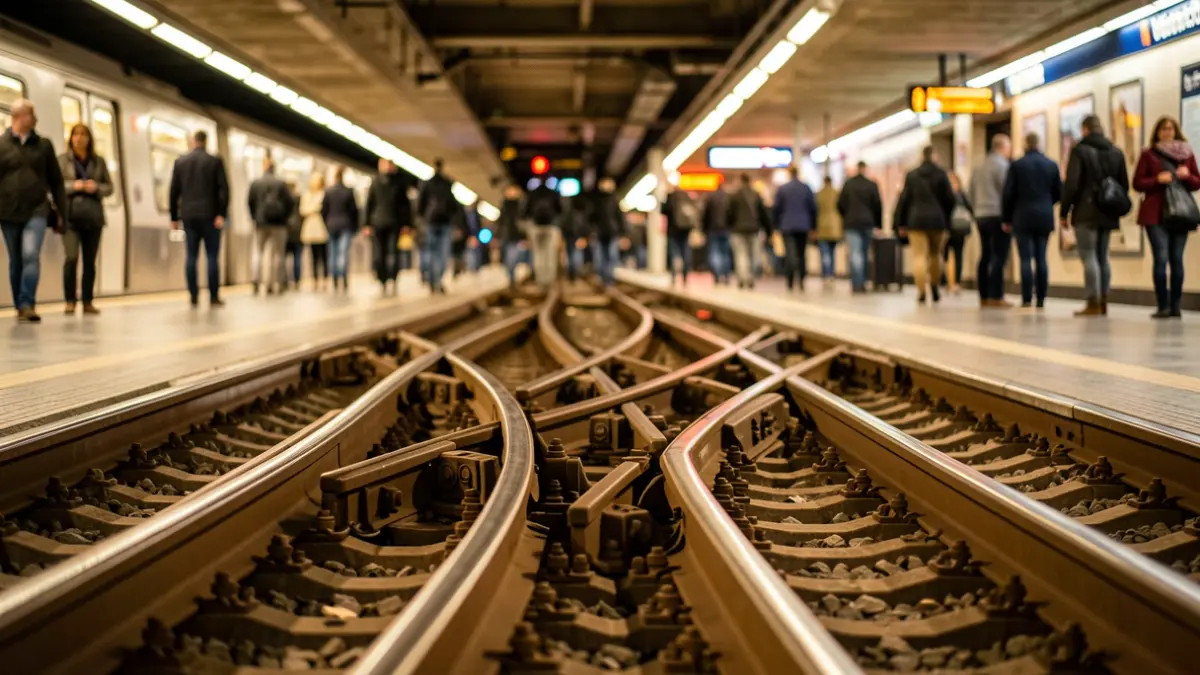
The Community of Madrid has ultimately ruled out modifying the section of Metro Line 1 connecting Chamartín with Pinar de Chamartín, as part of the suburban expansion project linked to the urban development of Madrid Nuevo Norte. This decision guarantees that users of the Bambú and Pinar de Chamartín stations will maintain their direct connection to the line without needing to transfer.
The initially preferred option involved extending Line 1 northward with three new stations and integrating the segment between Pinar de Chamartín, Bambú, and Chamartín into Line 4. This approach would have required travelers from Pinar de Chamartín and Bambú to change lines at Chamartín to continue on Line 1.
However, during the public information period, numerous residents from Pinar de Chamartín submitted objections expressing their rejection of losing direct connectivity. "After all the allegations being studied, the service of Line 1 that they are currently benefiting from will not be affected in any case," assured a spokesperson after an event organized by Metro de Madrid.
Although the regional government has dismissed the initial option prioritized in the study, it has not yet specified the definitive solution for serving Madrid Nuevo Norte. As explained by the counselor, technicians are continuing to analyze various available alternatives with the aim of expanding the network without negatively impacting current users of Line 1. "What we are going to do is try to study all the alternatives so that, when expanding the network, it does not affect the residents using Line 1 from Pinar de Chamartín in any way," he stated.
The study, published last March, concluded that the now-discarded alternative was the most favorable from a functional, environmental, territorial, and economic standpoint. Nevertheless, other considered options maintain a similar scheme: the creation of an independent line connected to Line 10 at Chamartín, running along the axis of the future Agustín de Foxá street.
The various alternatives studied include the construction of three new stations, provisionally named Centro de Negocios, Fuencarral Sur, and Fuencarral Norte, which will serve the future urban and business development in the north of the capital. The project also includes a connecting branch to the new depots planned for this area, the drafting of which is already out for tender.
Regarding the execution of the works, the Community of Madrid has indicated that the main tunnel will be built using the Traditional Madrid Method, a technique widely employed in the Madrid metropolitan network. For connections with existing lines, the German Method will be used, while procedures to minimize surface impact will be applied in the new stations.
The Metro expansion is considered a strategic infrastructure to support the development of Madrid Nuevo Norte, recognized as the largest urban regeneration project in Spain and one of the most significant in Europe.