
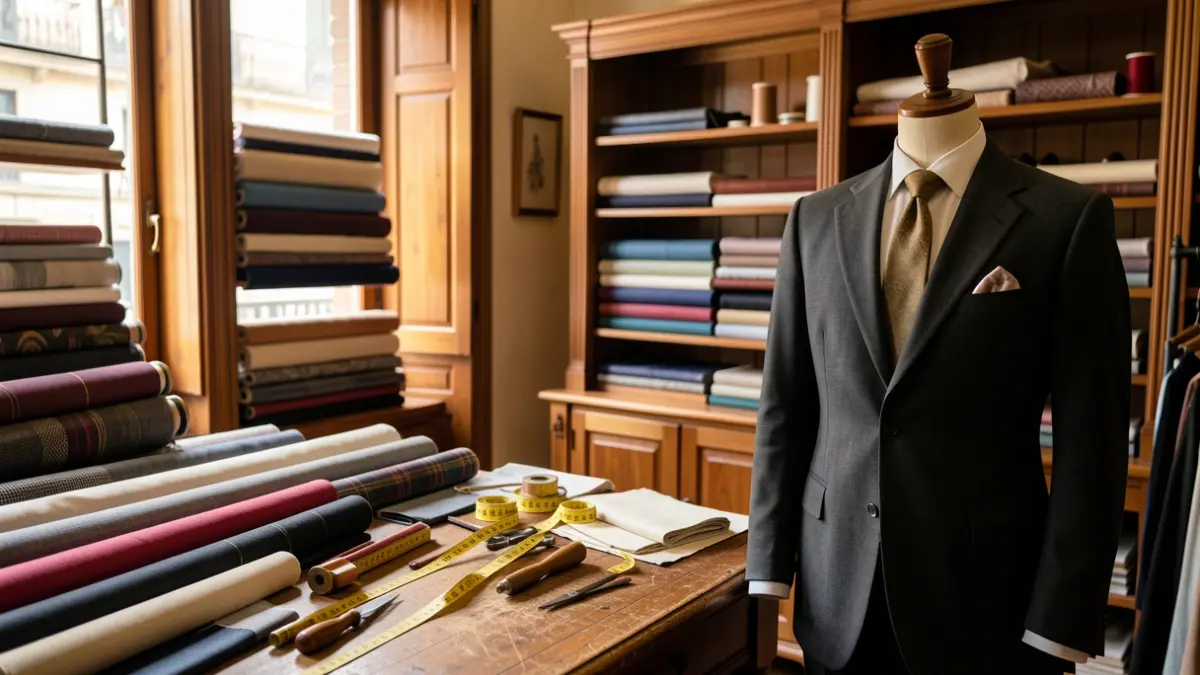
After years dominated by informal and homogeneous menswear, artisanal tailoring is experiencing a resurgence. During the peak season for weddings and communions, men and women are increasingly seeking garments crafted with care, tailored to their specific body shape and personality, valuing cut, drape, and perfect fit over mass production.
In contrast to the immediacy of current consumption, concepts such as quality, sustainability, and longevity are gaining traction. The return of 'tailoring' reflects a new understanding of fashion: less ostentatious, more understated, and focused on durability.
El Corte Militar, an emblematic Madrid tailor located on Calle Mayor, details the key differences between a purchased suit and one handcrafted for each client. A bespoke suit begins with an exclusive pattern, developed for the individual's proportions and posture, unlike the standard measurements of off-the-rack suits.
The artisanal process involves successive fittings and adjustments on the body, allowing for a much more precise and natural adaptation. The client actively participates in selecting fabrics, linings, lapels, and finishes, creating a completely personalized garment that offers superior drape, movement, and comfort.
Furthermore, traditional tailoring utilizes natural fibers and higher quality fabrics, ensuring better breathability and durability. This commitment to longevity stands in contrast to the rapid consumption of 'fast fashion,' promoting a more sustainable and discreet elegance, far from visible logos and fleeting trends.
Founded in 1926, El Corte Militar has established itself as a benchmark in the artisanal creation of bespoke garments, both civilian and military, preserving the essence of traditional tailoring and absolute respect for detail.