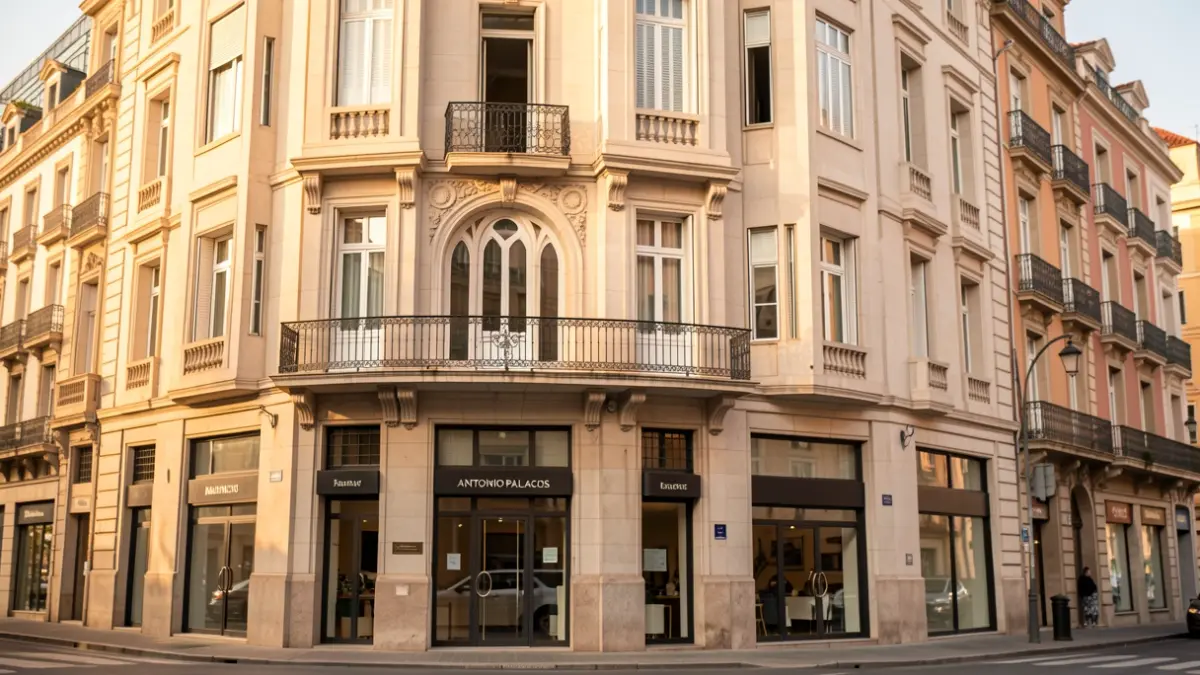
Casa Palazuelo, located at number 4 Plaza Mayor and designed by Madrid architect Antonio Palacios, will enter a new phase after its owners received authorization to convert this building, one of Madrid's first commercial and office structures, into a hotel.
Opened in 1921, the building, which still operates with facades on both Plaza Mayor and Arenal street, will soon become a hotel, retaining only a few commercial spaces on its ground floor. The decision was made at the last Cibeles Plenary before the summer break, with a 'yes' vote from the PP, abstentions from Vox and non-attached councilor Javier Ortega Smith, and rejections from Más Madrid and PSOE.
Urban Planning, Environment, and Mobility delegate Borja Carabante referred to it as "this jewel" and confirmed that the transformation has received a favorable report from the City Council's Historical Heritage Protection Commission. He assured that commercial tertiary activities would be maintained on the ground floor, thus combining lodging with retail.
The opposition has voiced concerns. Vox councilor Ignacio Ansaldo expressed worry that the conversion to a hotel "deprives Madrileños of this emblematic building." Meanwhile, socialist councilor Antonio Giraldo noted that the property is "in good condition" and retains its original use as a commercial and office building, warning that changing its use could affect its declaration as a Site of Cultural Interest (BIC).
José Luis Nieto from Más Madrid diagnosed that "where there were once companies, shops, and jobs, there will now be hotel rooms" due to the "much greater economic profitability" of hotel use, rather than a failure of the existing activities.
Demetrio Palazuelo's original design was inspired by commercial buildings in American cities like Chicago, featuring shops on the lower floors and offices above. The Casa Palazuelo website itself highlights that its five floors are "one of the few modernist houses that can be found in Madrid" and its interior is considered "a unique architectural gem in the city, very much in the style of 1920s Art Deco, influenced by the Chicago school".
Antonio Palacios aimed for the facade to reflect the building's function without overshadowing its surroundings, maintaining a classical air.