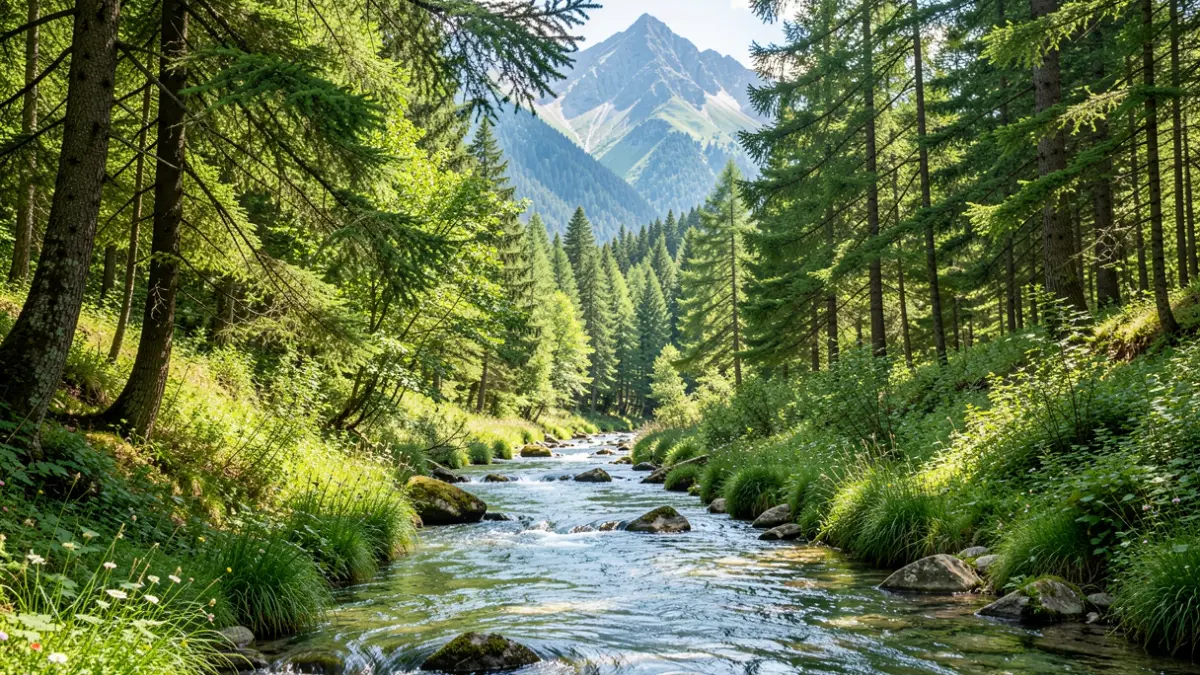
The forests of the Madrid region face an increasingly urgent challenge: to withstand the impact of extreme weather episodes such as torrential rains or prolonged droughts, phenomena that occur with greater frequency. To address this, the Community of Madrid has launched an ecohydrological restoration project in forest areas at risk of erosion.
These actions are part of the Madrid Forestal Forest Impulse Plan, an initiative by the regional government aimed at improving the management, conservation, and innovation of the region's natural heritage. The main objective is to enable forest ecosystems to fulfill their natural hydrological function: absorbing water, preventing soil erosion, and minimizing the damage caused by both floods and periods of extreme drought.
The first site where work has begun is the public utility forest of Los Robledos, located in the municipality of Rascafría, in the Sierra de Guadarrama. Technicians from the Ministry of Environment, Agriculture, and Interior have started a comprehensive intervention that includes several complementary actions, such as filling the stream bed, constructing a breakwater, stabilizing the terrain, building a closing dike, and installing fencing to protect the area from livestock.
Experts will also carry out silvicultural treatments on rebollo oak stands and install four energy dissipators designed to slow down the water's erosive capacity. The project will be completed with the planting of over a hundred native trees: birch, ash, cherry, and poplar, protected with individual sleeves.
Beyond Rascafría, regional government technicians have carried out similar interventions in other parts of the community. The former quarries of Alpedrete, the Dehesa de la Golondrina in Navacerrada, and Becerril de la Sierra have undergone environmental recovery work. Efforts have also been made in two wetlands of special value: El Campillo in Rivas Vaciamadrid, and Soto de las Cuevas in Aranjuez.
One of the most striking actions is underway in Tres Cantos, on land affected by the forest fire that devastated part of the municipality last August. Restoring these burned areas is a priority, as fire leaves the soil without vegetation cover, exposing it to much greater erosion from any intense rainfall event.
The plan includes expanding the restoration of the Alpedrete quarries and rehabilitating thirteen wetlands of particular importance, as part of the European project LIFE HumedalES. Wetlands are crucial environments for regulating the hydrological cycle, housing protected species, and acting as natural barriers against floods.
These actions collectively reflect a broader vision of anticipating environmental deterioration rather than merely reacting once damage has occurred. In a context of increasingly dry summers and more violent intense rainfall events, preventive forest restoration becomes a key tool for protecting both the natural environment and the municipalities that depend on it.