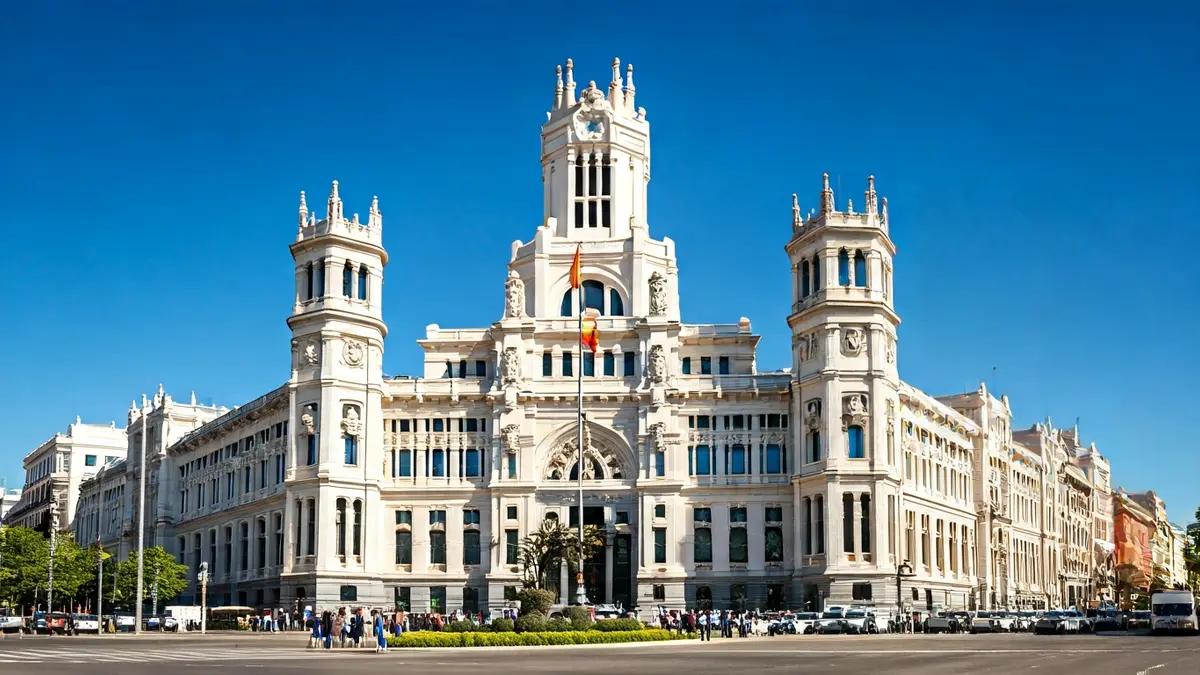
Constructed between 1907 and 1919 by young architects Antonio Palacios and Joaquín Otamendi, the Palacio de Comunicaciones, now known as Palacio de Cibeles, has been a cornerstone in Madrid's urban landscape. Initially, it housed the central headquarters of Correos de España for almost a century, marking an era in the country's communication.
The building, which at the time generated controversy, is now one of the most photographed and recognized landmarks in Spain. Its eclectic design, blending neo-Gothic, neo-Plateresque, and neo-Baroque elements, gives it a majestic character, earning it the popular nickname 'Our Lady of Communications'.
The Palacio de Cibeles has traveled an extraordinary path: from an object of architectural scandal in 1907 to an undisputed symbol of Madrid in the 21st century. From the Post Office palace to CentroCentro. From exclusive use to public openness. It is the building that best represents Madrid's ability to reinvent its heritage without losing its identity.
Since 2011, the building has been transformed into CentroCentro, a vibrant cultural and civic center managed by the Madrid City Council. This space hosts temporary exhibitions, the Archivo de Villa, areas for events and weddings, the Mediodía restaurant, and La Sala for various activities, establishing itself as a cultural reference point in the capital.
One of its main attractions is the viewpoint located on the 7th floor, offering 360-degree panoramic views over the Plaza de Cibeles, the Paseo del Prado, the Retiro Park, and Madrid's skyline, extending to the Sierra de Guadarrama. Access to this viewpoint has a reduced cost, making it an affordable option to enjoy one of the best perspectives of the city.