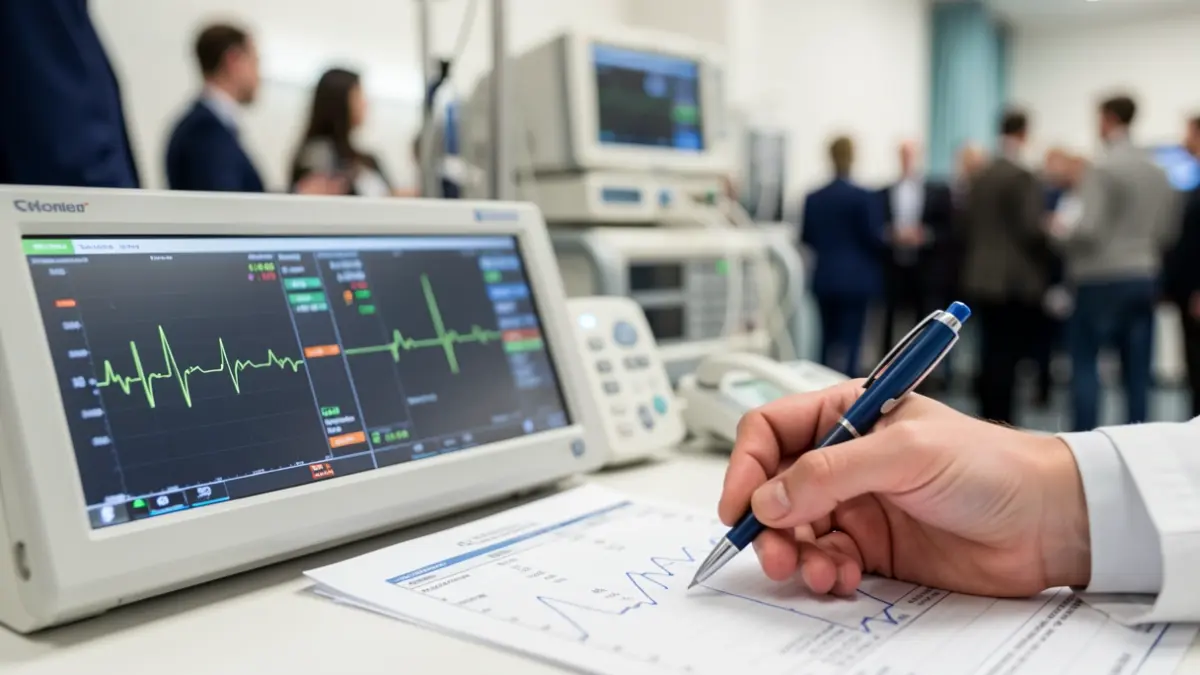
A pioneering investigation, led by scientists from the National Center for Cardiovascular Research Carlos III (CNIC) and the Cardiology Service of the Puerta de Hierro Majadahonda University Hospital, a public center in the Community of Madrid, has discovered markers that enhance the risk stratification of severe ventricular arrhythmias in patients with non-ischemic dilated cardiomyopathy. This condition is a primary cause of heart failure and sudden death.
The study, published in the journal Circulation by the American Heart Association, analyzed a cohort of 925 patients from 22 hospitals in Spain and the Netherlands. The combination of genetic information with advanced cardiac magnetic resonance imaging techniques demonstrated greater accuracy in predicting arrhythmias compared to current clinical criteria. The findings could optimize the selection of patients for preventive implantable defibrillators.
Traditionally, the indication for defibrillators has relied on the left ventricular ejection fraction, a parameter with limitations. The study focused on cardiac fibrosis detected by magnetic resonance imaging, analyzing "slow conduction corridors" – small pathways of healthy tissue between fibrotic areas that can facilitate abnormal electrical circuits. It was observed that a higher number of these corridors is independently associated with severe arrhythmias, especially in patients with four or more detected corridors.
Furthermore, the importance of certain high-risk genetic alterations was confirmed, particularly in patients without detectable fibrosis. Researchers developed an algorithm combining fibrosis, slow conduction corridors, and high-risk genetic variants. This model classified patients into different arrhythmia risk levels, surpassing the predictive capacity of the traditional criterion.
Patients classified as low-risk showed an annual rate of arrhythmic events below 1%, while in the high-risk group, the rate exceeded 7% annually. This strategy could prevent unnecessary implants while identifying patients at high risk of sudden cardiac death.
Doctors Jesús González Mirelis and Pablo García-Pavía, cardiologists at the Puerta de Hierro Majadahonda University Hospital and researchers at CIBERCV and CNIC, emphasized the need for personalized risk assessment, integrating clinical, genetic, and advanced cardiac imaging information.
Researcher Noemí Ramos, a cardiologist at the Puerta de Hierro Majadahonda University Hospital and lead author of the study, concluded that the findings open the door to new strategies for improving the prevention of ventricular arrhythmias and sudden cardiac death in this patient population, although they will require confirmation in future studies.