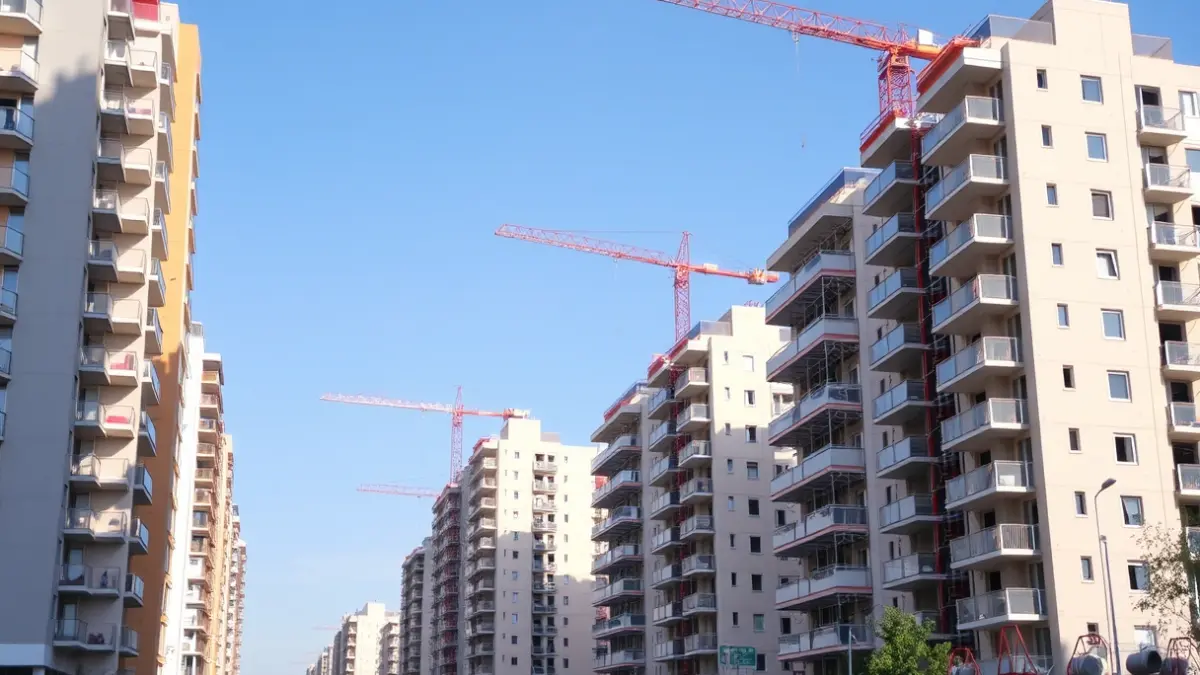
On Tuesday, April 28, 2026, the Minister of Housing, Transport and Infrastructure of the Community of Madrid, Jorge Rodrigo, reported on this new initiative. The homes will be distributed with 130 units in the Los Berrocales development and the remaining 220 in the Hortaleza neighborhood, specifically in UVA de Hortaleza, in the San Blas-Canillejas district. This measure is part of the regional government's public-private collaboration strategy.
The tender procedures will officially begin in the last quarter of the year. The Community of Madrid thus seeks to increase the housing supply to mitigate the current crisis of access to this essential good, a policy that, according to the regional government, has led to promoting more than 40% of all protected housing in Spain since 2019.
“"Since 2019, we have promoted more than 40 percent of all protected housing in Spain, more than any other autonomous community."
The regional executive projects the construction of more than 70,000 protected flats by the end of the current legislature, and up to 280,000 in the next 15 years, thanks to the 31 urban developments underway. This strategy contrasts with criticism from the opposition, which accuses the central Government of "interventionist" and "populist" housing policies.
For its part, the Más Madrid group has presented two Non-Legislative Proposals (PNL) in the Madrid Assembly. These proposals seek to "intervene in the housing market" to "curb speculation" and "strengthen the public housing stock." One of the PNLs denounces the role of large investment funds in increasing rents and the loss of public housing, proposing measures such as curbing the expansion of large landlords and prohibiting the sale of public housing to funds.
The second Más Madrid PNL focuses on the protected housing model, criticizing its "insufficiency and progressive disqualification." It proposes establishing indefinite public protection for these homes, eliminating incentives for private for-profit developers, promoting alternative models such as cooperatives, and increasing the land reserve for protected housing to at least 30% in new developments.