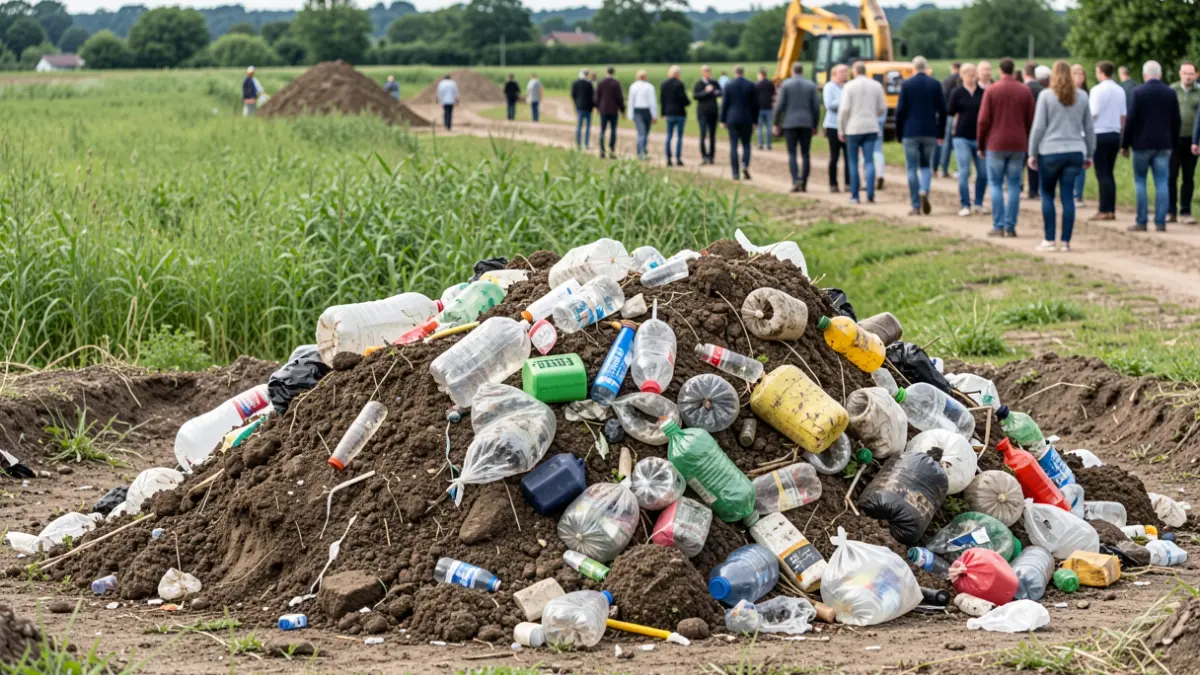
The Community of Madrid has initiated a sanctioning procedure for the alleged uncontrolled management and burial of hazardous waste in plots around Ventorro del Cano. This action follows a complaint filed by the Alcorcón City Council upon detecting activities that, according to the council, went far beyond the ordered removal of waste.
The sanctioning file incorporates documentation submitted by the City Council, as well as reports prepared by the Forest Rangers. These reports describe earth movements, removal of vegetation cover, and the possible shredding, mixing, and burial of waste, including potentially hazardous materials.
Trinidad Castillo, fourth deputy mayor and councilor for Ecological Transition, Mobility, Education, and Environment, emphasized that the City Council acted "within its powers since the first spills were detected." She explained that the property owner was required on three occasions to remove the waste through authorized managers, and when it was verified that actions exceeded the ordered cleanup, all documentation was transferred to the Community of Madrid, as the competent administration in environmental discipline.
Municipal services detected significant waste accumulations at the beginning of the year and sent three notices to the property owner demanding the removal of materials and their management by authorized companies. The City Council stresses that these orders were exclusively limited to cleaning the plots and removing illegal dumping, and in no case authorized earth movements, vegetation removal, shredding, or burial of waste, nor any other action aimed at transforming the land.
Subsequently, a municipal inspection confirmed that plowing and vegetation removal had been carried out without authorization. Faced with this situation, the City Council reported the facts to the Community of Madrid and requested an urgent investigation to determine the extent of the possible environmental impact. Castillo reiterated that a municipal order to remove illegal waste cannot be used as an excuse to shred, mix with soil, bury it, or cause even greater environmental damage.
The opening of the sanctioning procedure follows inspections by the Forest Rangers and the analysis of technical and administrative documentation submitted by the City Council. The Community of Madrid is investigating an alleged serious infraction related to the uncontrolled management of hazardous waste. The initial agreement for the file also includes the obligation to repair any damage that may have been caused in the affected area.
For the Councilor of Ecological Transition, the main objective goes beyond assigning responsibilities: "What is important is not only that responsibilities are assigned. The fundamental thing is that what happened is clarified and that the environmental damage is repaired as soon as possible. That has been our priority from day one and will continue to be."
The City Council frames this procedure within its municipal strategy to combat illegal dumping, based on early detection, administrative action, inter-administrative collaboration, and reinforced environmental surveillance. New cameras installed in various parts of the municipality have already helped identify and sanction a dozen offenders.