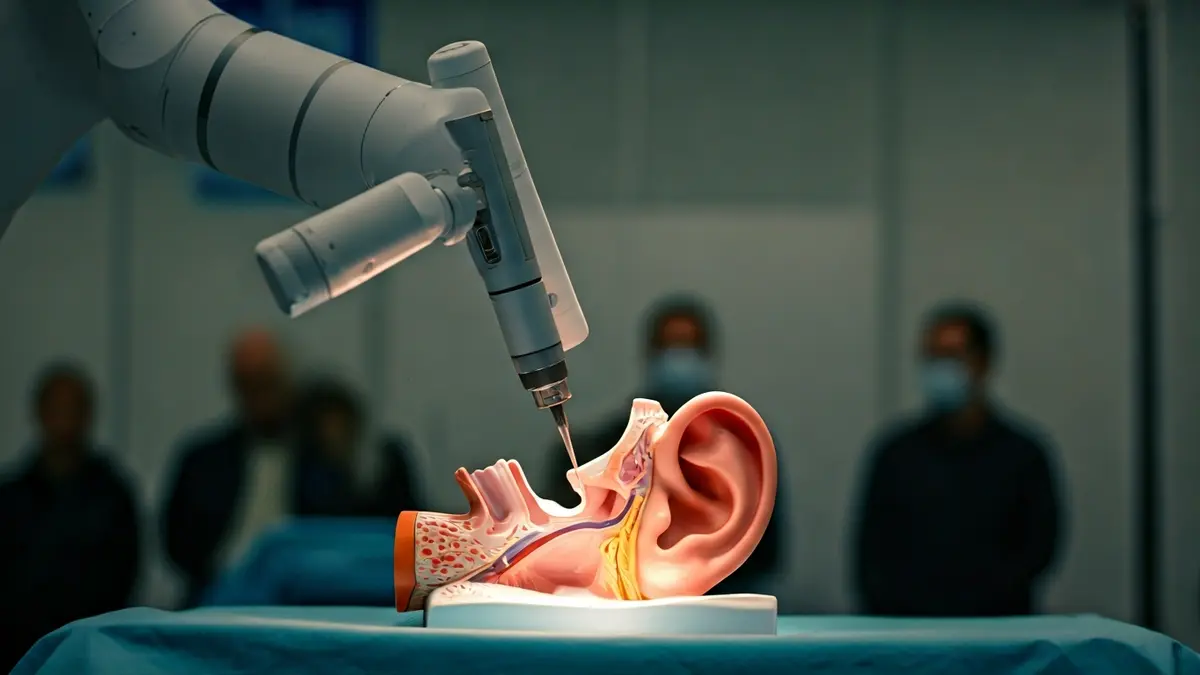
This innovative technology, as reported by the Community of Madrid, allows the procedure to be carried out with millimeter precision. Its application is crucial during the most delicate phase: the introduction of the electrode into the cochlea, a fundamental inner ear structure that converts vibrations into sound signals interpreted by the brain.
The use of the robotic arm ensures insertion at a constant speed of 0.1 millimeters per second, a stability that the human hand cannot maintain for several minutes without slight variations. This precision minimizes the risk of damage to cochlear structures and optimizes implant placement.
The technique is particularly relevant today, as an increasing number of cochlear implant candidates retain residual hearing. In these cases, surgery requires even greater precision to preserve existing auditory capabilities and improve long-term outcomes.
A cochlear implant is a device that, unlike traditional hearing aids, transforms sound into electrical impulses that directly stimulate the auditory nerve, allowing people with profound deafness to regain hearing. The integration of robotics not only refines the current intervention but also expands future therapeutic options.
The Otorhinolaryngology Service at Hospital La Paz has extensive experience in treating hearing loss and is a reference center in this field. Annually, it performs approximately 40 cochlear implants and attends to about 400 patients, consolidating its national leadership in auditory surgery.