The Madrid council asserts that complaints about cleanliness have steadily declined year after year since 2019. According to data from the Urban Planning, Environment, and Mobility Area, the cumulative reduction since that year stands at 67.6%, with complaints falling from 2,947 in 2019 to 957 in the first five months of 2026, representing 1,992 fewer incidents.
Municipal sources add that cleanliness has become a lesser concern for citizens. In the Quality of Life and Satisfaction with Public Services Survey, cleaning dropped from being the primary concern in 2016, 2017, and 2019, to fourth place in 2024 and sixth in 2025.
In May 2026, the latest month with closed figures, complaints decreased by 31% compared to the same month in 2025, dropping from 120 to 83. During this period, sidewalk and roadway cleaning indicators improved by 5%, and litter bin emptying by 17%.
The municipal government, led by José Luis Martínez-Almeida, has questioned the PSOE's data, stating it does not align with official figures from the Madrid Avisa system. The council emphasizes that a "citizen alert is not a complaint" and that the socialists have "hidden the real data" showing a downward trend since 2019, unlike the 4.1% increase recorded between 2018 and 2019 under previous administrations.
For their part, the spokesperson for the Socialist Municipal Group, Reyes Maroto, has maintained that the city is "dirtier every day" despite the action plan in effect since October 2025. She pointed to Usera as an example of the "failure of cleaning policies," citing "accumulated garbage around bins" and "street dirt." The PSOE will present demands for "effective and structural" measures at the next Urban Planning, Environment, and Mobility Commission meeting.
The action plan, operational since October 2025, includes 24-hour Proximity Brigades, reinforced inspections, awareness campaigns, and joint patrols by the Municipal Police and cleaning services. These patrols have issued 357 citations by mid-June 2026, primarily for waste abandonment in public areas, with higher incidence in the Centro and Usera districts.
The City Council details that the eight current cleaning contracts represent an annual investment of 843 million euros: 340 million for street cleaning, 275 million for waste collection, and 218 million for green area cleaning. This figure marks a 40% increase compared to previous contracts, with an additional 242 million euros annually.
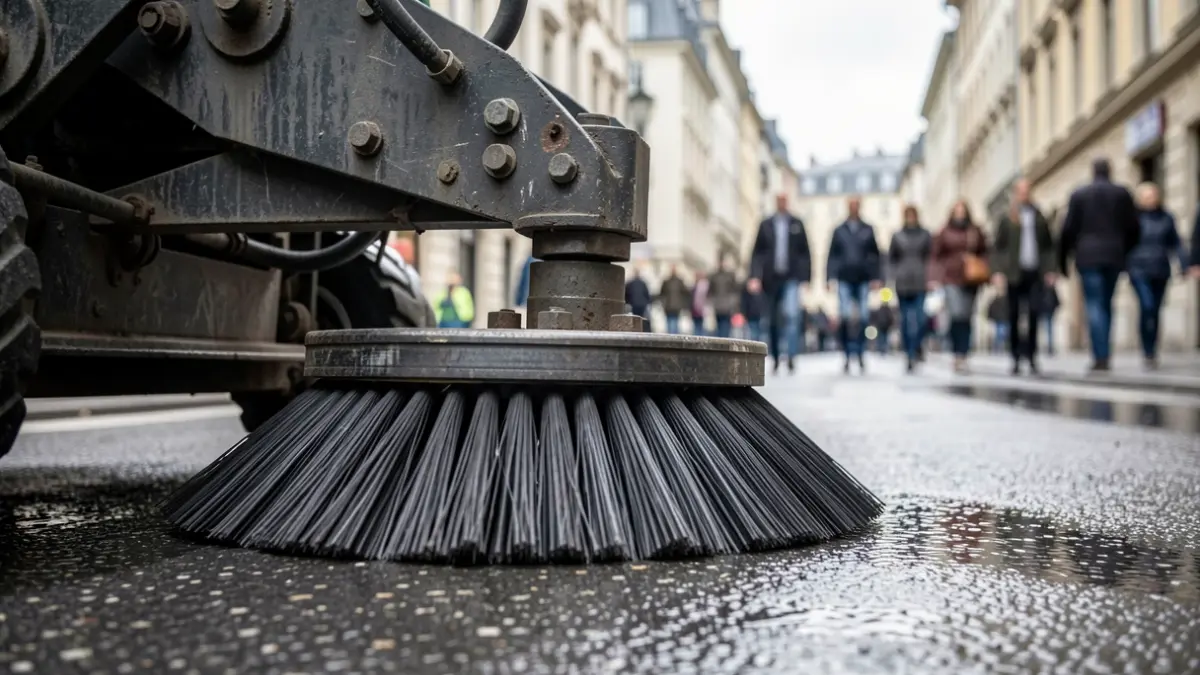
Other initiatives launched since November 2021 include new cleaning contracts with a 53% budget increase, 2,000 additional workers, and 16% more mechanical resources. The Selur (street cleaning service) budget has been multiplied by 2.5, and the contract for cleaning inter-block areas has been allocated 12.4 million euros annually. Regarding waste management, 1,300 smart litter bins and 12,000 volumetric fill sensors have been installed, along with the implementation of selective organic waste collection city-wide since September 2020.