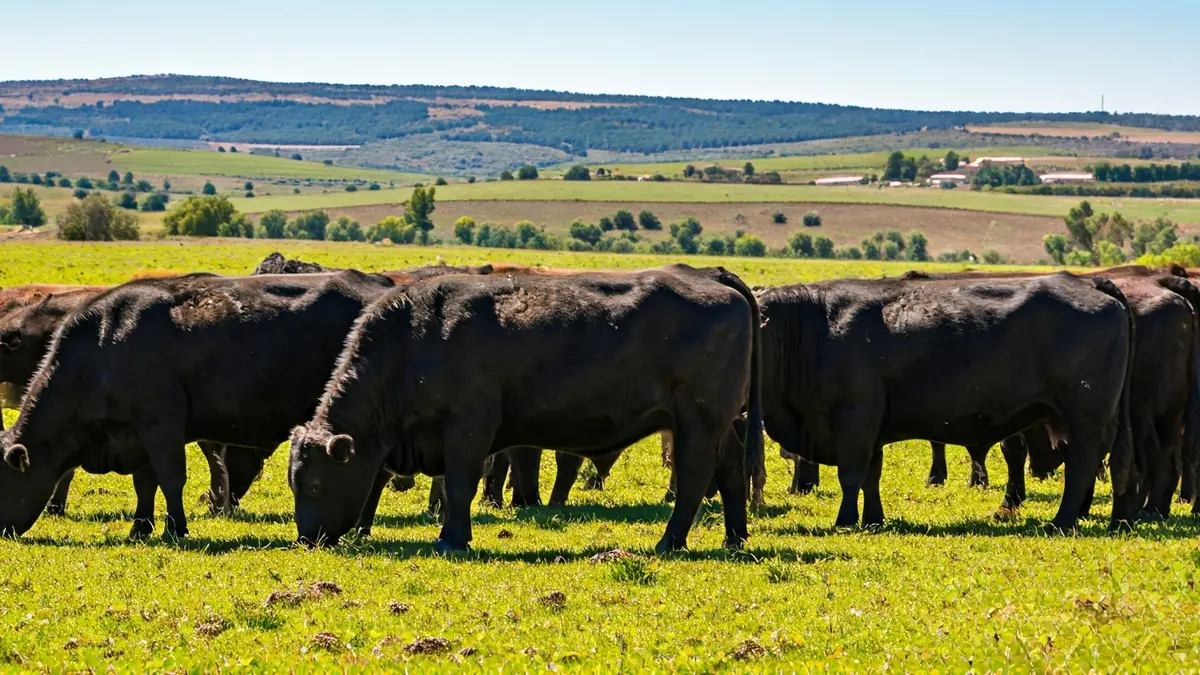
The event, which took place last Tuesday, included the auction of three males and twelve females of extensive livestock. These animals are highly valued for their resilience, their remarkable adaptability to the terrain, and their essential contribution to preventing forest fires. The Minister of Environment, Agriculture and Interior, Carlos Novillo, presided over the event, emphasizing the importance of this initiative for the sector.
Interested ranchers actively participated in the bidding, acquiring the specimens at public prices set by IMIDRA. During his speech, Novillo highlighted the fundamental work of the organization in the genetic improvement of the Avileña-Negra Ibérica breed, considered one of the most representative of extensive livestock farming in Madrid.
The Riosequillo farm currently houses over 150 head of this species. IMIDRA manages this herd in collaboration with the Spanish Association of Breeders of Selected Avileña-Negra Ibérica Cattle. Of this total, 72 are nursing females, while the rest consist of males, calves, and yearlings, ensuring the diversity and future of the breed.
This program originated in the 1980s, when it was promoted to ensure that Madrid ranchers had access to these animals and, at the same time, to preserve a breed deeply linked to the territory and traditional livestock farming activity in the region.
Annually, the Community of Madrid allocates one million euros to various aids aimed at maintaining livestock breeds. These subsidies cover lines for the conservation of bovine genetic resources through associations, the care of threatened native sheep and goat breeds, and the preservation of species at risk of genetic erosion or extinction, demonstrating a strong commitment to livestock biodiversity.