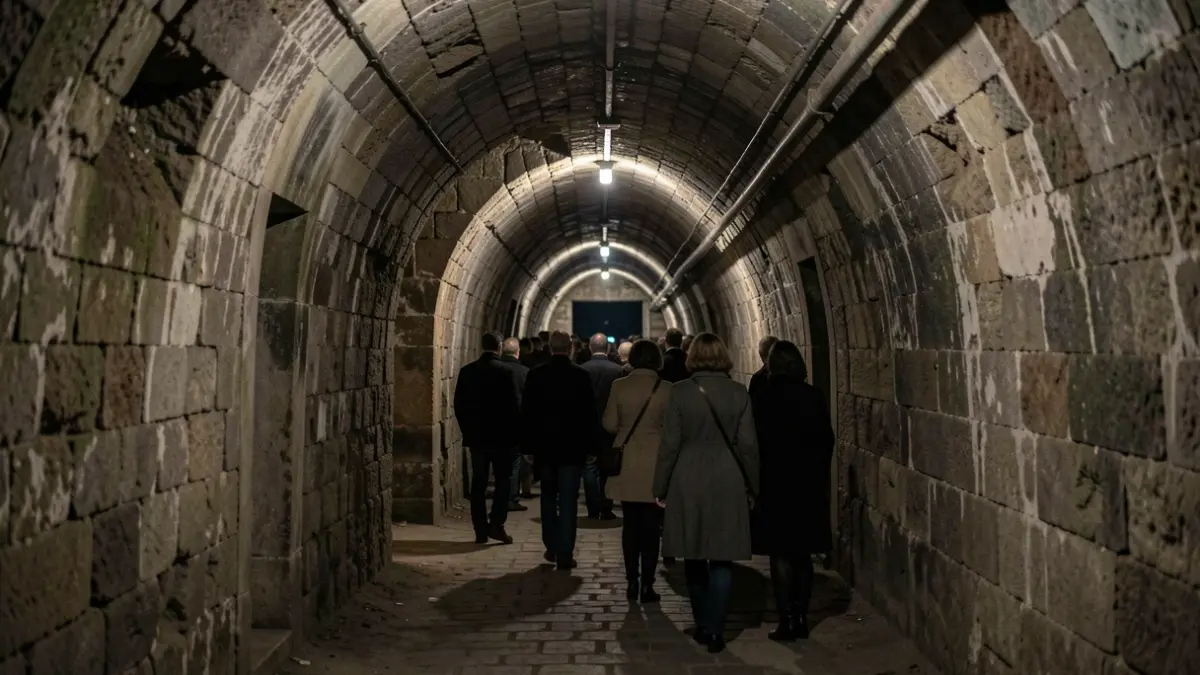
The tunnel, commissioned by Joseph Bonaparte to architect Juan de Villanueva to connect the gardens of the Royal Palace with the Casa de Campo, will be incorporated into the exhibition narrative of the future Royal Casa de Campo. The Director General of Cultural Heritage and Urban Landscape, Elena Hernando, detailed the initiative at the Commission of Culture, Tourism, and Sport.
Originally a private passage for royal hunting and recreation, the tunnel opened to the public in 1931. Its use was affected by the construction of the M-30 highway, which interrupted its connection to the river. The section managed by Patrimonio Nacional, in the gardens of Campo del Moro, is already accessible.
According to Hernando, the municipal section, located in Madrid Río, does not retain original historical elements. It is a contemporary underground pavilion built in 2011 as an emergency exit. The official noted that its interest lies in providing it with an exhibition discourse that narrates the history of the passageway and its link to the old Casa de los Vargas.
This opening is part of the recovery of the Casa de los Vargas, a residence of Philip II, which the City Council will transform into a new cultural space. The project includes a Renaissance garden of over 10,000 square meters and a Renaissance grotto with water features. The delegate for Culture, Tourism, and Sport, Marta Rivera de la Cruz, highlighted that it will be "the only 16th-century garden that can be seen in the capital."
“"The incorporation of the municipal section into this visit would only be of interest if an exhibition discourse is provided, as it lacks historical value."
“"the only 16th-century garden that can be seen in the capital"