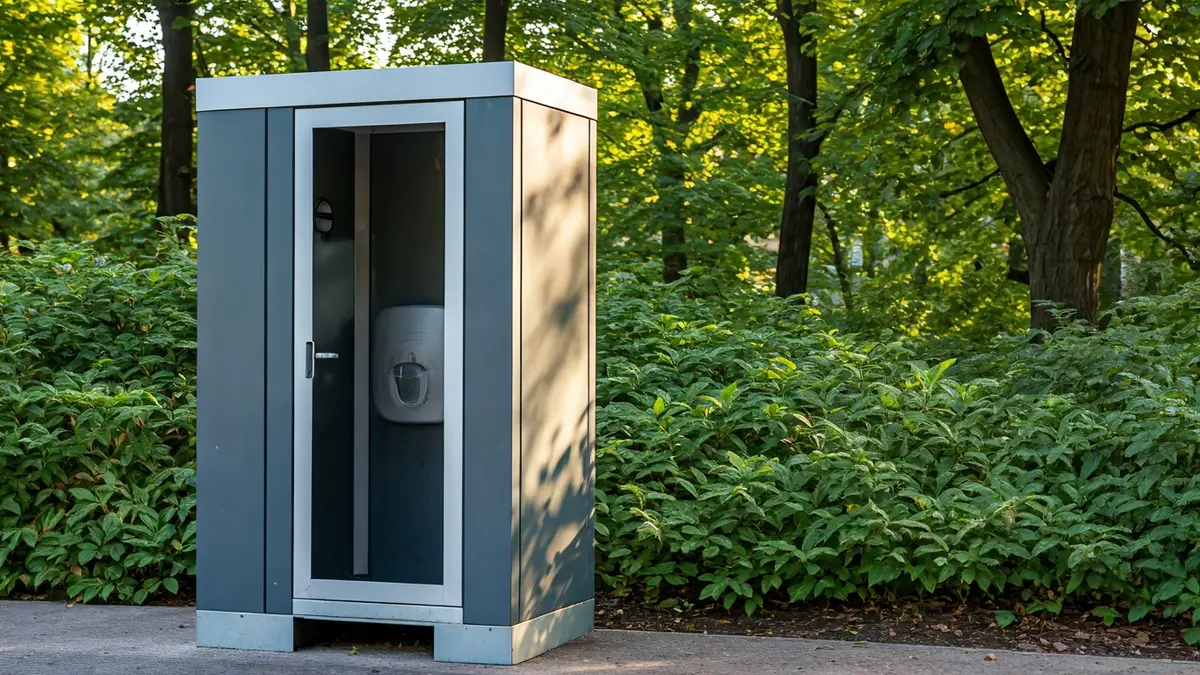
The municipality of San Sebastián de los Reyes has taken a significant step in improving its urban infrastructure with the launch of four new public restrooms. These additions bring the total number of such facilities distributed throughout the town to eight, enhancing comfort and hygiene for residents and visitors.
The new restrooms are not conventional cabins but automated urban units that incorporate an automatic disinfection system after each use. This mechanism ensures constant hygienic conditions without the need for continuous manual cleaning, reducing maintenance interventions and guaranteeing an optimal space for each user.
All facilities have been designed with universal accessibility in mind, featuring specific adaptations for people with reduced mobility. Furthermore, their design adheres to ecological principles, aiming to minimize the environmental impact of their operation.
One of the most notable aspects of this initiative is its funding model. The installation and full cost of the four new restrooms have been covered by the company JCDecaux, specializing in urban furniture and outdoor advertising.
This public-private collaboration model, framed within a mixed exploitation contract with the City Council, allows the council to expand and improve its public services without allocating municipal budget to this specific item. JCDecaux manages urban furniture for commercial and institutional advertising in the municipality, thus financing these citizen-use infrastructures.
The eight public restrooms in San Sebastián de los Reyes are strategically located at key points such as Paseo de Albacete, Avenida de Navarrondán (entrance to the Fairgrounds), Avenida de Somosierra (next to Parque de las Colchonetas), Avenida de Isla Graciosa with Avenida de Tenerife, Calle Cristo de los Remedios (next to Corrales de Suelta), Bulevar Sierra de Albarracín (opposite Ahorramás supermarket), Parque V Centenario (next to the metro exit and Plaza de Toros), and Paseo de Europa with Calle Silvio Abad. This distribution aims to cover common transit areas, recreational zones, and points of high resident concentration.