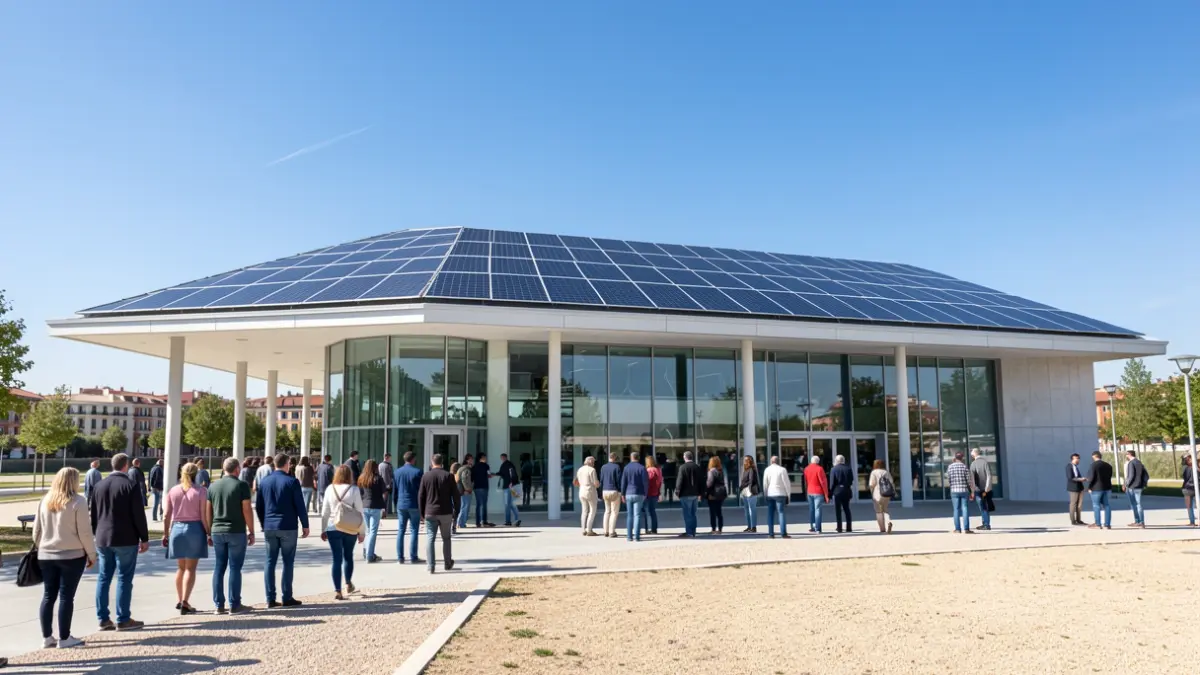
The opening of the complex, situated at the Arroyo Culebro Cuenca Media Alta Wastewater Treatment Plant (WWTP), coincides with the public company's 175th-anniversary commemoration. The facilities are a benchmark for their size, use of cutting-edge processes, and strategic role in the circular economy, according to the regional government.
During the visit, the monarch showed interest in technical aspects of the plant, such as its capacity to meet demand, installed power, and the treatment of non-treatable waste. Felipe VI positively acknowledged awareness campaigns regarding the environmental impact of these materials.
Since 2012, the center has supplied high-quality reclaimed water for the production of 100% recycled paper. Last year, nearly 3 cubic hectometers out of the 15 reused in the region were allocated to this industry.
This new center brings together pioneering projects combining renewable generation technologies with reuse measures linked to urban wastewater treatment.
One of the highlighted new infrastructures is a green hydrogen production plant. It uses reclaimed water and clean energy sources, capable of generating approximately 400 kilograms of this fuel daily. This amount is equivalent to what a hydrogen-powered vehicle would need to travel 40,000 kilometers.
Nearly half of the green hydrogen production will be used for refueling trucks to decarbonize heavy transport. It can also be employed for industrial uses and the production of synthetic biofuels.
Furthermore, the center hosts an experimental project for the production of synthetic biomethane, also known as e-methane. This renewable fuel is created by combining green hydrogen and carbon dioxide, and it will be injected into the internal grid to increase heat and electricity production at the treatment plant itself.