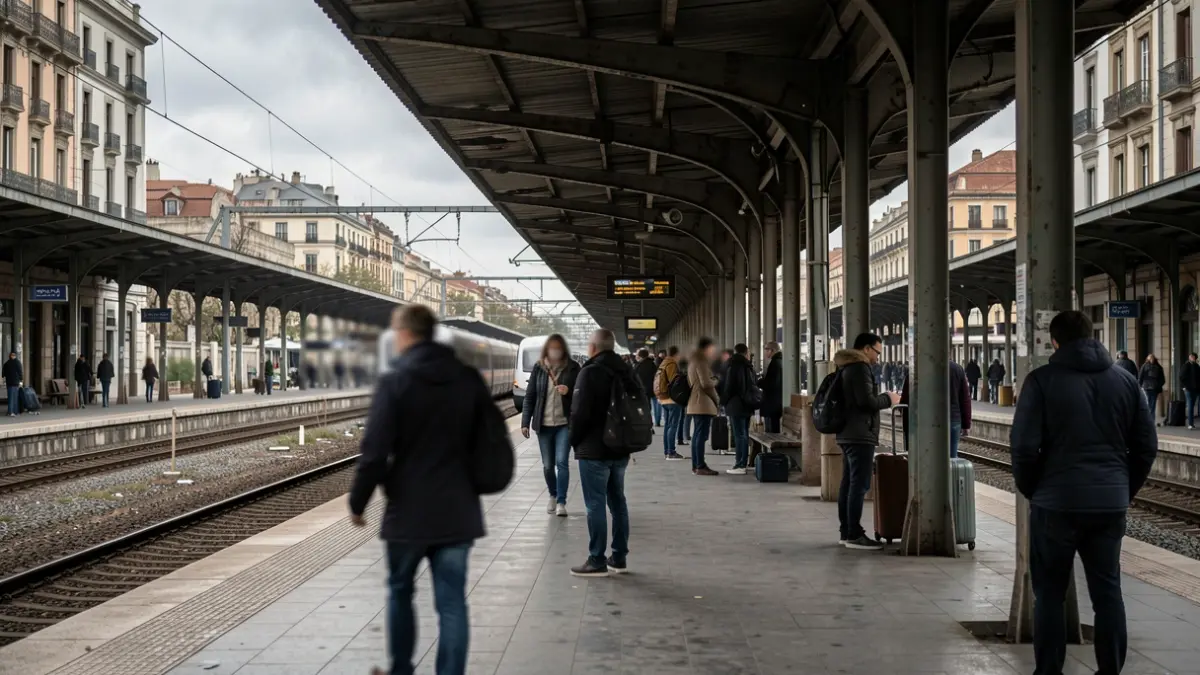
The patience of residents in the south of Madrid with the C5 Cercanías Line has run out due to the constant problems faced by thousands of citizens: daily delays, breakdowns, overcrowded stations, and a sense of institutional neglect.
In this context, the mayor of Humanes de Madrid, Óscar Lalanne, has taken a firm stance against the announcements made by the Ministry of Transport, led by Óscar Puente. During a recent meeting at the Congress of Deputies concerning the C-5, the mayor of Humanes was clear and concise. Lalanne emphasized that Humanes de Madrid is a crucial hub connecting the entire Sagra region, affecting towns like Moraleja, Griñón, Cubas, and Serranillos, which depend on the trains from this terminal.
The mayor stated that an increase in train frequency to Humanes de Madrid is not being considered, despite years of demands to be a true terminal station. "We have been demanding to be a real terminal for years," the mayor told this outlet.
Lalanne regrets that while the Ministry presents headlines and multi-million euro modernization plans until 2031, users face a harsh daily reality with broken-down trains and unbearable delays that prevent them from arriving at work on time. The commuter service has been malfunctioning for years without immediate government responses.
Óscar Lalanne's intervention at the Congress of Deputies has given voice to the growing discontent. The mayor questioned the feasibility of multi-million euro investments and long-term deadlines without approved General State Budgets to back the project, criticizing the Ministry of Transport's policy of constant announcements.
The Ministry's disconnect from the daily reality of users is criticized, as their seven-year promises contrast with the inability to guarantee a decent service in the present. Residents need punctual trains and a reliable network, not models or press conferences. The anxiety of being late for work, with potential professional consequences, is a real concern that the Ministry seems to ignore.
Furthermore, significant technical doubts exist regarding the implementation of new high-capacity trains on a line with inadequate infrastructure and stations, creating uncertainty about whether political impact is prioritized over rigorous planning. Future works and service disruptions also raise concerns in municipalities like Humanes de Madrid, with no clear explanations provided on how to prevent the mobility situation from worsening.
Óscar Lalanne's position is commendable for demanding real commitments and effective solutions, defending the interests of Humanes de Madrid and all C5 users against empty institutional rhetoric.