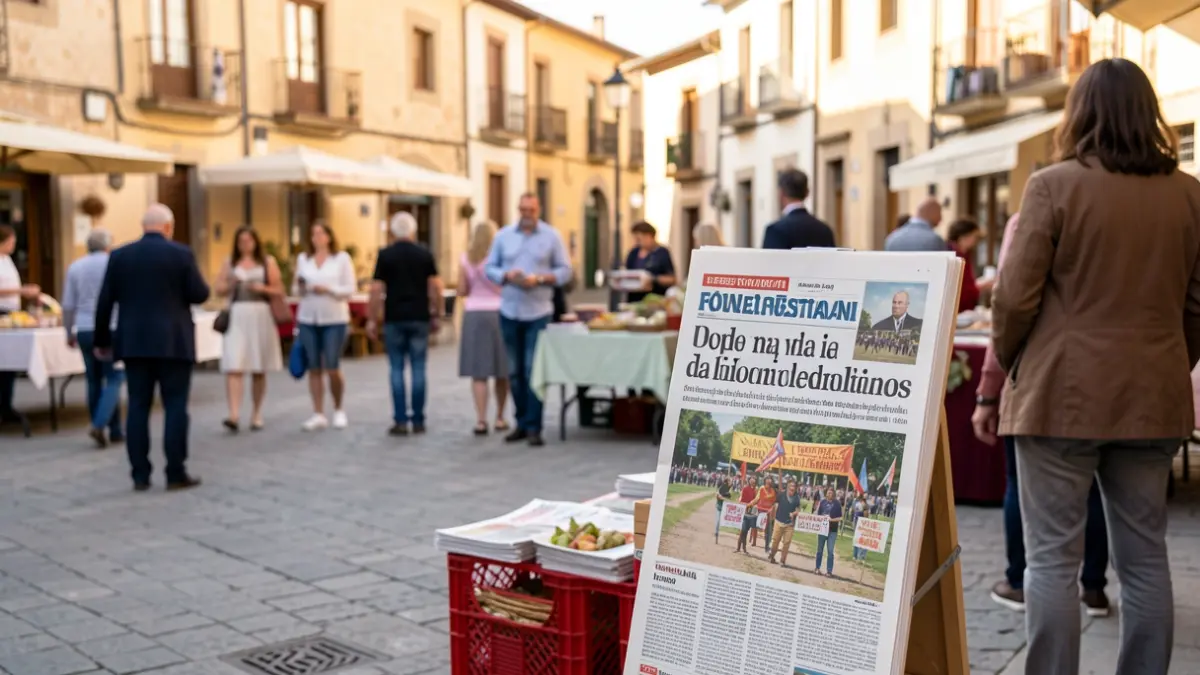
The municipal leadership asserts that Fuenlabrada has overcome past stigmas and is projecting itself into the future with a focus on sustainability and modernity. A General Urban Planning Scheme, which will define the city's development for the next 20 years, is one of the key initiatives in this strategy.
“"Fuenlabrada wants to be among the great intermediate cities, where we have something to contribute."
Among the prominent projects is the Urban Art Museum, which aims to attract tourism and visitors from the capital to explore the city's murals and cultural activities. The rehabilitation of buildings in various neighborhoods, partly funded by European Next Generation funds, is crucial for regeneration and improving the energy efficiency of homes.
Regarding housing, the new General Plan foresees the construction of 8,000 new units, with the goal that 60% will be protected housing. The municipal leadership has expressed concern about the cost of these homes, seeking mechanisms to make them accessible, especially for young people. Aid has been implemented, such as paying for basic services (electricity and water) for young people renting, and the SHARE project, which facilitates shared spaces for seniors and youth.
Another point of concern is the situation of the Yvonne Blake school, which has accumulated years of delays in its construction. The municipal leadership has criticized the management of this project, especially the phased construction, and has expressed concern about the possibility that the center may not open next academic year, affecting families in the Vivero neighborhood.
“"I am concerned that the Yvonne Blake may not be able to open next academic year."
The shortage of doctors in the city is another constant demand. The municipal leadership has denounced the normalization of this situation and has expressed fear that the opening of a new health center in the Vivero neighborhood will occur without the necessary staffing, potentially neglecting other existing centers. It has committed to continue demanding adequate public health services from the Community of Madrid.
Regarding the waste fee, the municipal leadership has acknowledged the discomfort generated but has defended its application as an obligation imposed by the European Union. It has highlighted that Fuenlabrada has managed to apply discounts of up to 30% for citizens most committed to recycling, easing the tax burden compared to other municipalities.
“"I don't like the waste fee, but I am obliged to apply it."
Finally, the municipal leadership has reiterated its rejection of the La Cantueña juvenile center, calling it an unfair decision for Fuenlabrada and regretting the lack of judicial support. It has criticized how it was established and the political instrumentalization of the city in this matter. In the local political sphere, it has observed a general climate of tension but has affirmed that the citizens of Fuenlabrada are committed to the city project being promoted.