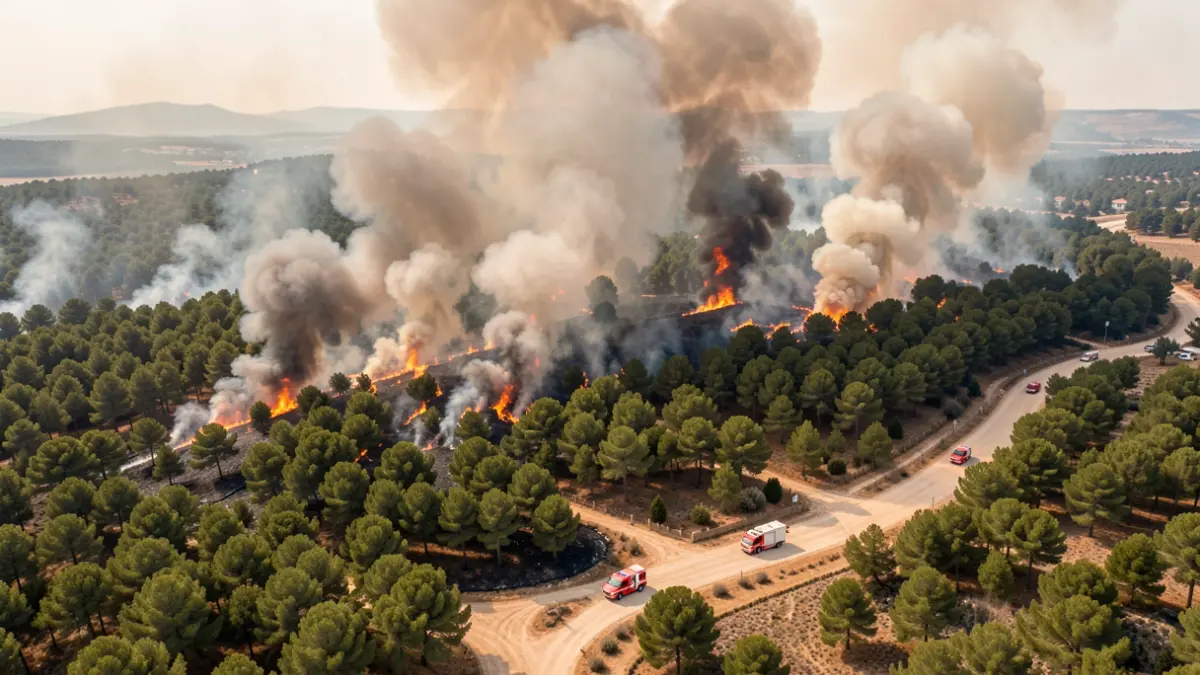
The wildfire affecting the Community of Madrid presents three active fronts, with the most critical located north of the Pantano de San Juan reservoir. The flames, which remain uncontrolled after four days, have forced the evacuation of thousands and the confinement of many others, while intensive efforts are underway to contain their spread.
Operational challenges are compounded by the need to divide resources among several critical points. The northern front near the Pantano de San Juan concentrates the majority of firefighting efforts to prevent expansion towards populated areas. Although the flames slowed their advance overnight due to lower temperatures and higher humidity, the fire's potential for spread persists.
“"The Community of Madrid is experiencing its worst modern forest catastrophe with unprecedented consequences."
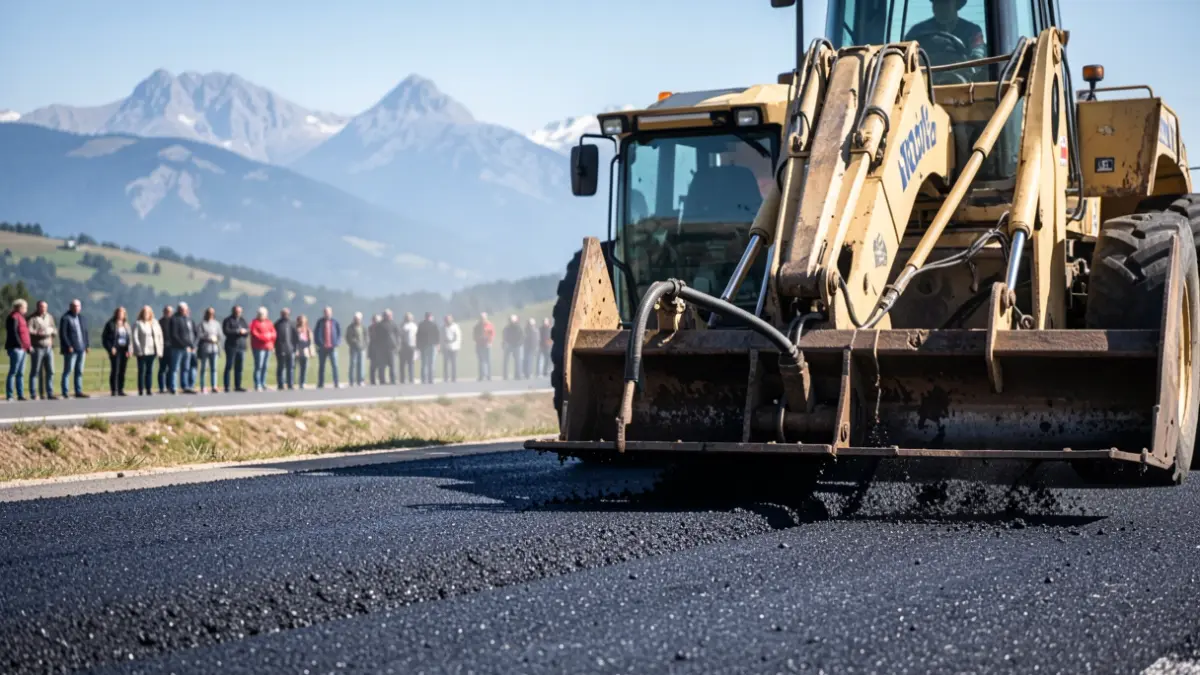
A total of 13 roads in the Community of Madrid remain affected, with full and partial closures severely hindering regional mobility. Key routes such as the M-507, M-540, and M-501 are experiencing extensive closures, isolating municipalities and impeding access.
The Madrid 112 Security and Emergencies Agency has activated the ES-Alert system to order the immediate evacuation of the El Encinar del Alberche urbanization, directing residents towards Villa del Prado. This measure is in addition to the existing confinement in Villa del Prado, creating a complex situation of double confinement for evacuees.
18 reception points have been established across 16 municipalities to house affected individuals, offering accommodation, meals, and medical and psychological care. The total capacity of these centers is approximately 2,400-2,500 people.
The healthcare response has recorded approximately 1,000 total interventions, including primary care emergencies, hospital treatments, and 13 non-critical hospital admissions. The SUMMA 112 has provided 147 interventions at reception points and 19 hospital transfers.
The public hospital Enfermera Isabel Zendal is serving as a specific emergency center, while the Virgen de La Poveda Hospital in Villa del Prado maintains normal operations, having relocated 29 patients from a mental health residence.
A medication dispensing system has been implemented for confined individuals and those in reception centers, in collaboration with the College of Pharmacists of Madrid. SUMMA 112 psychological teams are providing support to evacuees.
The fire has devastated municipalities including Aldea del Fresno, Navas del Rey, Chapinería, Robledo de Chavela, and Navalagamella, among others. Three municipalities—San Martín de Valdeiglesias, Pelayos de la Presa, and Villa del Prado—remain under confinement.
President Ayuso has announced a recovery plan that includes repairing over 100 kilometers of regional roads and allocating one million euros in direct aid for affected livestock farmers. 300,000 kilograms of fodder and 10 water tanks have been distributed for livestock.
Initial damage assessments indicate 43 destroyed homes and 300 with significant damage, a figure expected to rise. Support for livestock farms requires official documentation to prevent fraudulent claims.
Spain has burned 153,000 hectares in 2026, six times more than in 2025, receiving international aid through the European Civil Protection Mechanism. Firefighters from Portugal, aircraft from Greece and Italy, and Turkish planes are assisting in the firefighting efforts.
The Tagus Hydrographic Confederation (CHT) has activated security control at the Picadas dam and released water to support operations. A pioneering satellite project ensures communications following the destruction of fiber optic lines.
The unified operation involves 300 Madrid firefighters and forest agents, 50 ground vehicles, and 10 regional helicopters. They are supported by 1,201 UME personnel, 1,085 Civil Guard agents, 220 National Police officers, 110 Civil Protection staff, and 103 from the Ministry for Ecological Transition.