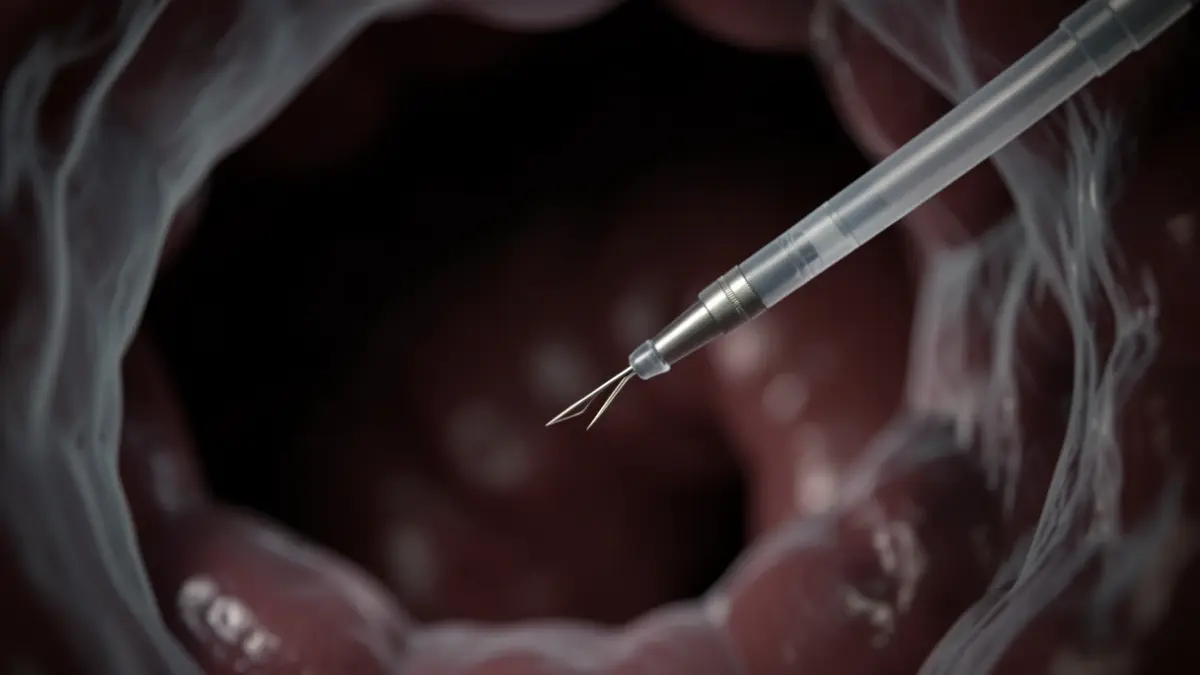
A multicenter clinical trial, coordinated by the Puerta de Hierro Majadahonda University Hospital and its Health Research Institute Puerta de Hierro-Segovia de Arana (IDIPHISA), has for the first time compared the efficacy, hospitalization, and costs of two techniques for removing early-stage rectal tumors: endoscopic submucosal dissection (ESD) and transanal minimally invasive surgery (TAMIS). The research has contributed to accrediting the hospital's Advanced Endoscopic Resection Medico-Surgical Unit as a National Reference Center.
Colorectal cancer is one of the most frequent tumors worldwide. When detected early, it can be treated by removing the lesion with minimally invasive techniques. The DSETAMIS-2018 study, published in the journal Gastroenterology and led by doctors Diego de Frutos Rosa and Alberto Herreros de Tejada Echanojáuregui, compared ESD, which removes the lesion from inside the intestine using an endoscope, with TAMIS, which uses surgical instruments through the anus.
After 12 months of follow-up in 73 patients from three Spanish hospitals, no significant differences were found in lesion recurrence or patient survival between the two techniques. However, TAMIS required a longer hospital stay and incurred almost double the cost compared to ESD. Furthermore, the majority of patients preferred the endoscopic technique, considering it less invasive.
Researchers conclude that, since both techniques are effective, cost and patient preference should be considered when choosing the most suitable treatment. ESD emerges as a promising, safe, and better-accepted alternative that can improve quality of life by avoiding complications from more aggressive surgeries. Further studies are needed to confirm these findings due to limitations such as the small sample size.