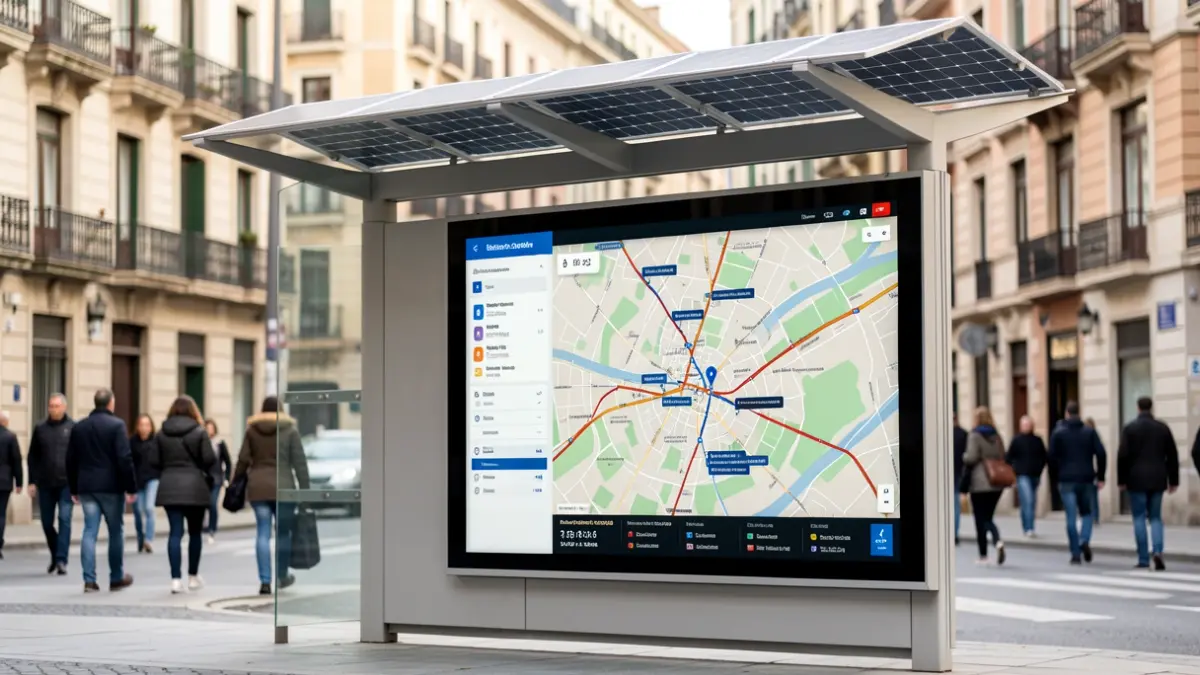
The Regional Transport Consortium (CRTM) of Madrid has launched a pioneering initiative to transform public transport waiting times. The project involves installing touchscreens with interactive maps at interurban bus shelters, allowing users to check real-time data, locate routes, and access the urban network more easily. These stops are evolving into smart digital spaces, emphasizing Wi-Fi connectivity and energy sustainability.
Digitalization is rapidly changing urban mobility. The interactive maps at bus shelters represent a significant leap forward in traveler information and connectivity. Users can plan journeys, find nearby stops, and access constantly updated maps. This urban furniture is becoming a direct and accessible assistant for residents.
In an initial phase, ten interactive screens will be installed at key locations across the region. The northern metropolitan area is leading this deployment, with Alcobendas, San Sebastián de los Reyes, and Colmenar Viejo already having operational touch devices. Other municipalities benefiting from this initial stage include Boadilla del Monte, Getafe, Móstoles, Rivas-Vaciamadrid, Majadahonda, Torrejón de Ardoz, and Alcorcón. This technology aims to provide instant details about public transport, promoting more reliable network use and reducing the stress of daily transfers.
The new bus shelters adhere to strict universal accessibility criteria. The touchscreens incorporate specific features designed for individuals with reduced mobility. Furthermore, throughout 2025, 393 new shelters and 551 signage posts are being installed, equipped with NaviLens technology. This system significantly improves information access for visually impaired individuals through high-visibility codes detectable from several meters away with mobile devices.
As part of the connectivity strategy, 19 new Wi-Fi connection points were launched in 2025, bringing the total number of interurban shelters offering this valuable free service in 13 municipalities to 29. Dynamic information panels, displaying exact waiting times, are now fully operational at 555 stops strategically located across 133 Madrid towns.
The renovation of urban furniture also prioritizes sustainability and comfort. Lighting systems powered by solar panels are being installed to ensure night-time safety without straining the traditional power grid. Additionally, digital advertising displays (mupis) will project useful general content for residents planning their routes. Pilot projects, such as heated benches implemented in Sierra region municipalities, are being tested to mitigate harsh winter weather conditions.
These technological and structural advancements aim to make choosing public transport over private vehicles increasingly attractive, comfortable, and safe. Real-time updated information is intended to facilitate interurban journeys, reducing stress and improving work-life balance. The new interactive screens will serve as genuine neighborhood connection hubs, bringing the practical benefits of 'smart cities' to all user generations, from hyper-connected professionals and youth to seniors, breaking down barriers and fostering a more human and accessible mobility network.