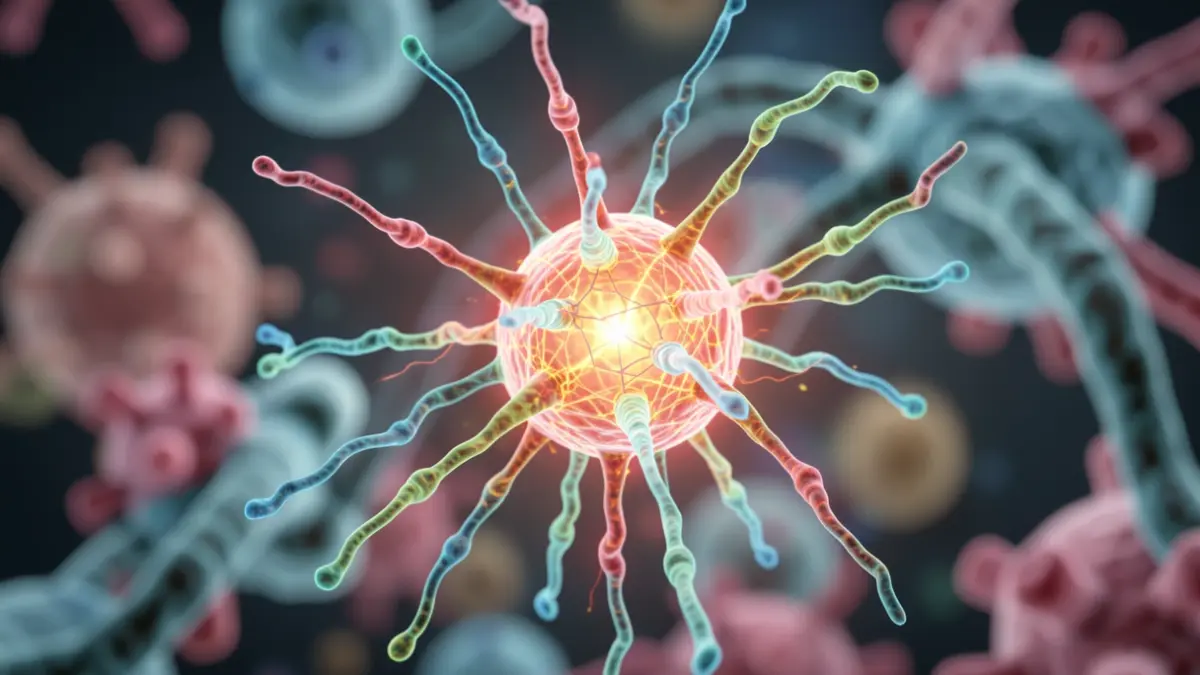
Gamma-delta () T cells require their receptor, a molecular 'antenna', to remain active both during development and maturity to detect tissue damage and respond to tumor growth. This is demonstrated by research published in the journal Nature, utilizing mouse models and human cells.
These cells, particularly abundant in the skin and gut, continuously patrol the body. Their T receptor allows them to receive danger signals and activate to eliminate damaged or abnormal cells. Previously, it was unclear if this 'antenna' remained essential once T cells matured.
The research team, led by Miguel Muñoz from the CBM, used mice with a genetic switch to delete the receptor in fully developed T cells. They observed that upon losing this 'antenna', the lymphocytes changed their behavior, losing qualities needed to reside in tissues and respond to damaged cells.
Experiments with human T cells cultured in vitro confirmed similar changes, indicating that the need to keep this receptor active is not limited to a specific cell type or tissue. The findings suggest these cells require continuous environmental information to maintain their responsiveness.
The study also assessed the impact of receptor loss on the cells' ability to fight cancer. In mice, tumors appeared more frequently or grew larger when T cells lacked their receptor. In human cells, receptor loss made them less effective at slowing tumor growth.
These findings underscore that T cells need not only proper developmental instructions but also an active receptor at the time of action to effectively combat tumors. Understanding how these cells maintain their activity is key for developing future cancer strategies.