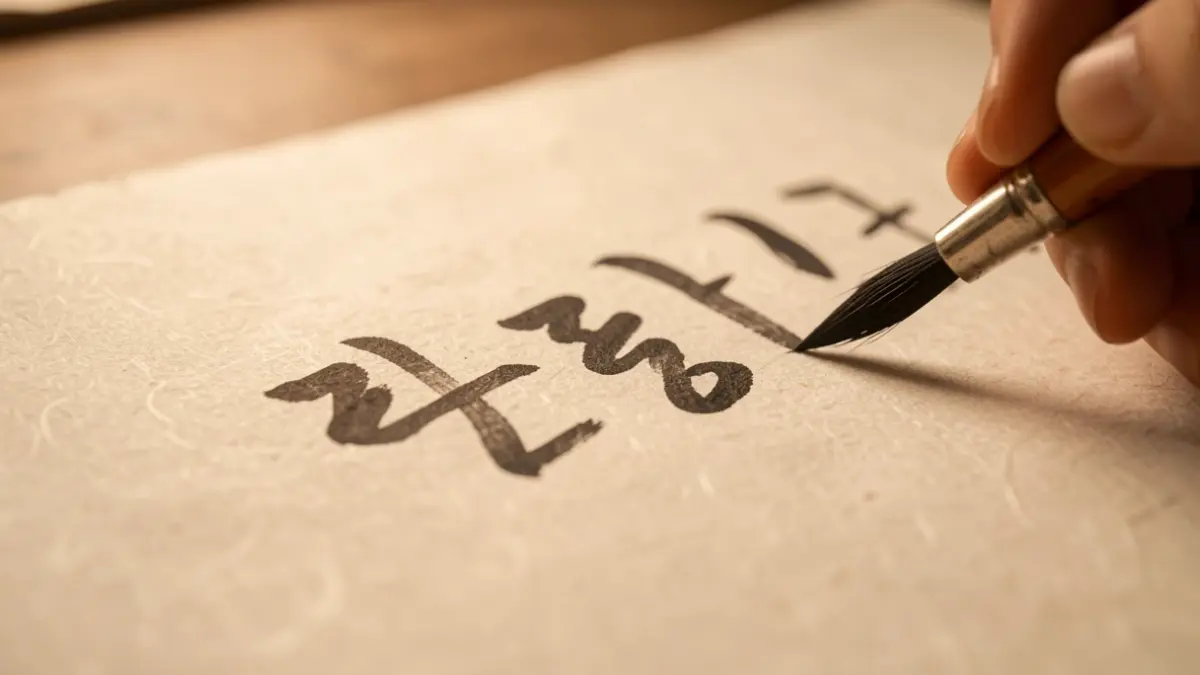
This international exhibition, the first in Spain of hangeul calligraphy promoted by the biennial, features a selection of works exploring the artistic possibilities of the Korean alphabet. Visitors can admire traditional calligraphy pieces, artisanal fans from Jeonju, artistic seals, and a reproduction of the Hunminjeongeum Haeryebon, a key historical document for understanding the origin of the Korean writing system.
The inauguration was attended by institutional representatives from Spain and South Korea, including Song Ha-jin, president of the Organizing Committee of the Jeonbuk World Calligraphy Biennial, and Park In-young, head of Cultural Affairs at the Embassy of the Republic of Korea in Spain. Representing the UCM were Dámaso López García, emeritus professor and former vice-rector; Mohammed Dahiri Boughalem and Salud María Jarilla Bravo, vice-deans of the Faculty of Philology; Consuelo Marco Martínez, director of the Area of East Asian Studies; and Yang Eun-sook, professor of Korean Studies.
Hangeul, created in the 15th century, has evolved from a writing system to an artistic manifestation. The exhibition highlights how the arrangement of letters and the intensity of strokes turn Korean calligraphy into an expression of identity and cultural memory, fostering a dialogue between tradition and contemporary creation.
The Jeonbuk World Calligraphy Biennial promotes this heritage internationally, and the exhibition in Madrid expands its reach. The permanent donation of the works to the UCM will preserve and promote these pieces, strengthening ties between cultural institutions of both countries and enhancing the understanding of East Asian cultures.