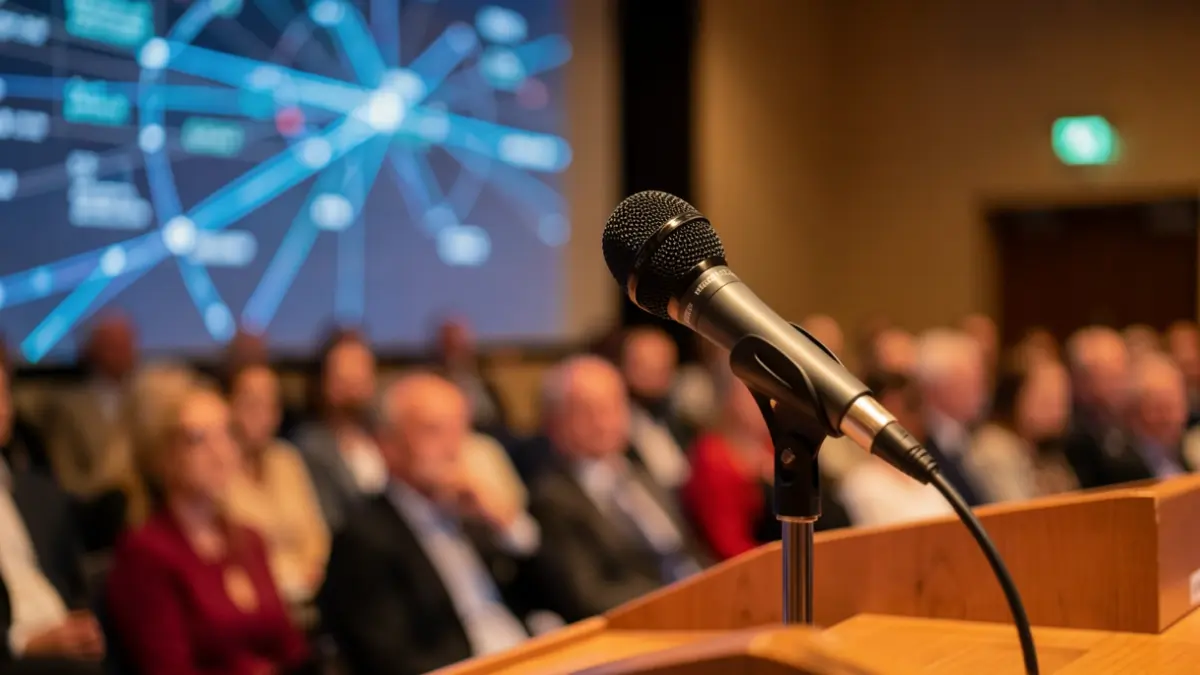
The Minister for Digital Transformation and Public Function, Óscar López, inaugurated the Ibero-American Digital Forum this Tuesday, held at the Royal Mint of Spain in Madrid. The event brings together 22 countries, international organizations, technology companies, and representatives from academia and civil society to discuss digital transformation, within the framework of the XXX Ibero-American Summit.
López stated that the forum's purpose is to "enshrine digital transformation as one of the pillars of the Ibero-American community in the 21st century," addressing issues impacting over 700 million people. He recalled the roadmap towards a "joint Ibero-American Digital Agenda," the Ibero-American Charter of Principles and Rights in Digital Environments approved in 2023, and the commitment to promote AI language models in Spanish and Portuguese reached in 2024, as well as the creation of the EU-Latin America Caribbean Supercomputing Network in 2025.
The minister highlighted that, although Ibero-American languages have over 850 million speakers, "the major global AI engines are predominantly trained in English." He emphasized that "none of our countries can live outside the digital revolution" and posed the choice between being a "data farm, a dependent customer, or a sovereign digital producer." He proposed that "faced with the models of China and the USA, Europe and Latin America can lead a third digital path that is humanistic, multilateral, sustainable, and trustworthy."
Following the forum, the Madrid Declaration and the Ibero-American Artificial Intelligence Alliance will be debated, described as "two political artifacts that will help us converge around sovereign, ethical, and trustworthy AI." Andrés Allamand, Ibero-American Secretary General, warned that "artificial intelligence will not wait for Ibero-America" and that the Alliance aims for the region to "stop being just a user of technologies designed elsewhere and build its own, with our data, our languages, and our priorities."
The forum covers digital rights and child protection, connectivity and cybersecurity, digital administration, and Artificial Intelligence. It features speakers such as Mexican activist Olimpia Coral, an expert in cyber-violence; Elizabeth Bodine-Baron, a senior cybersecurity scientist; Mateo Valero, director of the Barcelona Supercomputing Center; and Sebas Muriel, Chief Digital Officer of Telefónica. Participants also include Ana García Robles (UN), Pedro Duque (Hispasat), José Ignacio Latorre (University of Barcelona), Roberto Benes (UNICEF), and Marina Fernández (Free Mobile Association). The panels are moderated by María González Veracruz, Antonio Hernando, Consuelo Sánchez, and Manuel de la Rocha.