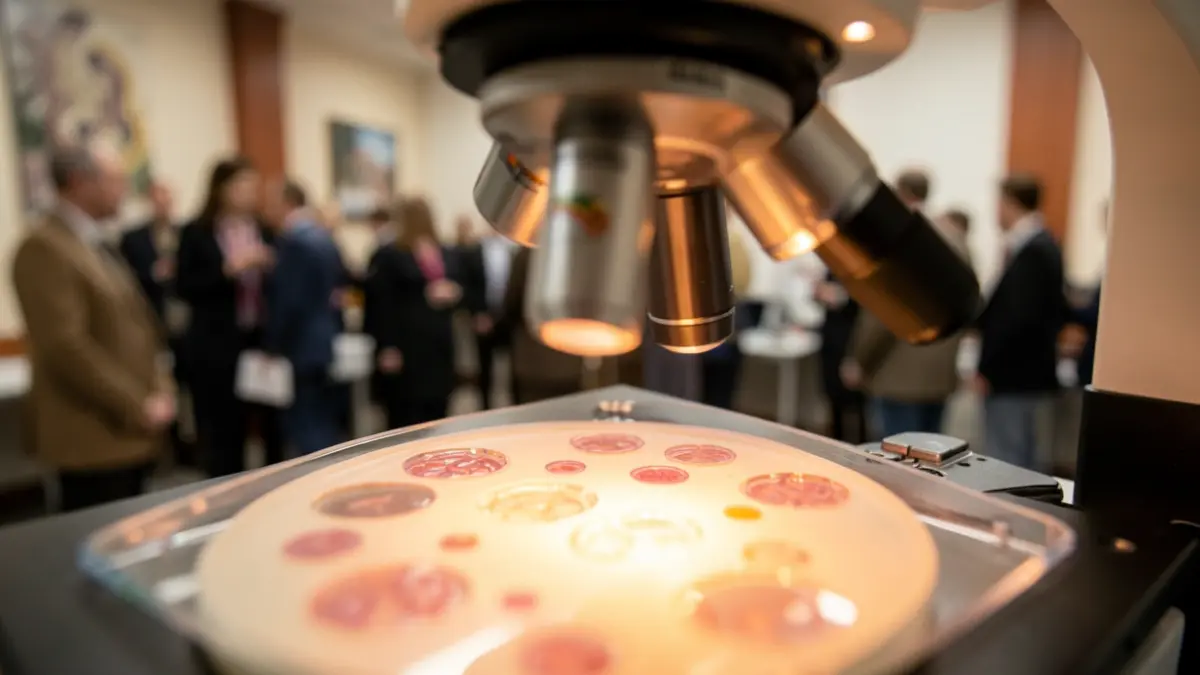
The conference, held at the public center of the Community of Madrid, brought together experts from various scientific fields to share experiences on current issues in reproduction. It was revealed that infertility currently affects "one in six couples trying to conceive," according to Ignacio Cristóbal García, head of the Obstetrics and Gynecology Service at the hospital.
Infertility is defined as the difficulty a couple has in achieving a natural pregnancy after one year of regular sexual relations. It is estimated that couples without fertility problems have a 20% to 30% chance of pregnancy in each ovulatory cycle, with 85% achieving conception within the first year.
The Clínico San Carlos Hospital has an assisted reproduction unit, accredited by the Spanish Fertility Society, which offers treatments such as ovulation induction, homologous artificial insemination, oocyte vitrification, and fertility preservation.
The unit conducts a thorough study of the couple to offer "individualized treatment to achieve pregnancies that allow them to fulfill the family project each one desires," states gynecologist María Isabel Calventus.
“"The positive reception and the diversity of centers represented confirm the interest in creating meeting spaces that promote scientific updating and collaboration among professionals"
The conference addressed topics such as low ovarian reserve, fertility preservation, ovarian stimulation, uterine pathology, pregnancy loss, and implantation failure, featuring high-level scientific presentations and a multidisciplinary approach.
“"this first edition “has been a success both in terms of the number of registrations and the development of the event itself, with high-level scientific presentations where evidence and professional experiences were shared by specialists with extensive professional careers, which are very useful for application in daily clinical practice for gynecologists and biologists dedicated to reproductive medicine."
The meeting, which included a highly participatory panel of specialists, allowed for the exchange of knowledge and experiences on current issues in assisted reproduction, concludes Ignacio Cristóbal.