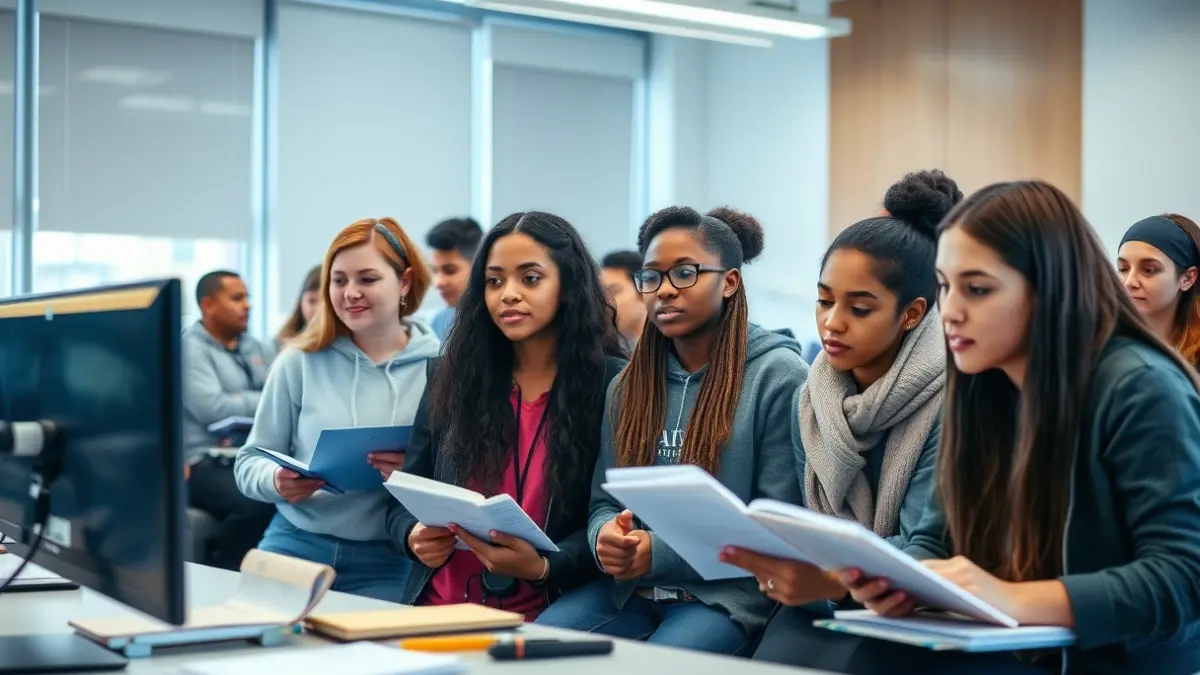
The activity, organized by Vallecas VA for the fifth consecutive year, took place from March 24 to 26, just before the Easter holidays. Participants came from eight districts of the capital, including Puente y Villa de Vallecas, Moratalaz, Carabanchel, Hortaleza, Latina, San Blas-Canillejas, and Fuencarral-El Pardo, as well as from the towns of Aranjuez, Coslada, Fuenlabrada, and Alcorcón. The event, which broke participation records, was held in the assembly hall of the Puente de Vallecas Business Incubator, generously provided by the management of this municipal resource.
The first day, Tuesday, March 24, focused on print journalism. After a theoretical introduction to the importance of journalism, students debated relevant topics and drafted their own articles, applying fundamental principles such as clarity, veracity, and objectivity. The session concluded with the presentation of the texts prepared by the working groups.
On Wednesday, March 25, radio took center stage. Key elements such as technique, voice-over, and writing were explained, emphasizing the adaptation of language to an auditory format. Students reflected on their radio consumption habits and, in groups, created small podcasts or news reports on topics of their own interest, working on aspects such as structure, rhythm, and intonation. They were assisted by Rafael Pardo, from the La Paz de Entrevías Neighborhood Association, in presenting their programs.
The week culminated on Thursday, March 26, with an analysis of the role of social media in contemporary journalism. The session included a reflection on screen usage and information consumption in digital environments. Students engaged in practical activities, discovering that tools like Instagram or TikTok, while familiar, present challenges when used for journalistic purposes, especially in creating posts or memes.
What they liked most was being «allowed to be creative and do the work as we pleased», «the effort put into helping people learn to speak in front of an audience and speak loudly», the atmosphere, and learning about the different types of journalism, among other things.
At the end, participants anonymously evaluated their experience, highlighting the opportunity for creativity, the encouragement of public speaking, and the learning about various forms of journalism.