
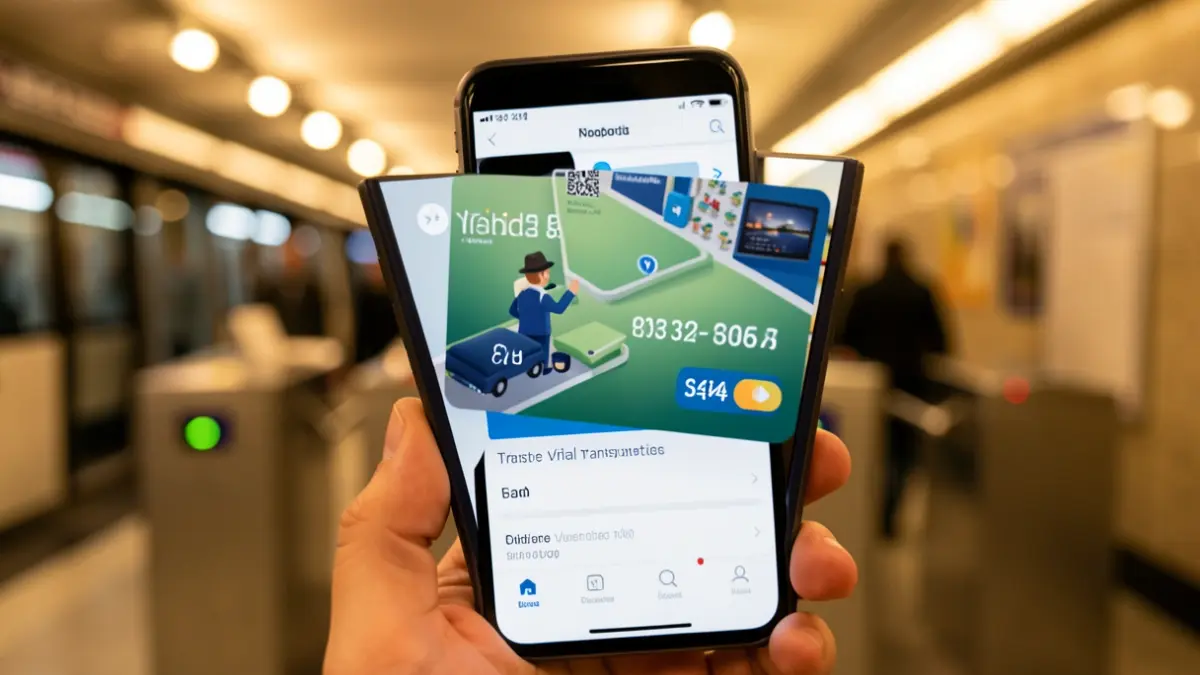
A recent regulation by the Community of Madrid, effective since June 15th, mandates residency for obtaining or renewing personal transport cards. However, an update to the regional transport network allows users with a valid pass to digitize it on their mobile phones, thus avoiding expiration and the need for prior appointments for renewal.
This measure, promoted by the government of Isabel Díaz Ayuso, does not affect existing cards but prevents their renewal once they expire (after ten years, or five for the reduced fare). Digitizing the card on a mobile phone, a process that does not require an appointment and is not explicitly mentioned in the Official Gazette, allows the pass to function indefinitely. The residency requirement applies to the 'issuance' of titles, not to virtualization.
This option is not available for those who have never had a physical card, as a prior physical card is necessary to obtain the virtual version. It is also not accessible for iPhone users, as the mobile functionality is not yet available for these devices and is expected by the end of the year.
The management of the new virtual transport card is done through the 'Mi Tarjeta Virtual' app, available on the Play Store. According to the Minister of Transport, Jorge Rodrigo, this app will integrate the functionalities of existing applications, such as Tarjeta Transporte and Tarjeta Transporte Virtual, allowing for the recharging of physical and virtual passes, digitizing cards, and checking balances.
Users who prefer to keep their physical pass can do so without issues, as adapting to the virtual format is not mandatory. However, downloading 'Mi Tarjeta Virtual' and completing the registration for the digital version will render the physical card irreversibly invalid. Therefore, a choice must be made between one method or the other for daily use.
The digitization process involves bringing the physical card close to the back of the phone (activating the NFC reader) for the app to verify its compatibility. Subsequently, a virtual card is generated in Google Wallet, and the titles from the physical card, which then becomes unusable, are transferred. Currently, this feature is not compatible with annual passes.
The measure has sparked controversy, particularly among migrant populations, students, and workers from outside the Community. To obtain a personal TTP, since June 15th, it is necessary to prove residency in the Community of Madrid or in municipalities within tariff zones E1 and E2, by presenting a certificate of registration. The only exceptions are agreements with Castilla y León, Castilla-La Mancha, and requests from large families for technological reasons.
Sources from the Ministry of Transport argue that the measure aligns with the Regional Transport Consortium Law, directing public funding towards residents. They acknowledge that its implementation was delayed due to technological limitations and the pandemic. Ayuso's government states that 94% of public transport funding comes from the Community and its municipalities, justifying that aid should benefit those who support it through taxes. They estimate the measure will affect only 3.4% of users, impacting around 200,000 individuals.