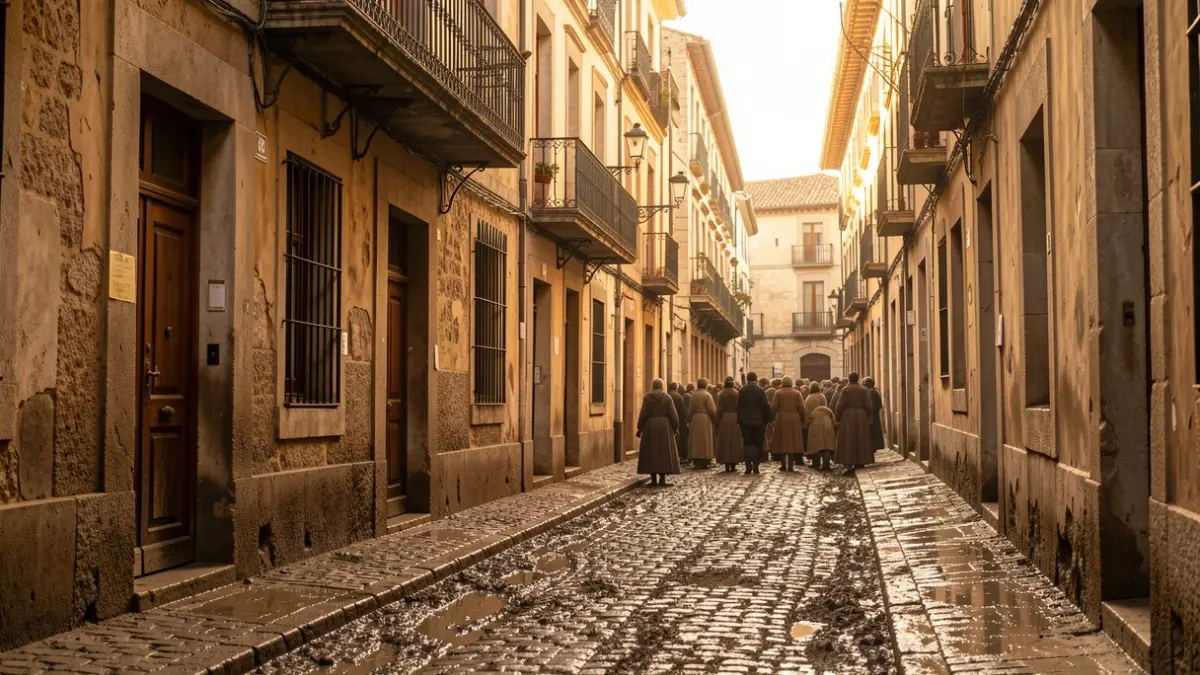
The transformation of Madrid was rapid and complex. What had been a town with narrow, muddy, and disorganized streets had to suddenly adapt to become the political center of the largest empire of the time. The massive influx of nobles, officials, clergy, and merchants overwhelmed a city that still retained its rural essence.
Demographic pressure and the lack of space led to the Regalía de Aposento, a regulation that forced residents to provide housing for members of the royal administration. This imposition sparked an ingenious response from citizens: the so-called casas a la malicia (houses of malice).
These buildings, typical of the Golden Age, concealed their true capacity through complex structures, double heights, and hidden rooms. The goal was to deceive royal inspectors by appearing to have less space than was actually available, thus protecting family privacy from the demands of the Court.
Despite the urban chaos and the difficulties of coexistence, this period of excessive growth forged the city's distinctive character. The mix of social classes, from swordsmen and writers to beggars and aristocrats, gave Madrid a unique vitality that defined its identity as a capital.