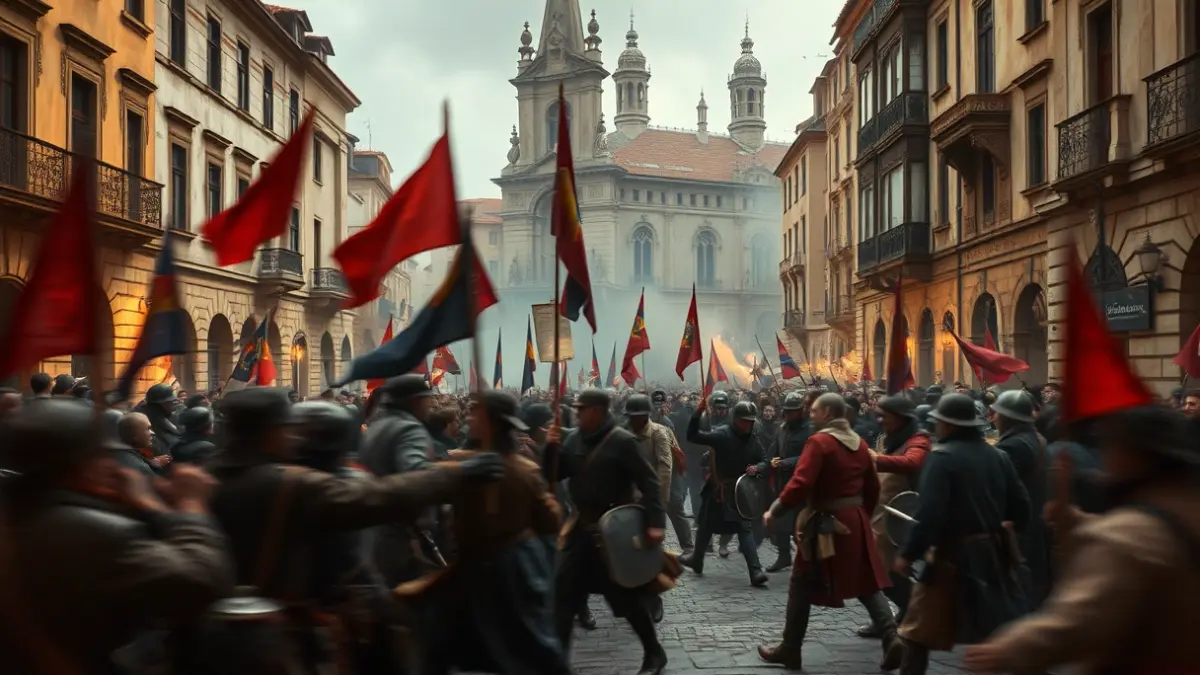
In the early 19th century, Napoleonic troops, led by Murat, entered Spain with the intention of conquering Portugal, an ally of England. However, Napoleon's true ambition was to replace the Spanish Bourbon dynasty with the Bonaparte family, designating his brother Joseph as the new monarch. The alliance with France had already proven costly for Spain, with significant defeats such as Trafalgar, leading to growing popular discontent.
On May 2nd, 1808, tensions in Madrid erupted. News that French troops were attempting to remove Infante Francisco de Paula, the youngest son of King Carlos IV, from the Royal Palace, sparked a spontaneous revolt. Groups of Madrileños gathered to prevent this, confronting a French artillery battalion that opened fire on the crowd. This act ignited the spark of insurrection throughout the city.
Clashes spread, with the people of Madrid attempting to block Alcalá Street and being pushed towards the Puerta del Sol. There, despite being poorly armed, they resisted the charge of the Egyptian Mamluks, part of the French forces. The repression was brutal, with numerous deaths in the revolt and summary executions in the cloister of the Buen Suceso church. These tragic events were immortalized by Francisco de Goya in his famous work The Charge of the Mamluks.
That May 2nd, that May 3rd, marked Madrid forever. All night the bell of Buen Suceso tolled for the dead. Graves were opened next to the church walls, which were later sealed. Black cloths covered the place.
The French retaliation continued through the night of May 2nd and the early morning of May 3rd, with mass executions that Goya also masterfully depicted in his painting The 3rd of May 1808. These events profoundly transformed the artist's vision, who until then had created more festive works and portraits of royalty and prominent figures, such as Jovellanos or the Duchess of Alba.
From 1808 onwards, Goya's work became darker and more critical, reflecting human cruelty, repression, and the brutality of war. From this period emerged series such as The Disasters of War, the Black Paintings, and the Disasters and Follies, showing an embittered and hopeless artist. After fleeing the absolutism of Fernando VII and taking refuge in Bordeaux, Goya regained some peace, which allowed him to create works such as The Bulls of Bordeaux and The Milkmaid of Bordeaux.