Early childhood education is experiencing a period of high demand across various European countries, with Germany particularly in need of qualified professionals for its kindergartens. This situation represents an interesting career path for educators trained in Madrid and other Spanish autonomous communities.
Working in Germany offers more than just employment; it presents an opportunity for personal and professional development. The German educational system places significant importance on early childhood, emphasizing play, child autonomy, and social interaction.
The profile of a Spanish early childhood educator aligns well with the requirements of the German system. These professionals are accustomed to working with young children, supporting their learning processes, respecting individual paces, and contributing to their emotional, social, and cognitive development.
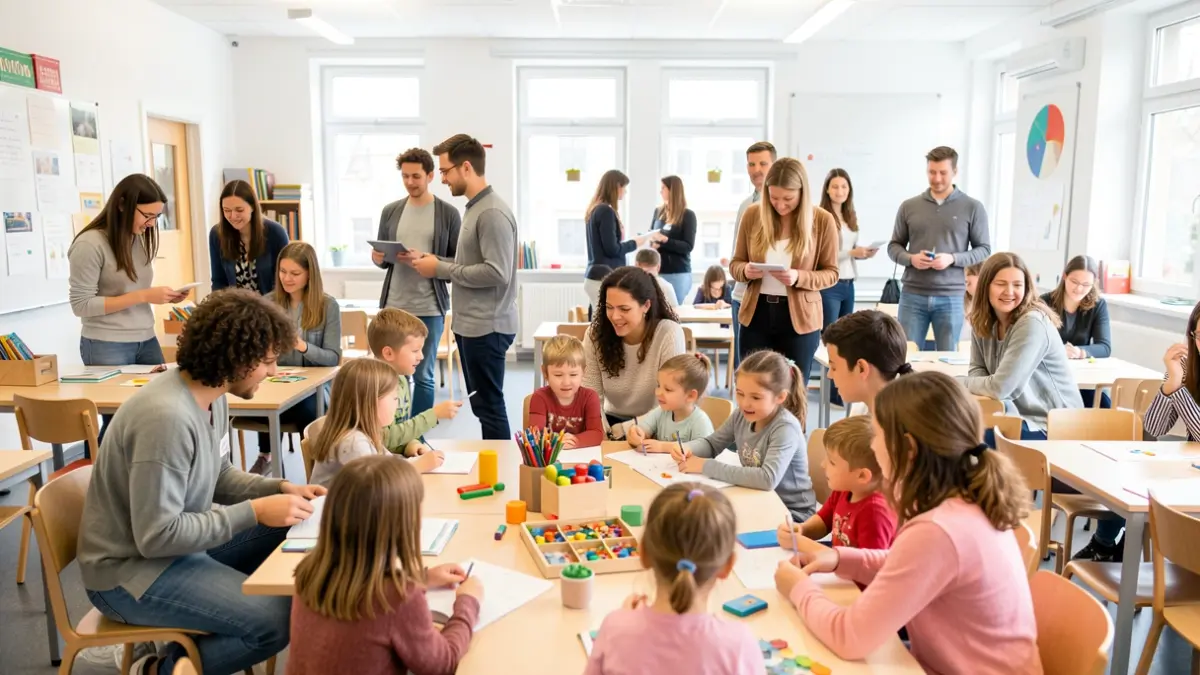
German early childhood centers cater to children from a very young age up to six years old. They are typically characterized by spacious classrooms, play areas, contact with nature, and active methodologies inspired by approaches such as Montessori, Waldorf, or Reggio Emilia.
For those seeking early childhood education job offers, specialized platforms provide information on processes for educators interested in working in Germany, including assistance with selection, language training, administrative procedures, and professional integration.
Proficiency in the German language is crucial. It not only facilitates access to job positions but is also essential for daily integration within the school, communication with families, and participation in team meetings.
It is important to consider other practical aspects such as necessary documentation, potential qualification recognition, and adaptation to the country. Differences between the Spanish and German educational systems, as well as specific procedures, can vary depending on the candidate and the federal state, making thorough research advisable.
German early childhood education is founded on principles such as respect for individual pace, autonomy, free play, contact with natural materials, outdoor activities, and project-based work. This philosophy can be particularly appealing to many Spanish educators, as it allows for pedagogical work closely aligned with children's well-being and progressive independence.
Madrid has a considerable number of professionals trained in early childhood education seeking stability and new growth opportunities. Germany emerges as a solid option for those wishing to pursue their vocation in a different educational environment, provided the process is approached with preparation and realistic expectations.
Working outside of Spain involves facing new professional and personal challenges. However, for many Spanish early childhood educators, the experience of working in Germany has become an opportunity for continued growth, exposure to different pedagogical models, and the development of their vocation within a system that centralizes early childhood education.