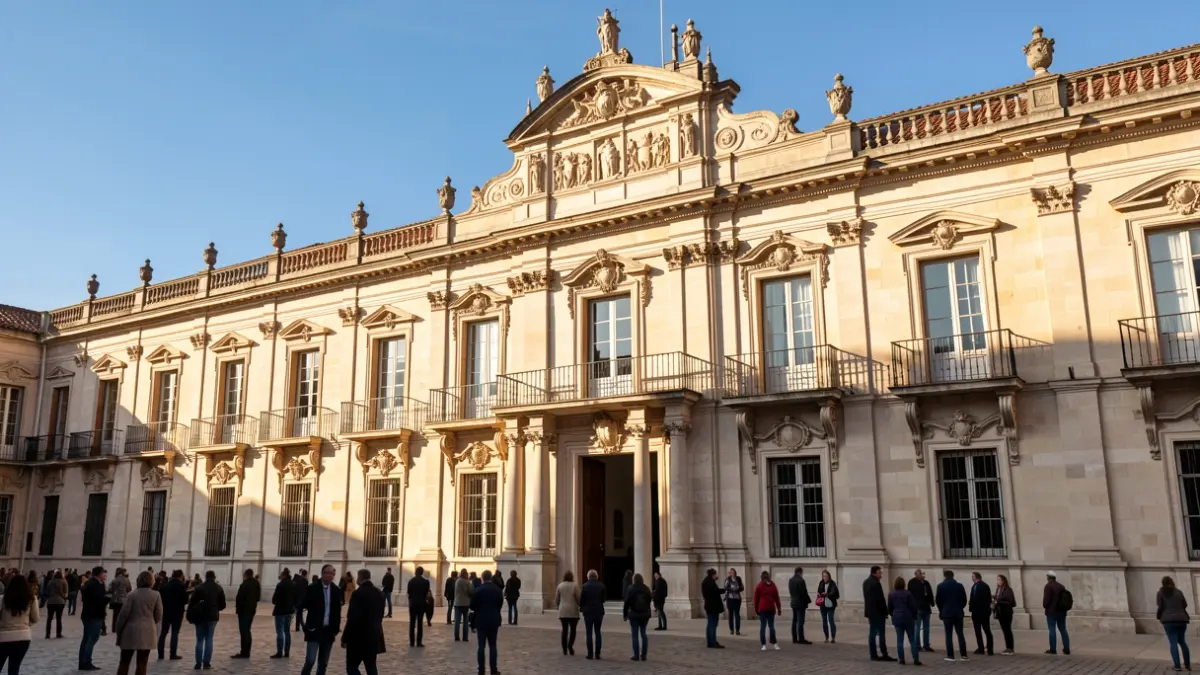
The VII International Expansion Forum, held at the historic Parador de Alcalá de Henares, brought together prominent figures from Spanish and European politics, institutions, and business. The event, themed “Challenges for a New Global Order: Economy, Geopolitics, and Technology,” addressed international uncertainty, technological revolution, and strategic shifts in the West.
Organized by the newspaper Expansión in collaboration with The European House – Ambrosetti, the forum transformed the Complutense Parador into a think tank. For two days, discussions covered artificial intelligence, energy, geopolitics, defense, tourism, and the global economic future, fostering intense political and economic activity.
Mayor Judith Piquet expressed the city's pride in hosting such a significant event, calling Alcalá a “millennial city, crossroads, and World Heritage site.” She congratulated Expansión on its 40th anniversary, wishing the newspaper “another forty years of success.”
The official opening featured Ana I. Pereda, director of Expansión, and Marco Pompignoli, executive president of Unidad Editorial. The Tuna of the University of Alcalá provided a distinctive cultural touch to the proceedings.
Speakers such as Óscar García Maceiras, CEO of Inditex, highlighted growth potential in international markets. Rebeca Grynspan, candidate for UN Secretary-General, warned about the consequences of geopolitical fragmentation.
Experts identified Spain as a relatively stable “refuge destination” for international investments, citing its institutional stability and technological sectors. China's Ambassador to Spain, Yao Jing, emphasized Beijing's commitment to constructive relations with the United States.
José Manuel Albesa, CEO of Puig, confirmed ongoing discussions with Estée Lauder. The event underscored the interconnectedness of economy and geopolitics, with energy, defense, and technology as key factors in business decisions.
The debate on artificial intelligence brought together figures like Pablo Isla, chairman of Nestlé, and Carlos Torres Vila, chairman of BBVA, who stressed the need for strategic adaptation to this transformative technology.
Emilio Gayo, CEO of Telefónica, and Gonzalo Gortázar, CEO of CaixaBank, shared optimistic views on AI's impact on new services and productivity. Ignacio Gutiérrez-Orrantia, representing Citibank, detailed the entity's AI-related global processes.
The tourism session analyzed the sector's role as an economic driver, with Alcalá de Henares presented as an example of a city combining heritage, culture, and strategic connectivity.
Former Prime Minister José María Aznar called the upcoming general elections “constituent” and defended judicial independence. The President of the Community of Madrid, Isabel Díaz Ayuso, advocated for her liberal economic model against interventionism.
Ayuso highlighted the Community of Madrid's leading position in per capita GDP and technological sectors. Third Vice President of the Government, Sara Aagesen, and the President of the People's Party, Alberto Núñez Feijóo, also attended.
Alberto Núñez Feijóo referenced the Zapatero case, suggesting complicity from the Council of Ministers. Mayor Piquet reiterated Alcalá's pride in being a “sanctuary of the memory of the future.”
Over two days, Alcalá de Henares demonstrated its capacity to host major international gatherings, blending its historical and university character with discussions on the global future.