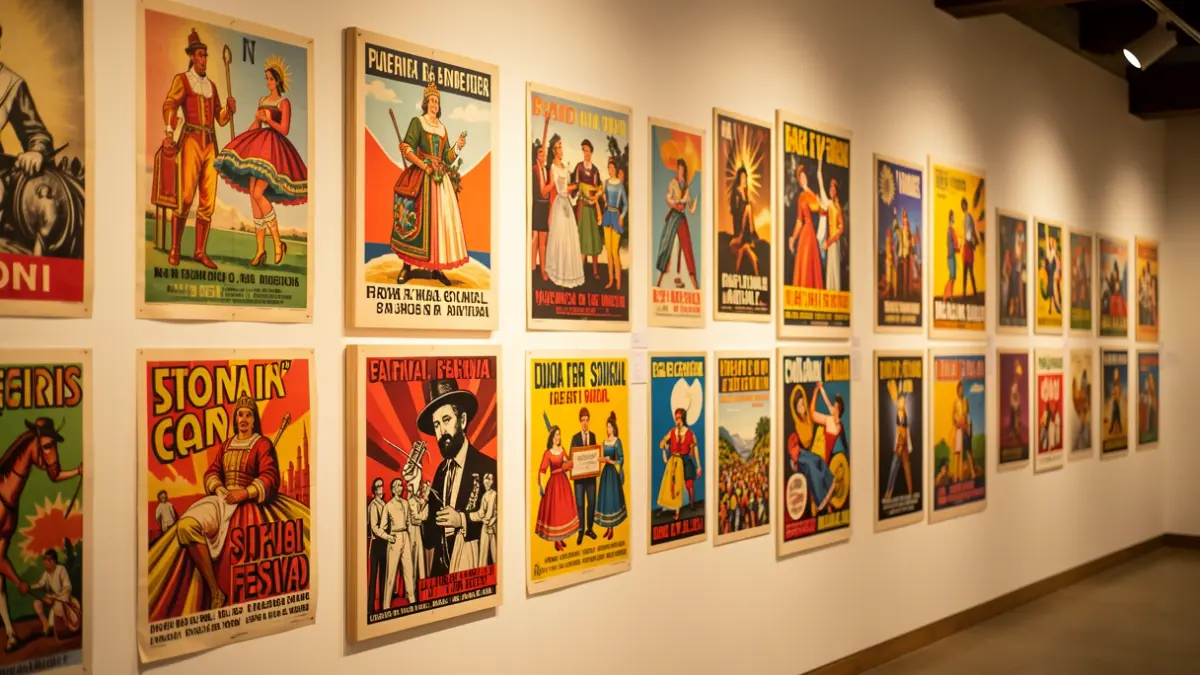
The exhibition 'San Isidro Posters. The Image of the Festivals', located on the second floor of the Museum of Origins of Madrid and open until September 20, offers a visual journey through the city's history via the designs that have announced its patron saint festivals. The exhibition allows visitors to observe how the aesthetic of the posters has transformed from the religious and folkloric motifs of the post-war period to the pop art of the Transition.
Since 1947, the Madrid City Council has held competitions to select the festival poster, a model that was maintained for decades. The initial jury comprised the mayor and relevant council members, joined by a representative from the Royal Academy of Fine Arts of San Fernando from 1951 onwards. Mayors such as the Count of Santa Marta de Babio and the Count of Mayalde marked the early eras.
The San Isidro festival, with its religious and popular character, was more easily assimilated by Francoism than other celebrations. The posters reflected this trend with folkloric, costumbrist, and religious motifs, avoiding avant-garde styles and opting for techniques like tempera and lithography, which have allowed many designs to retain a surprising modernity.
The exhibition, extending to 1980 and including more recent examples, contextualizes the thematic, stylistic, and technical changes in poster art. It shows the incorporation of festive and everyday objects from the mid-fifties, and how less realistic and more geometric forms began to gain ground. The creative explosion of the late Franco regime and the Transition is reflected in the aesthetics, with influences from the rock music of the era.
Although the exhibition focuses on institutional advertising, the displayed material invites reflection on Spain's aesthetic and social evolution. Artists like Ricardo Summers Ysern Serny, known for his focus on the human figure and his participation in Falangist publications, are examples of the historical complexity reflected in the posters.