The second installment of our series on Puente de Vallecas focuses on the transformation of its commercial and leisure offerings, where tradition merges with development. This district, one of Madrid's most populated, has experienced increasing real estate pressure, attracting new residents and entrepreneurs thanks to its proximity to the city center, good transport links, and a growing leisure offer.
Local commerce in Puente de Vallecas transcends its economic function, acting as a meeting point and social hub for residents. Urban interventions, such as the renovation of the area around the Assembly of Madrid, aim to improve accessibility and boost access to shops, including a historic shopping center undergoing modernization.
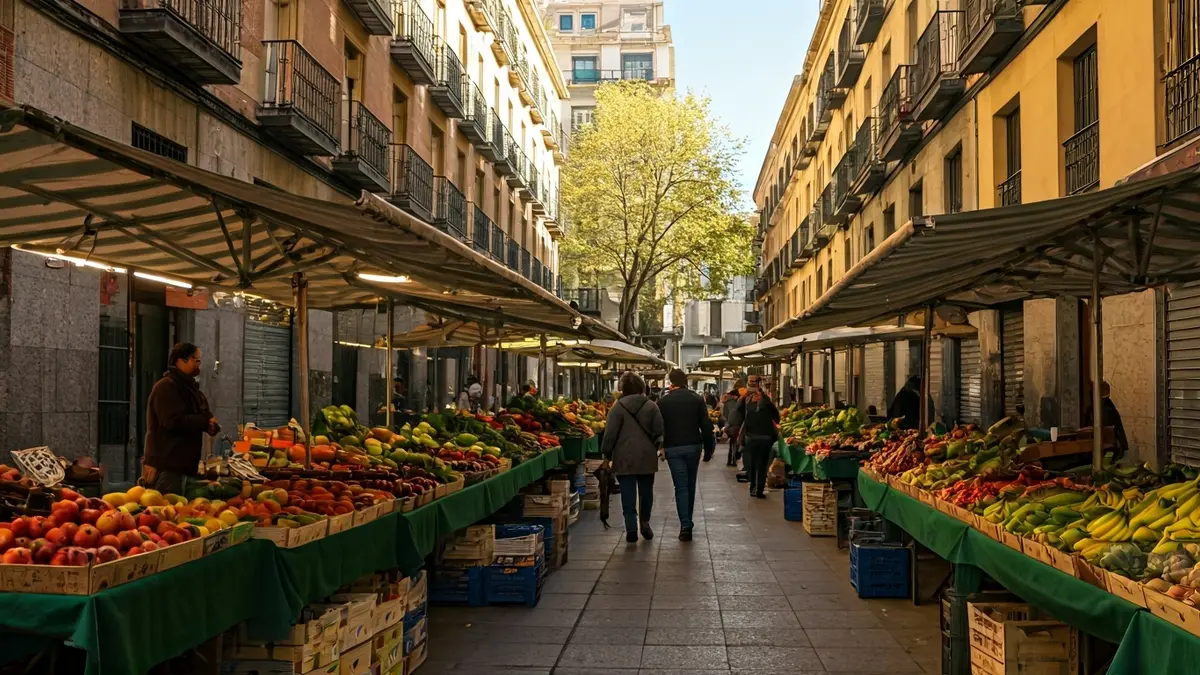
A prominent example of this revitalization is the reform of the surroundings of the Numancia Market, which has included the pedestrianization of Josefa Díaz and Castalia de Vallecas streets. These improvements have created a resting area with trees and benches, in addition to renovating the park next to Pico de la Maliciosa street, boosting the market's local commerce, which features 47 indoor stalls and 10 outdoor premises.
I like the neighborhood market; it's more endearing. It's close to my house, and I prefer this commerce to that of large supermarkets.
Beyond commerce, the district enriches its cultural offerings with spaces like the Municipal Firefighters Museum of Madrid, located on Boada street. This museum offers a unique perspective on the city's history through the evolution of fire and the work of firefighters, spanning nearly 2,000 square meters and featuring 15 restored historic vehicles.
According to Carlos Arribas, deputy inspector of studies and regulations, the museum not only exhibits vehicles and rudimentary tools but also narrates major fires in Madrid and holds significant educational value, teaching citizens how to act in case of fire through recreations and simulations. Furthermore, it preserves a documentary archive of historical interventions.
“"Those who visit the museum not only see historical vehicles but also understand how fires and the way to combat them have changed."
The area around the Assembly of Madrid, with the Assembly Square, has become a meeting and commercial point, while the Madrid Sur shopping center, with over 30 years of history, is undergoing a renovation phase. The leisure offer is complemented by natural spaces such as Payaso Fofó Park and the park dedicated to Juan José García Espartero, which reinforce the community spirit and neighborhood life of Puente de Vallecas.