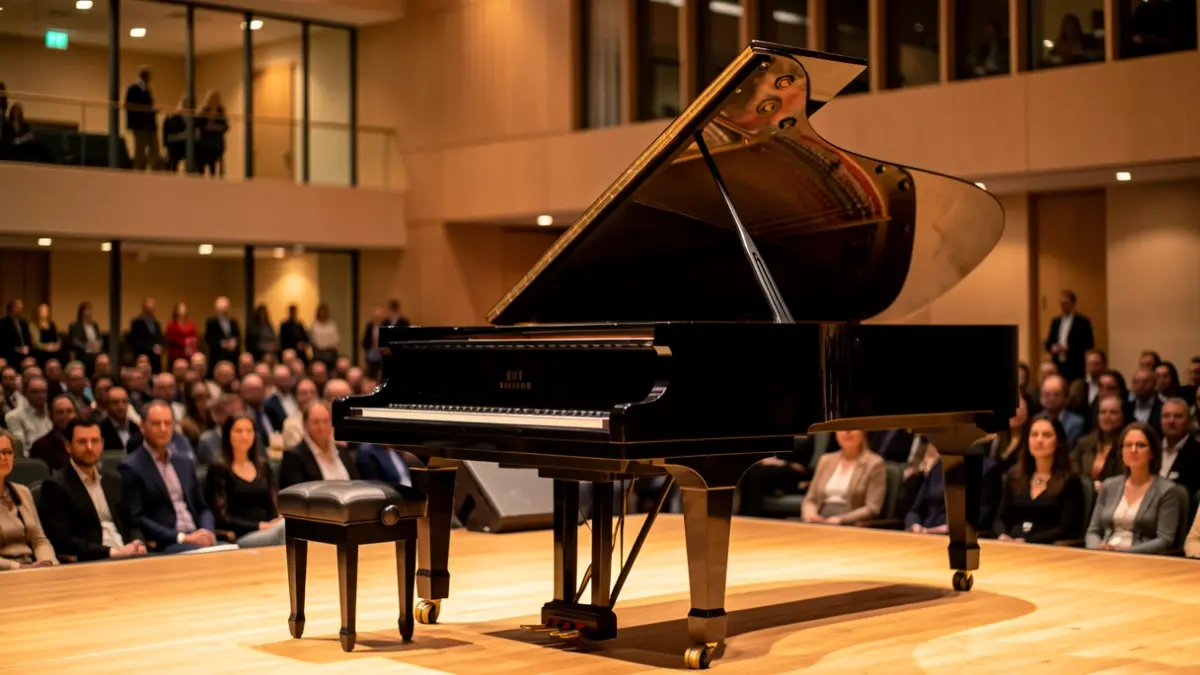
The event, presented by Culture, Tourism, and Sports delegate Marta Rivera de la Cruz, aims for social cohesion by bringing piano music to diverse audiences and neighborhoods.
Organized by TopArtEspaña with the collaboration of the Madrid City Council and Plenitude, the festival will feature established and emerging performers, covering styles such as classical music, jazz, flamenco, tango, fado-jazz, electronic, and contemporary music.
Performance venues will include municipal spaces like CentroCentro, Contemporánea Condeduque, Matadero Madrid, and Espacio Cultural Serrería Belga, along with new locations such as Cupra City Garage and the Hotel Emperador.
Among the new features is the ‘Notas Mayores’ (Older Notes) cycle, with 12 concerts in municipal centers for seniors in districts like Moratalaz, Retiro, and Arganzuela. Two concerts will also be held at the La Paz University Hospital in collaboration with the Músicos por la Salud Foundation.
The ‘Piano Dúos’ cycle, exploring piano combinations with other instruments, is also being introduced, and the Plenitude Award for emerging pianists under 30 will be maintained.
The program includes notable international and national artists. In jazz, performers like Rita Marcotulli, Álvaro Torres, Lluís Coloma, Manuel Borráz, Yulei Díaz, and Switzerland's Nik Bärtsch will be featured. Classical music will be represented by Roberto Prosseda, Eduardo Frías, Laura Sierra, and Alessandra Ammara, who will perform Chopin's 12 Études op. 25. The young 14-year-old pianist Pablo García Pont is also among the talents.
The ‘Piano Dúos’ cycle, scheduled for June 28 at Condeduque, will present ensembles exploring fusions between piano and cello, double bass, or guitar.
Piano City Madrid is expanding its international reach with participation from institutions such as the Istituto Italiano di Cultura di Madrid, the Goethe-Institut, the Austrian Cultural Forum, and several European and Latin American embassies.
The festival will conclude on June 28 at Contemporánea Condeduque with performances of fado-jazz and projects combining piano and Portuguese guitar, marking the end of an edition that reinforces its open, urban, and cross-cutting character.