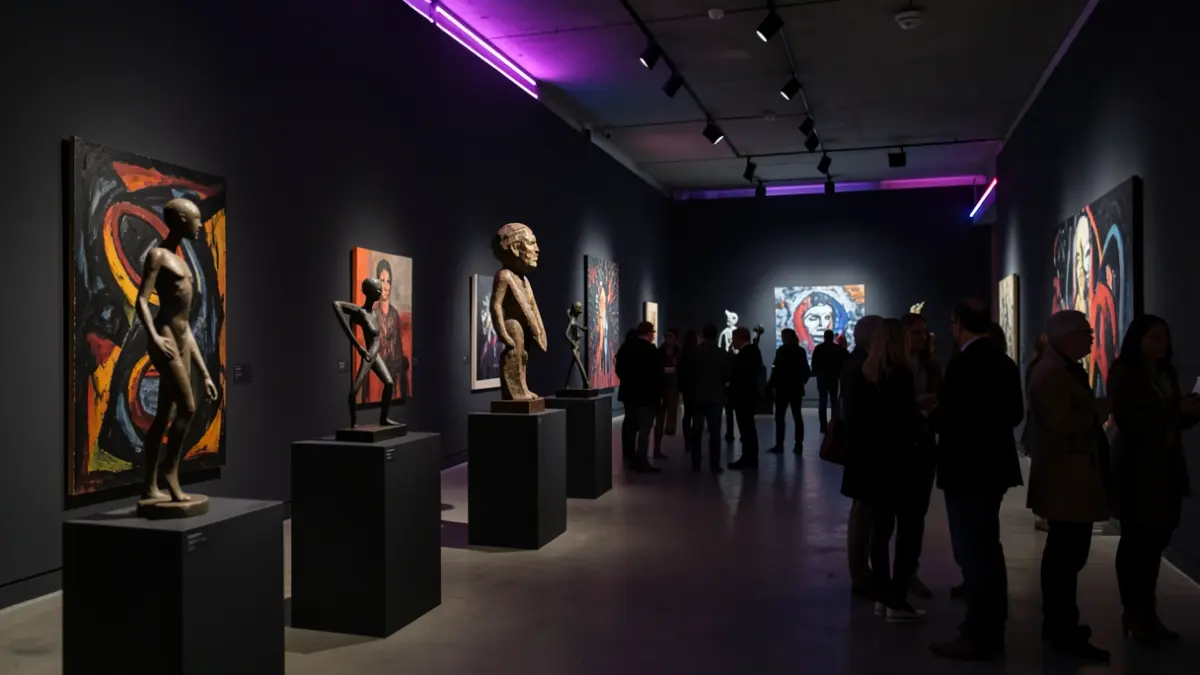
Granada-based artist and performer Omar Jerez is once again at the center of cultural debate as the curator of the '88' project, an exhibition that turns art into an ideological battleground. The show, open at El Aleatorio de Madrid until September 1st, reflects on totalitarianism, identity, and contemporary social polarization.
The exhibition features the work of emerging artist J. Tormento and is structured as a global critique of all forms of authoritarian thought. The title, '88', alludes to a neo-Nazi code, but its appropriation aims to disarm its ideological charge and transform it into a tool for questioning. The exhibition directly addresses the present, denouncing the persistence of extremist discourses in contemporary formats.
The exhibition originated from an image by J. Tormento that superimposed gay iconography onto a Francoist symbol. This intervention functions as an act of subversion, where the mix of oppression and dissent neutralizes the symbolic power of authoritarian discourses. This logic of re-signification is the central axis of the curatorial project.
The project expands into a series of eight pieces addressing different expressions of totalitarianism through irony and visual confrontation. It does not seek the viewer's comfort but aims to provoke a critical reaction against established ideological narratives, forcing them to position themselves and question their own relationship with the symbols they consume.
Omar Jerez reflects on the current social context, marked by extreme polarization where ideological confrontation has become a consumer product. This dynamic diverts attention from real issues such as economic precarity or housing access, generating a permanent noise that hinders critical thinking.
The artist notes that many contemporary political positions respond more to the need to belong to a group than to deep reasoning. The pressure to integrate into closed identities is a fundamental axis of his creative thought. The real challenge, according to Jerez, is to break free from these prefabricated certainties and recover the individual capacity for analysis.
This questioning will also extend to his editorial project: Omar Jerez will publish 18 books in approximately two months, an unusual initiative aimed at generating a cumulative impact and exploring dimensions of contemporary society, fostering reflective reading.
In parallel, he is preparing an international performance in Mexico, where he will spend 90 hours over nine days in front of hyperrealistic sculptures of controversial figures like Jeffrey Epstein and Marina Abramović. He seeks to generate debate on power, media influence, and the narratives that construct public reputation.
With '88', his editorial project, and this new performance, Omar Jerez consolidates his line of work focused on art as a tool for intellectual confrontation. His proposal aims not to offer closed answers, but to unsettle the viewer and push them to question the certainties dominating contemporary social discourse.
The exhibition stands as a space where memory, critique, and provocation dialogue to dismantle past symbols and examine present tensions, reaffirming art's role as a catalyst for thought in an era marked by ideological simplification.