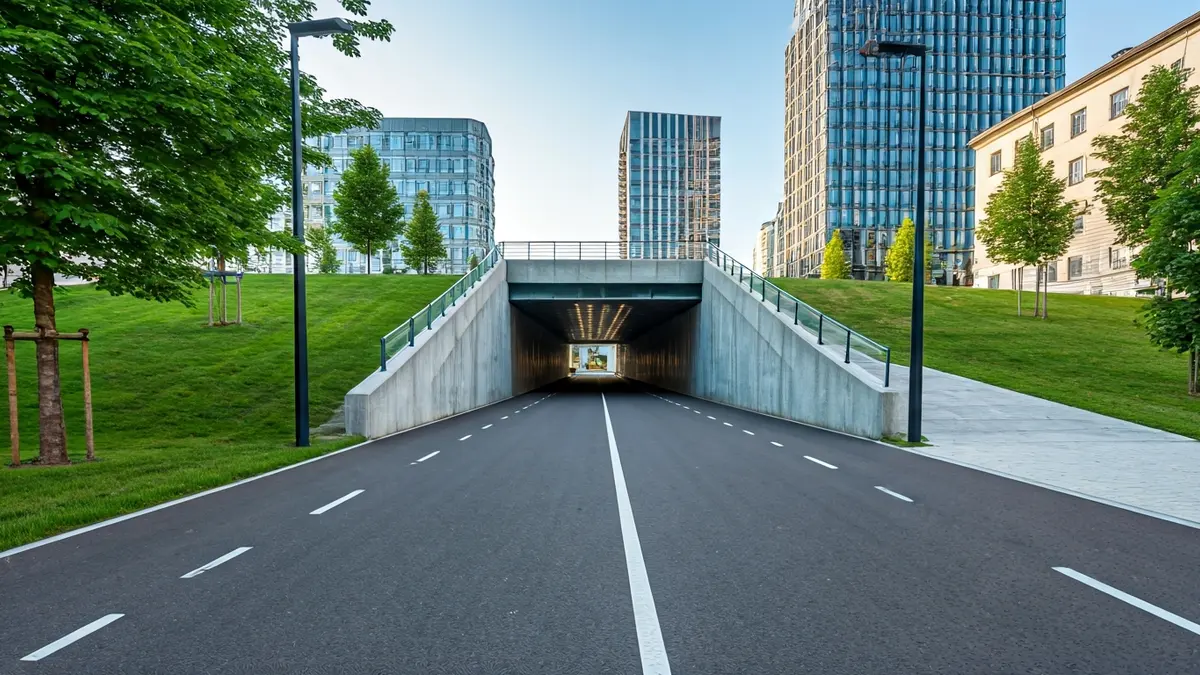
In an interview for the program Cambia Madrid on Canal 33 TV, Fanjul explained that there is currently a “complicated passage” between these areas and the rest of the capital. The City Council's Public Works Department has already authorized the study of this project, which seeks to create an underground pedestrian path to improve connectivity for these two neighborhoods.
The councilor also highlighted the diversity of the Moncloa-Aravaca district, which comprises seven “very distinct” neighborhoods, leading to varied challenges. He emphasized that the needs of residents in areas like Ciudad Universitaria differ significantly from those in El Plantío or Valdemarín.
“"They are studying to create an underground pedestrian path to connect these two neighborhoods with the rest of the city."
Fanjul expressed gratitude for the district's budget increase, which now exceeds 53 million euros, representing a rise of over 13 percent. This increase will enable key infrastructure projects, such as the aforementioned underpass, and other daily improvements for residents. Among the projects mentioned are the repair and upgrade of refrigeration systems at the Goyeneche and Fernando Martín sports centers, as well as the renovation of spaces and the kitchen at the Dehesa de la Villa Senior Center. Additionally, a Spanish flag will be placed in Pepe Domingo Castaño Square, a long-standing request from Valdemarín residents.
Regarding mobility, the councilor highlighted the expansion of Bicimad in Moncloa-Aravaca, which will add eight new stations to the existing 38. This initiative, described as a “decisive commitment by Mayor Almeida,” aims to facilitate bicycle travel within the district. He also praised Madrid's public transport, calling it “unbeatable” and a source of pride for all Madrileños.
Concerning Casa de Campo, Fanjul described it as “the most important green lung Madrid has” and advocated for a balance between its conservation and public use. He mentioned municipal investment in adapting paths for activities like cycling and popular races. Regarding the cable car, he stated that its reopening is anticipated by the end of 2027, though without a precise date, and that the process has been communicated since the start of the works.
Finally, Fanjul noted the transformation of Colonia Manzanares, whose first phase has been completed “phenomenally,” and expressed his hope that the second phase will finish “on schedule.” He also mentioned the future conversion of Casa de Vargas into a museum and interventions in the La Bombilla area, intended for the enjoyment of both district residents and all Madrileños. He championed Aravaca as a “very important gastronomic hub in Madrid,” thanks to its excellent restaurants and shops.