Decades after its closure, La Mandrágora, that small establishment that defined the eighties, became a benchmark for singer-songwriter music and a crucial meeting point during the Movida madrileña. In this space, a repertoire was forged that today is part of Spanish musical history.
The venue gave its name to the emblematic live album recorded in 1981 by Joaquín Sabina, Javier Krahe, and Alberto Pérez. The initiative for this recognition was championed by a socialist councilor, who presented it to the Cibeles plenary, receiving unanimous support from all political groups.
“"As my dear friend and teacher Javier Krahe used to say, La Mandrágora is a ground floor, a basement where one sings."
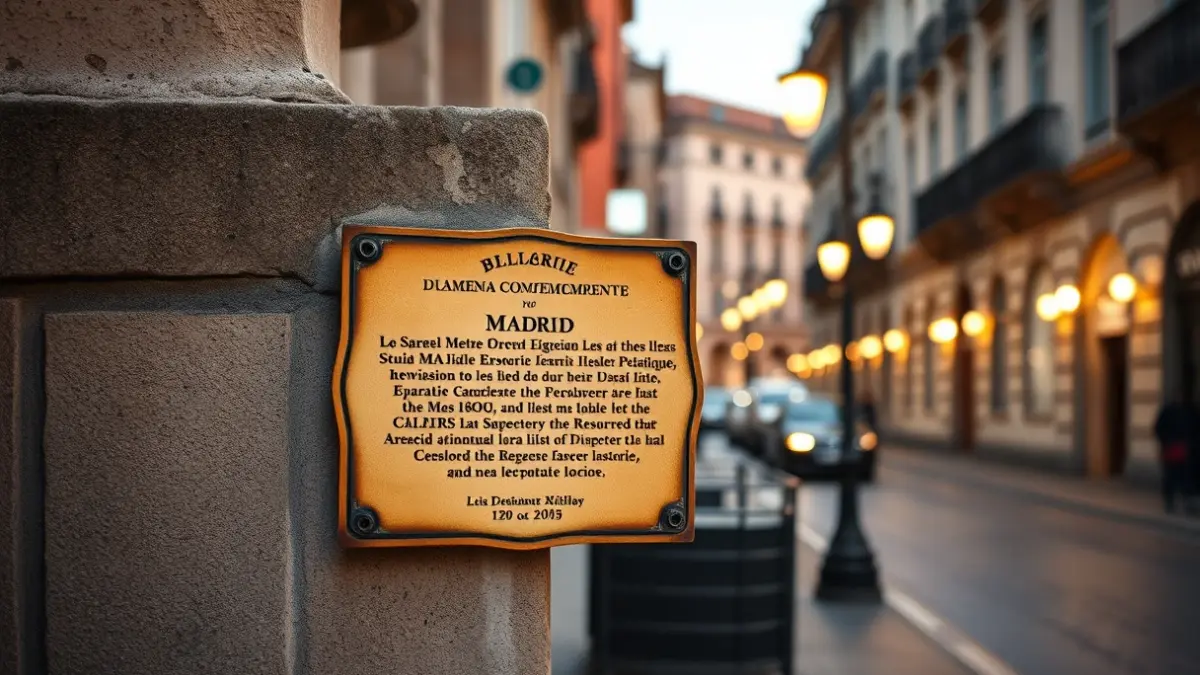
The artist celebrated the marking of “that sacred facade” in honor of a space that, as he highlighted, contributed to a “small cultural revolution” and which he remembers as one of the “most important” stages of his life. During the plenary intervention, the socialist councilor described La Mandrágora as “home, refuge, and meeting point” in a time of transformation for Madrid.
The delegate for Culture, Tourism and Sport, Marta Rivera de la Cruz, supported the proposal, pointing out the importance of “fulfilling a kind of memory pact with what preceded us.” She celebrated the consensus reached, emphasizing that “it is a satisfaction for everyone to know that a proposal will pass unanimously.”
Although the initiative was supported by all parties, a Vox councilor suggested adding phrases from Sabina to the commemorative plaque. For its part, Más Madrid supported the initiative but warned about the current situation of the cultural fabric, demanding measures to protect cultural spaces against gentrification.