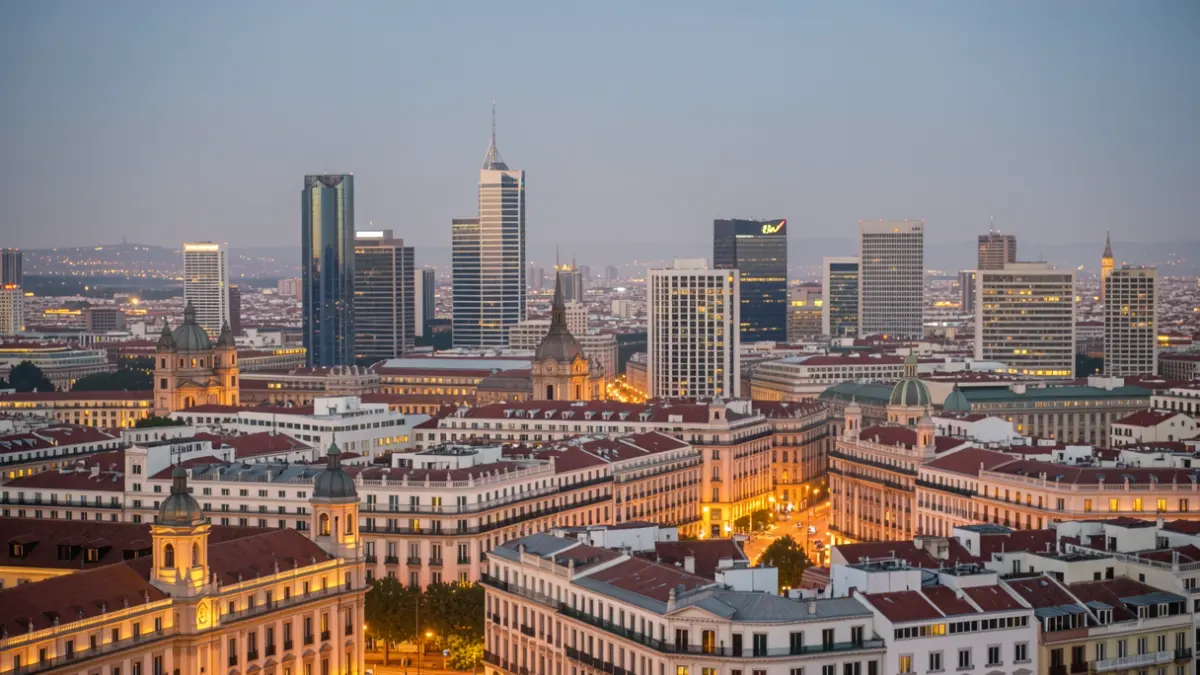
The Community of Madrid will experience a demographic growth of 14.4% by 2041, resulting in the incorporation of 1,035,571 people. With this evolution, the region will reach a total population of 8,204,833 inhabitants, positioning itself as the third autonomous community with the highest relative increase in the country, only behind the Valencian Community (16.4%) and the Balearic Islands (16.2%).
Projections from the National Statistics Institute (INE) indicate that Madrid's demographic growth will follow the national trend, where international migration is emerging as the primary driver. It is expected that Spain's population increase over the coming decades will be solely due to a positive net migration balance, as the number of deaths will continue to exceed births.
Nationally, Spain will gain 4.25 million inhabitants by 2041, reaching 53.8 million residents. Subsequently, the population will stabilize around 54.6 million in 2051 before beginning a gradual decline to approximately 53 million by 2076. The INE estimates that the net migration balance will remain positive throughout the period, albeit with decreasing intensity, contributing millions of additional inhabitants.
Spain's natural population growth will continue to be negative. Although a slight increase in births is anticipated from 2026 onwards, they will remain lower than the number of deaths. Projections also point to a progressive aging of the population, with a significant rise in the percentage of people over 65 and a thirteen-fold increase in the centenarian population. Life expectancy will continue to rise, increasing the dependency ratio.
In this context, Madrid will solidify its position as one of the country's main demographic attraction poles, driven by the arrival of foreign population and its capacity to concentrate economic activity and job opportunities.