This measure, presented at the Governing Board and detailed by Deputy Mayor Inma Sanz, aims to address the needs of a “broad segment of the population with average salaries” who, despite having stable employment, cannot afford current rental prices. The new program seeks to promote “emancipation, social mobility, and residential stability for those who wish to remain in the city.”
Until now, public rental housing managed by the EMVS was reserved for households with incomes up to 3.5 times the Public Indicator of Multiple Effects Income (Iprem). With this change, the City Council extends the access threshold to 5.5 times the Iprem (and even up to 7.5 times in future developments), depending on the protection level of each plot. This means, for example, that a couple with two children could have a maximum gross annual income of approximately 68,000 euros to access these public homes.
“"What we are going to do now is complement with this program in certain plots, which will be exempted to be able to access this new program."
This expansion will not replace the current lotteries for incomes up to 3.5 times the Iprem, the next of which will take place in May. The program is aimed at individuals between 18 and 50 years old, registered in Madrid for at least five consecutive years (or eight within the last ten), and without owned property. Family incomes must be between 3.5 and 5.5 times the Iprem.
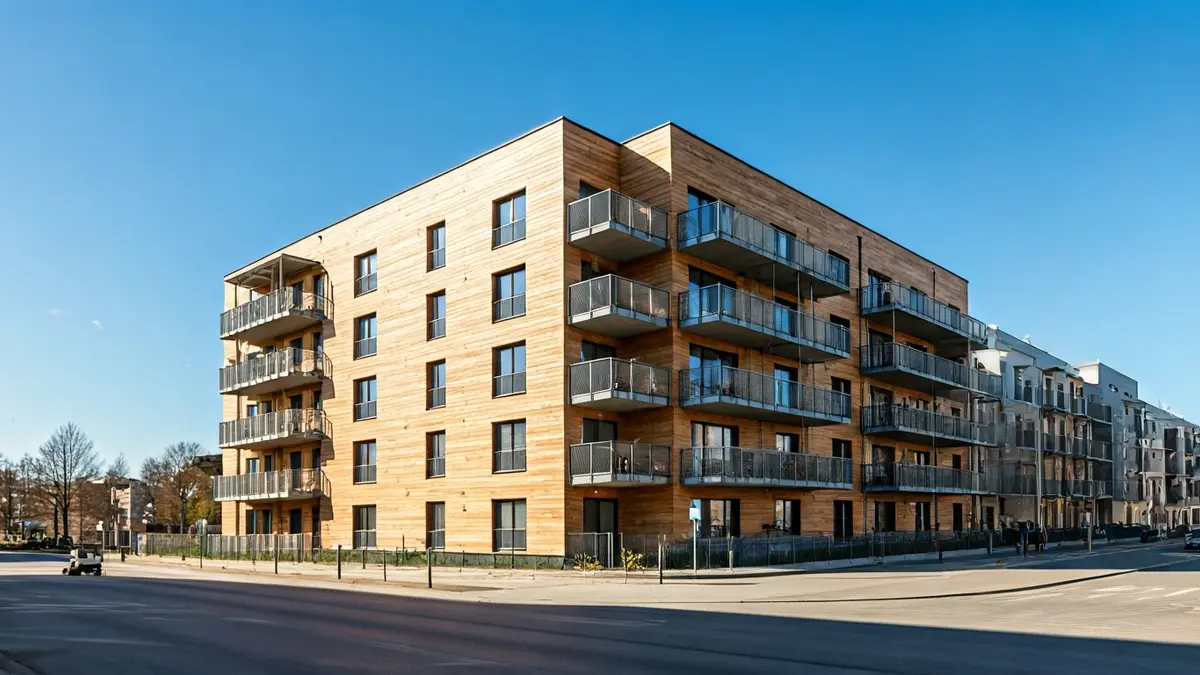
Additionally, access conditions are reinforced with criteria linked to coexistence and responsible housing use. Those who have been convicted in the last five years for illegal occupation, rent non-payment, or eviction proceedings due to coexistence issues will not be able to participate. The first development to apply this new model will be Iberia Loreto 1, located in the Barajas district, a completed building with 52 homes, including four adapted for people with reduced mobility.
This project, driven by EMVS Madrid, has involved a municipal investment of nearly 15 million euros and stands out as the first public building constructed with industrialized timber systems, which has reduced execution times to 17 months. The public lottery for the allocation of these homes is scheduled for June, with registration opening in the coming weeks via the EMVS website.