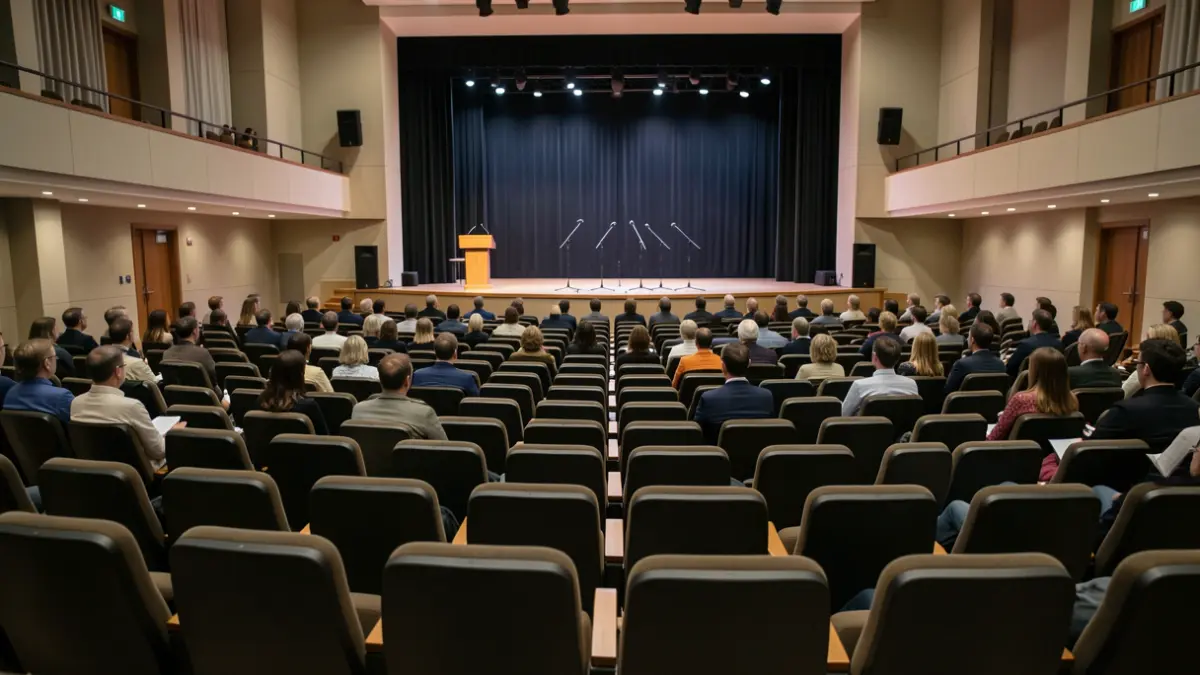
The recent visit of Pope Leo XIV to Madrid sparked an extensive discussion on the municipal talk show 'Cambia Madrid', broadcast on Canal 33 TV. The conversation covered the transport, security, and emergency services deployed by the City Council, the pontiff's political messages, and the expected economic return for the city.
The program, hosted by journalist Fernando Rodríguez of Madridiario, featured representatives from the main political forces: Paula Gómez (PP), Miguel Montejo (Más Madrid), Enrique Rico (PSOE), and Ignacio Ansaldo (Vox).
Paula Gómez described the papal visit as an "unprecedented success," highlighting the "historic moment" and the coordination of municipal efforts in transport (with free EMT buses and BiciMad) and security.
Opposition councilors Miguel Montejo and Enrique Rico attributed the success more to the "effort" of public employees than to the organization by José Luis Rodríguez Almeida's team. They focused on reinforcements in healthcare and transport, such as doctors at extra-hospitalary emergency points and increased Metro train services, expressing a wish for these "miracles to always happen" and for the council to prioritize citizens over "large corporations."
Regarding the estimated economic return of 74 million euros, Ignacio Ansaldo stated that "it makes no sense to measure the Pope's visit in terms of economic impact," a view shared by Montejo and Rico. Gómez, however, preferred to emphasize the "incalculable" "image" that Madrid projected to the world.
The debate also explored the political interpretation of Pope Leo XIV's messages, particularly following his address to the Congress of Deputies. While Ansaldo argued that "the Pope's message is not political," other speakers sought to align their positions with the pontiff's. Discussions touched upon the alignment of speeches with the "social doctrine of the church" and the Pope's recent encyclicals.
The need for air conditioning in regional educational centers to combat heatwaves was another key topic. Paula Gómez defended the measures taken by regional and municipal governments, such as awnings, pergolas, and facade renovations. However, Miguel Montejo and Enrique Rico deemed them "insufficient," criticizing the lack of agreements with the Community of Madrid and pointing to territorial inequality and the "concrete, asphalt, and lack of green spaces" as causes for temperature differences of up to eight degrees.
Ignacio Ansaldo, on the other hand, advocated for "common sense," calling the requested investment "brutal" for just a few weeks of heat.
Finally, the leaked study on installing a network of 'lockers' in Cuatro Caminos was discussed. Miguel Montejo described it as a "crazy trial balloon that consolidates Madrid as a city for sale." Enrique Rico criticized the model of public space occupation that "subjugates the public to the private." Ignacio Ansaldo added his disagreement due to "taking space away from BiciMad and the few available spots for loading and unloading," as well as harming "small businesses."