The Government Council of the Community of Madrid has given the green light to the awarding of a contract valued at 3.8 million euros. This agreement, initially for four years with a possible extension, will focus on the maintenance of the vaults and structures of the Madrid Metro tunnels, including connecting tunnels, maneuvering pockets, and branches leading to depots and sidings.
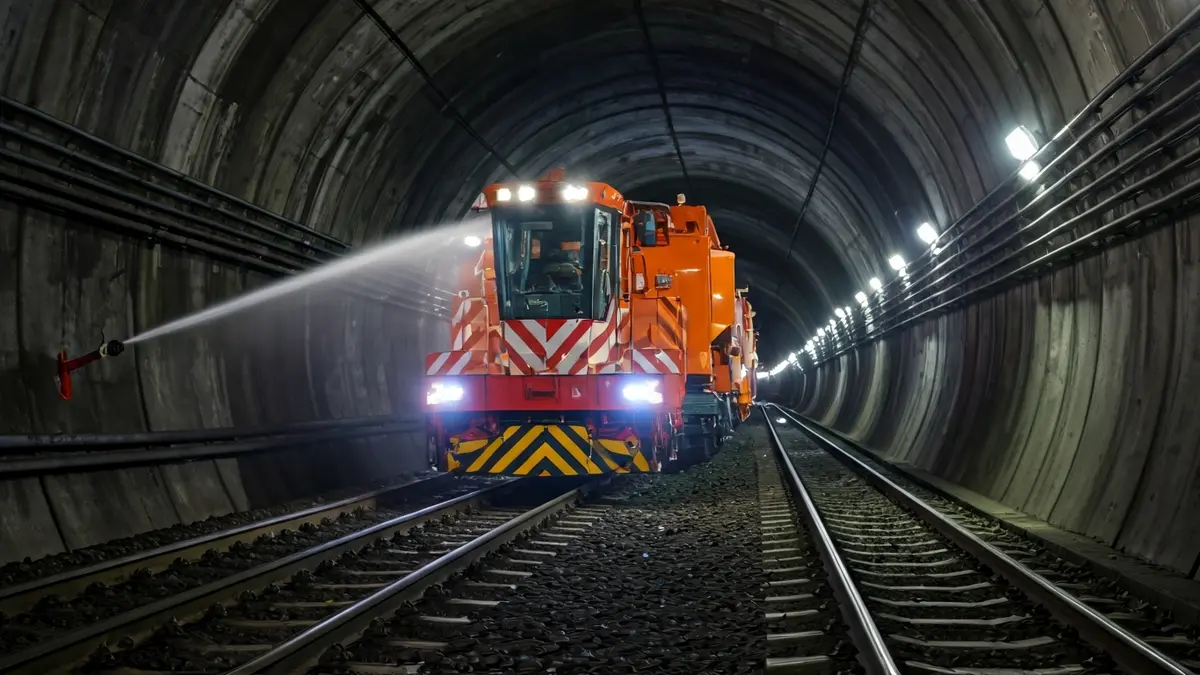
The main purpose of this initiative is to ensure optimal hygiene and maintenance conditions within the extensive tunnel network, a crucial aspect for the operability of the Madrid subway. The work will be carried out exclusively at night, when train services are inactive and electric traction is disconnected, thus avoiding any disruption to daily train circulation.
For the execution of these tasks, a specialized convoy will be used. This will consist of a dresina, a railway vehicle specifically designed for track maintenance, and a wagon equipped with a water tank. Through a booster pump, the equipment will project pressurized water at a 360-degree angle, allowing for deep cleaning of the vaults and the interior lining of the tunnels. This technique is particularly effective in the restricted environment of an underground railway infrastructure. In addition to mechanized cleaning, the contract includes the manual removal of accumulated waste on the tracks.
The accumulation of dirt, dust, and debris in the vaults and underground structures can affect both electrical and signaling systems and the air quality breathed by passengers.
Tunnel maintenance goes beyond aesthetics, directly impacting safety, operational efficiency, and public health for the thousands of users who travel daily. Accumulated dirt can compromise electrical and signaling systems, as well as air quality. Therefore, these actions are an essential part of the routine maintenance of any metro network that has been operating for decades.
The contract also incorporates environmental criteria, requiring the awarded company to implement measures to reduce CO₂ emissions generated by the dresinas. This approach aims to improve air quality within the tunnels and minimize the environmental impact of maintenance operations, reflecting a growing trend towards sustainability in public infrastructure management.
This agreement complements another independent contract, valued at 56 million euros, which Metro de Madrid maintains for the hygiene of rolling stock, i.e., the trains themselves and their operational spaces. This service includes ordinary cleaning, disinfection, disinsection, and deratization, as well as actions against vandalism, such as graffiti removal. The coexistence of both contracts underscores the need for detailed planning and continuous investment to maintain a metro network as extensive as Madrid's.