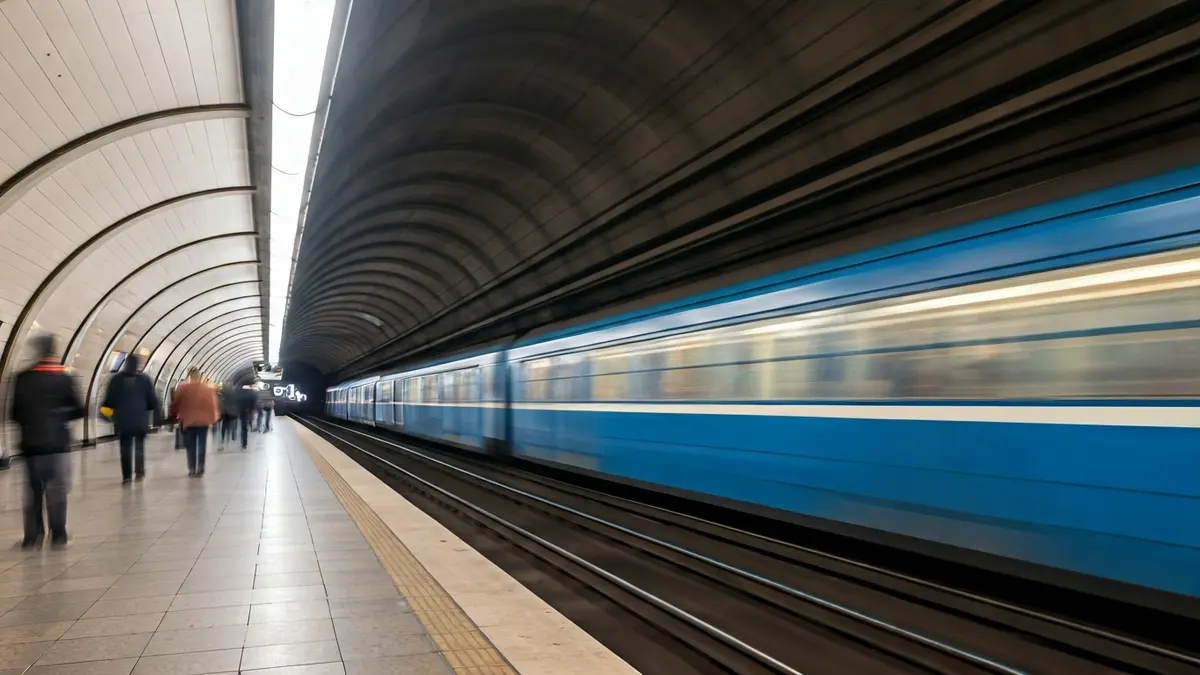
The Spanish capital will see its metro network extend to include stations in areas such as Los Berrocales and Los Ahijones, Campamento, the T1-T2-T3 airport terminals, Conde de Casal, and Valdebebas. Additionally, a new line dedicated to Madrid Nuevo Norte is projected, solidifying the infrastructure as a driver of urban development.
These expansions not only aim to improve user convenience but are crucial for the viability of Madrid's new neighborhoods. Without efficient access to public transport, the integration of thousands of families into the capital's working life would be considerably more complex.
Among the most notable projects, the extension of Line 5 from Alameda de Osuna to the airport terminals, with construction starting in May 2025, is expected to be operational by 2028. This will provide the airport with two metro connections, adding to the existing Line 8.
Line 9 will also benefit from a new station to serve the southeastern developments, with the drafting of the construction project initiated in 2026 and an expected opening in 2028-2029. Meanwhile, Line 11 is shaping up to be Madrid's great diagonal, with the Plaza Elíptica - Conde de Casal section (including Comillas and Madrid Río) ready by 2027, and the start of construction for the northern section (up to Valdebebas) in 2027.
The Community of Madrid also announced in May 2025 the extension of Line 4 from Pinar de Chamartín to Chamartín, with an intermediate stop at Bambú, eliminating the need for transfers between lines 1 and 4. The direct relationship between the arrival of the metro and the viability of new neighborhoods is evident, attracting more buyers to areas like Los Berrocales and Los Ahijones once the stations are under construction.