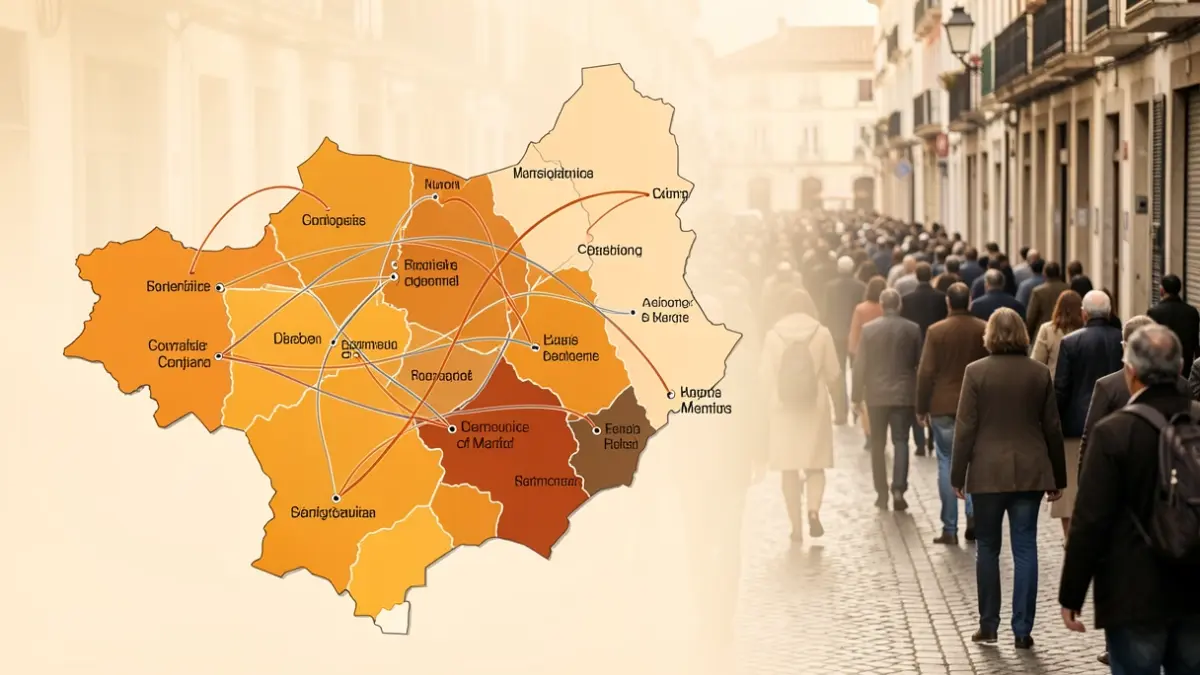
According to the report X-ray of the Labor Market for People with Disabilities, prepared by Randstad Research and the Randstad Foundation, the Spanish capital is only behind Cantabria in labor participation. This analysis, based on data from the National Institute of Statistics (INE), reveals that out of 216,300 people with disabilities of working age in Madrid, 89,800 were active in the labor market.
Nationally, the study indicates that in 2024 there were 687,500 active people with disabilities, a figure that, although slightly below the maximum of the last decade, shows a consistent growth trend. The disparity among autonomous communities is notable, with a 16.5-point difference between regions with the highest and lowest participation.
“"Madrid continues to be one of the most active communities in terms of labor inclusion. When administrations, companies, and social entities work together, labor inclusion advances in a real and sustained way."
The employment rate for people with disabilities reached 28.9% in 2024, the highest record since 2014. The total number of employed people with disabilities amounted to 560,400, representing a cumulative increase of 42% since 2014, adding more than 166,000 people to the active population.
Furthermore, the trend of decreasing unemployment in this group was consolidated in 2024, with a cumulative reduction of 34% over the last ten years, resulting in 64,400 fewer unemployed individuals. The unemployment rate stood at 18.5%, a decrease observed in both men and women.
Despite these advances, people with psychosocial disabilities continue to face greater challenges. Their population grew by 18% between 2014 and 2024, but they show the lowest rates of activity and employment. Only 29.8% of this group is active, and 23.6% are employed, figures lower than the general average for people with disabilities.