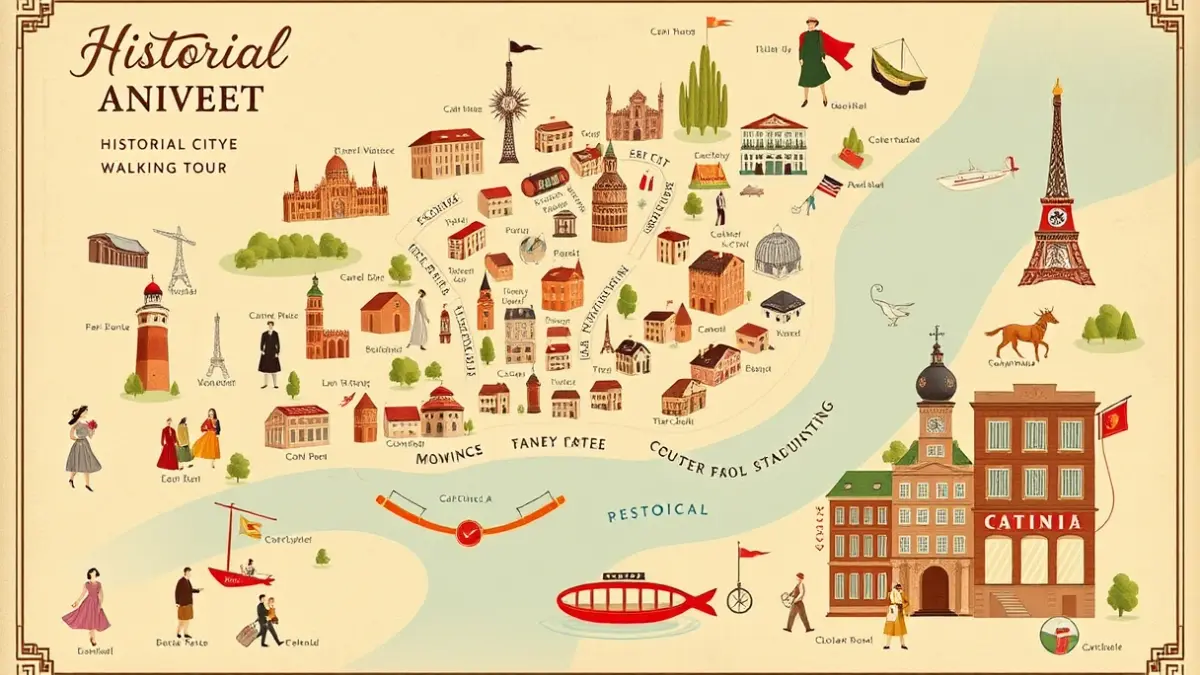
This initiative, conceived as a visual and narrative route, was developed by designer Lorenzo Caprile, fashion collector and researcher Lydia García, and illustrator Jorge Arévalo. Its aim is to pay tribute to the names and establishments that were a benchmark for generations of Madrileños, from traditional haberdasheries to haute couture houses and now-defunct department stores.
The itinerary begins near the Puerta del Sol, at Almacén de Pontejos, a symbol for sewing enthusiasts. It continues through historic streets like Arenal and Carrera de San Jerónimo, where the 19th-century tailoring shop of Alberto Ranz and the ancient jewelry store Mellerio, known for its royal clientele, are highlighted.
The route extends to Gran Vía, which served as a showcase for modernity, featuring the former Almacenes Madrid-París, later transformed into the well-known SEPU. Also included are EISA, linked to Cristóbal Balenciaga, and the Loewe space, a Spanish brand that evolved from leather goods to an international luxury label. The popular Almacenes Arias, a commercial landmark on calle de la Montera until its disappearance in 1987, is also part of the tour.
The walk delves into the elegance of the Castellana-Salamanca axis, mentioning couturier Flora Villarreal's workshop on calle Monte Esquinza, a pioneer of Madrid haute couture. The guide also highlights unique spaces like Tebas, considered Madrid's first concept store, and designer Elio Berhanyer's studio, a key figure in modernizing Spanish fashion.
The map includes enclaves associated with the capital's social life, such as the Leonardo hair salon and the Dafnis store, frequented by high society and celebrities. The final section features names that evoke nostalgia, like Don Algodón, and designer Manuel Piña, linked to Madrid's creative scene of the 1980s.
The tour concludes with two essential references for understanding the sector's evolution: the historic Pasarela Cibeles, which began in 1985 in Plaza de Colón, and the Museo del Traje, inaugurated in 2004 as the first national museum dedicated to fashion. This material is free and available for download on the City Council's digital platforms, as well as in libraries and tourist information points.