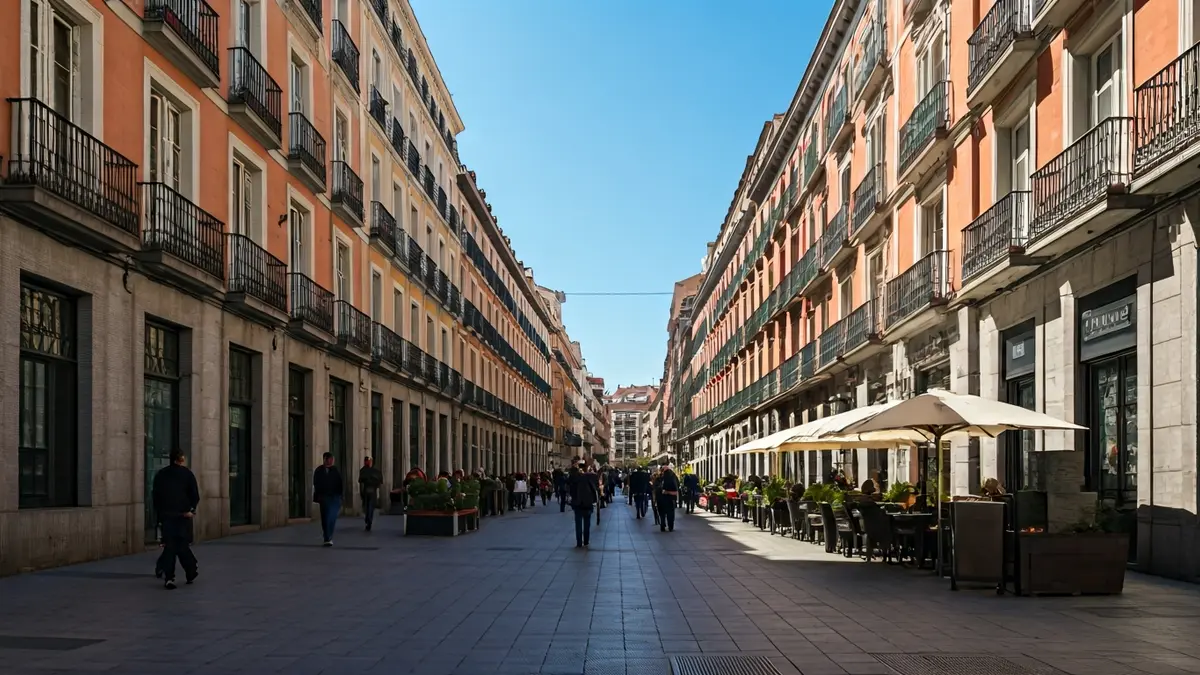
Since the 1980s, the city has undergone continuous transformation, emerging from isolation to connect with Europe. Currently, Madrid is recognized for its work activity, vibrant social life, and adaptability, solidifying its position as a major attraction.
With 3.3 million inhabitants, the Spanish capital balances the scale of a large metropolis with remarkable accessibility. Its historic center is easily walkable, and the efficient metro network allows travel across the city in under 40 minutes, a feature highly valued by foreign residents.
Madrid's climate, with over 300 sunny days a year, cold but sunny winters, and hot, dry summers, promotes an outdoor lifestyle. Terraces, parks, and street life are direct consequences of this climatic advantage, setting it apart from other European capitals like London or Berlin.
Madrid's cultural offerings are top-tier, featuring the renowned Art Triangle, which includes the Prado Museum, the Reina Sofía Museum, and the Thyssen-Bornemisza Museum. Additionally, a gastronomic scene places it among the top five culinary capitals globally, an unparalleled nightlife in continental Europe, and a constantly evolving cultural landscape.
Furthermore, Madrid serves as the primary connection hub between Europe and Latin America. The shared language, numerous direct flights from Barajas Airport, and the presence of companies operating on both continents make it a strategic key point for talent, tourism, and business from over 600 million Spanish speakers.
Despite its success, Madrid faces significant challenges in 2026. These include high housing prices, which reached 5,820 euros/m² in December 2025, tourist overcrowding in certain central areas, territorial inequality between the north and south of the city, and the need for adaptation to climate change, with increasingly hot summers.