The Lucero Neighborhood Association has used the recent visit of public figures to highlight the "shortcomings and needs" of their neighborhood, which they consider neglected by municipal and regional authorities. They point out that, while they share general problems with Madrid such as difficulty accessing decent housing, precarious employment, and work-life balance issues, there are specific problems in the area.
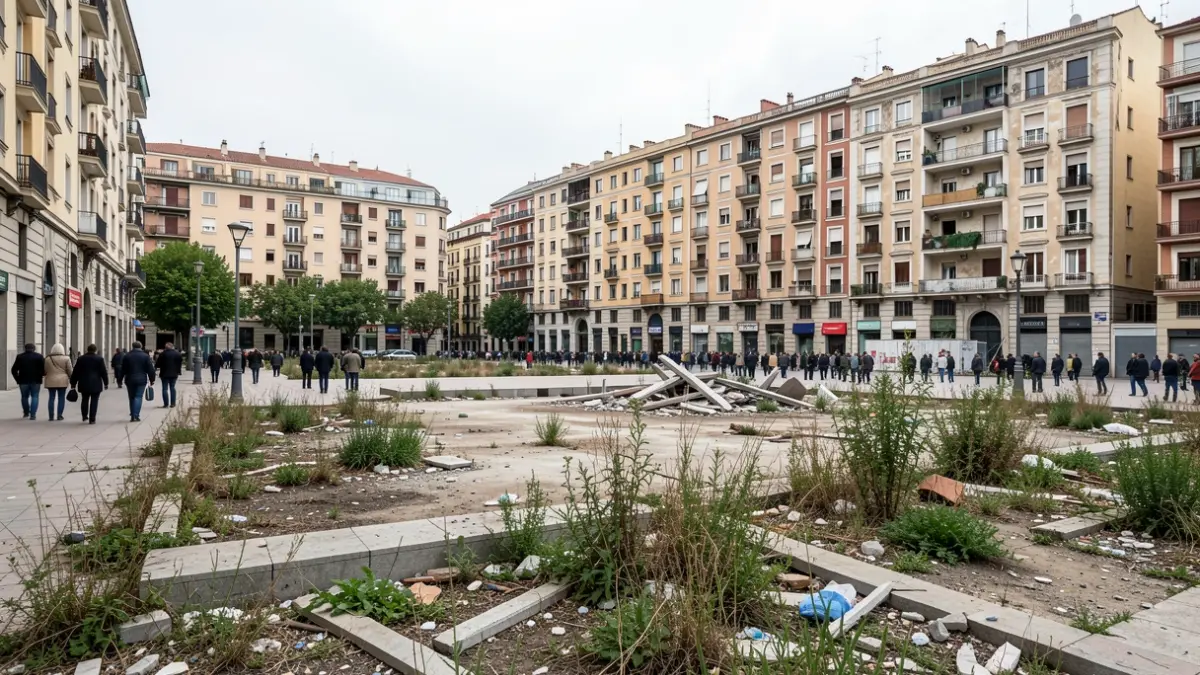
Among the main complaints is the stalled project for "La Plaza Cívica del Lucero", a facility promised eight years ago that, according to the association, the current Municipal Government has halted without prospects of reactivation. Additionally, a historically significant plot of land on Calle Luis Pando, owned by the municipality, remains abandoned.
Urban cleanliness is another critical point. Residents describe the neighborhood as "dirty," criticizing the insufficient frequency of garbage collection, sweeping, and watering. They allege that the City Council does not control the accumulation of belongings and that damage and debris in the streets, especially in the older part of the neighborhood, "take forever" to be addressed.
The association also expresses concern about the potential reactivation of drug dealing spots, even though activity is currently lower. Furthermore, they criticize an "incomprehensible administrative authorization" for a nightclub in the basement of a residential building on Calle de la Alhambra, which makes rest difficult for residents.
The neighborhood collective laments that, despite having put the neighborhood "on the map," its fundamental problems persist. They question whether situations of abandoned lots, permanent dirt, or "unbearable" disturbances would be tolerated in higher-class areas of Madrid, concluding that for the City Council and the Community of Madrid, their neighborhood has been and they fear will continue to be "invisible" after the visit.