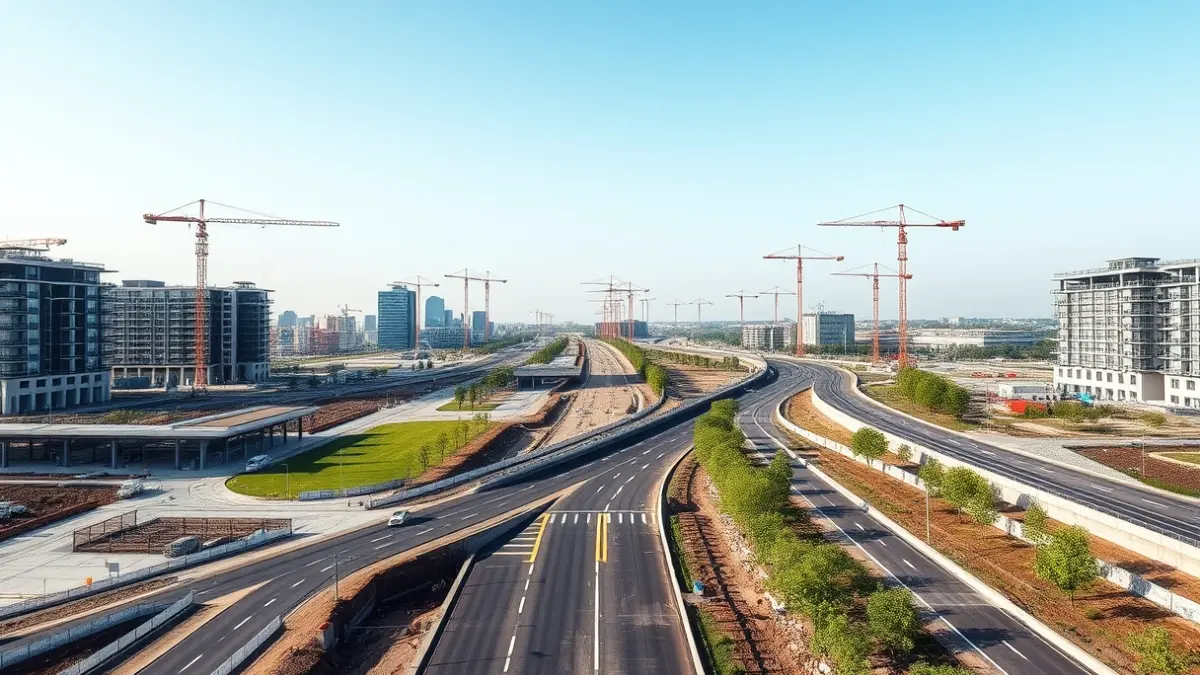
This administrative decision, made on Thursday, April 16, 2026, brings closer the realization of one of Europe's largest urban development operations. Of the total homes projected in Malmea-San Roque-Tres Olivos, 20% will have some form of public protection, contributing to the supply of affordable housing in the capital.
“"This area will contribute the largest number of homes within the urban operation as a whole, which foresees a total of 10,500 properties, with 2,100 protected."
The Madrid Nuevo Norte project, definitively approved in 2020, is structured into four main sectors: Malmea-San Roque-Tres Olivos, Las Tablas, the Business Center, and Chamartín station. The initiative not only includes housing construction but also an extensive network of public facilities, including health, educational, sports, and social centers, to meet the needs of future residents.
Regarding mobility, two strategic transport hubs are planned, located to the north and south of the development. These hubs will integrate new Metro and Cercanías stations, as well as stops for a high-capacity bus system with a reserved platform, prioritizing public transport for up to 80% of planned commutes.
The urban design will allocate over 500,000 square meters to local public networks, with more than 160,000 square meters for green areas and open spaces. A large linear green axis will connect the north and south of the area, linking the natural environment of El Pardo with the Paseo de la Castellana and improving cycling mobility with connections to the Anillo Verde Ciclista.
Furthermore, connectivity between neighborhoods will be enhanced through new infrastructure such as bridges and a tunnel, facilitating travel between Fuencarral and Las Tablas, and new connections over the M-30 towards Chamartín. These actions aim to eliminate the historical urban barrier that has divided these areas for decades. The plan also includes the preservation of heritage elements such as the Profidén building and several hermitages.