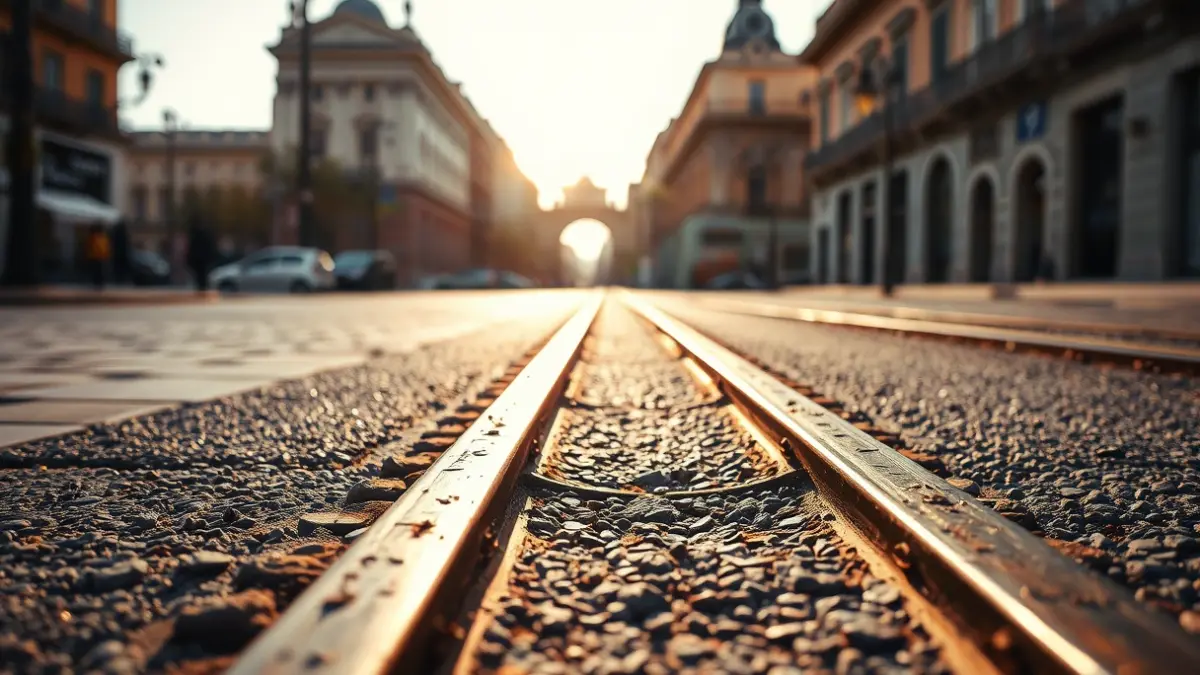
These vestiges, hidden beneath the asphalt, bear witness to the evolution of mobility in Madrid. The tram system began operating in May 1871 with mule-drawn convoys, connecting the Salamanca district with the Puerta del Sol and transforming the city's expansion.
The electrification of the lines in 1898 marked a milestone, giving rise to the popular “canaries” due to their distinctive yellow color. By the early 20th century, the network already spanned the entire capital, with its central hub at the Puerta del Sol.
The tram was not just a means of transport. It was part of Madrid's daily and cultural life.
The Sociedad Madrileña de Tranvías, founded in 1920, and later the Empresa Mixta de Transportes in 1933 (predecessor of the current EMT), modernized the system. In the 1950s, the tram reached its peak with 188 kilometers of tracks and over 500 units in circulation.
This mode of transport left a deep cultural mark, such as the traditional expression “más chulo que un ocho,” originating from the line that led to leisure areas. However, the rise of the automobile and the expansion of the metro and buses led to its decline. The last tram ran on June 2, 1972, ending over a century of service.
The remains found at the Puerta de Alcalá could correspond to an advanced phase of the system. The Madrid City Council is analyzing their exact chronology and heritage value, considering the possibility of musealizing part of these findings. It is not ruled out that more sections of these tracks, which were never removed, may be rediscovered in other parts of the city.