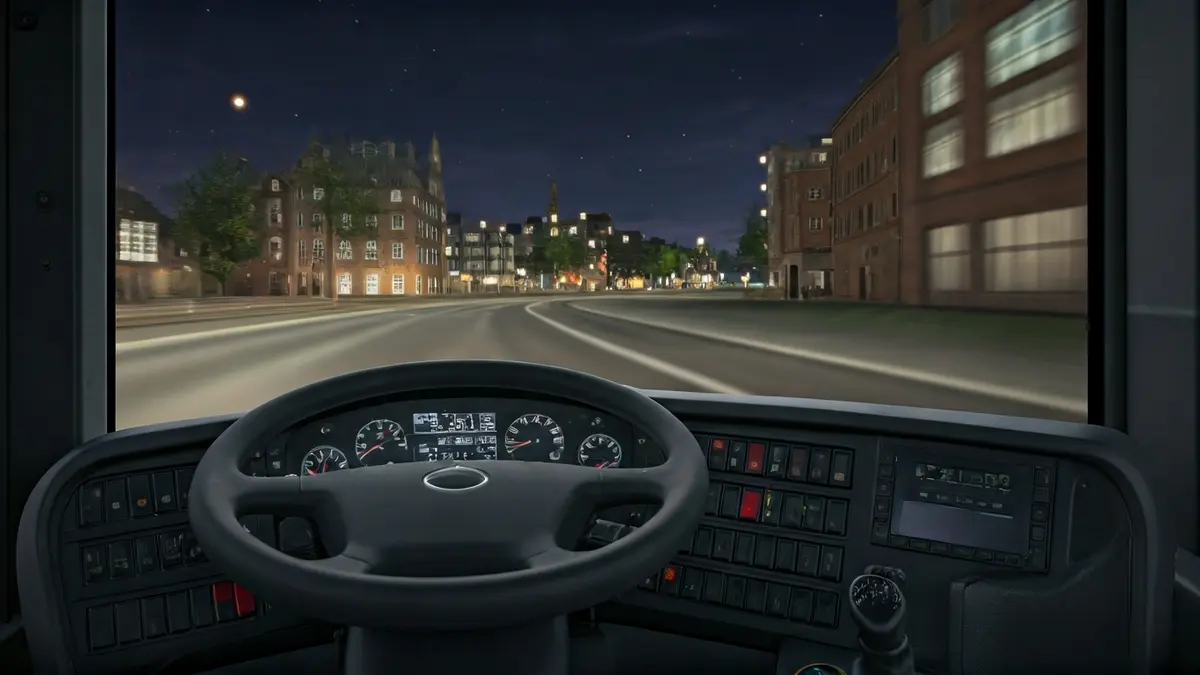
The Delegate for Urban Planning, Environment, and Mobility, Borja Carabante, recently visited EMT Madrid's Fuencarral facilities to observe the advanced driving simulators in action. These devices, which accurately replicate a bus cabin and urban conditions similar to Madrid, are crucial for preparing new personnel.
The simulators are an essential tool for EMT Madrid, as they help optimize the safety, efficiency, and cost-effectiveness of the training process. They allow future drivers to practice in high-risk scenarios, such as adverse weather conditions, heavy traffic, unexpected pedestrian or cyclist appearances, and emergency braking, thereby preventing accidents and reducing risks in real-world driving.
These simulators are a key instrument for the municipal company in the training of new driving personnel because they help improve safety, efficiency, and profitability in the training process, as well as, subsequently, in the circulation of buses through the streets.
Beyond accident prevention, the use of these simulators contributes to reducing fuel consumption and bus maintenance, leading to significant emission savings. From a training perspective, they ensure consistent instruction for all drivers and an objective evaluation of their skills.
Introduced in April 2003, EMT Madrid's simulators have undergone continuous updates. Recent enhancements include the simulation of 6.4 kilometers of bike lanes with interacting bicycles and traffic. They are compatible with both standard (12 meters) and articulated (18 meters) bus models. Each simulation session lasts approximately 15 minutes, and a total of 6,638 drivers have been trained, with 2,270 since 2019, including the 78 currently undergoing training.
The training for EMT Madrid drivers begins after passing theoretical tests, which saw over 1,600 applicants in the latest call in June 2025. Following a practical driving exam, new professionals undergo an intensive 175-hour preparation over five weeks, combining theory, simulator use, real driving practice without passengers, and practice with passengers, before joining one of the 229 lines in the municipal network.