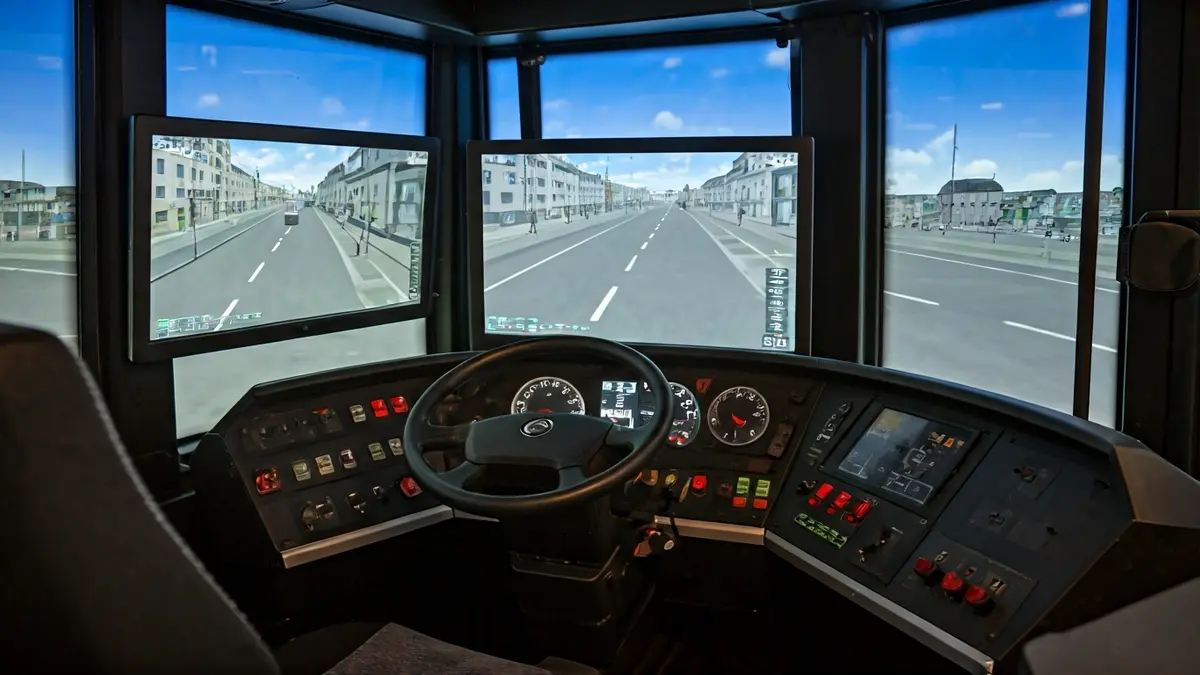
The delegate for Urban Planning, Environment, and Mobility of the City Council, Borja Carabante, visited the facilities on Tuesday, April 7, 2026, to observe the operation of these advanced devices firsthand. The simulators accurately replicate the driving position of an urban bus and Madrid's traffic conditions in a virtual setting.
This technology allows aspiring drivers to face everyday situations and risk scenarios, such as adverse weather conditions, the unexpected appearance of pedestrians or cyclists, dense traffic, or emergency braking. This proactive training is crucial for improving drivers' reaction capabilities and, consequently, road safety in Madrid.
The use of simulators not only increases driving safety but also contributes to optimizing resources. Among their advantages are reduced fuel consumption, less vehicle wear, and decreased pollutant emissions.
The simulators, introduced in April 2003 and continuously evolved, ensure consistent training and facilitate objective performance evaluations. Recent improvements include the integration of virtual bike lanes with interactive bicycles and adaptability for both standard 12-meter and articulated 18-meter buses. Each simulation session lasts approximately 15 minutes.
Over 6,600 drivers have undergone this training system, with more than 2,200 trained since 2019. The training process includes theoretical tests, a practical exam, and an intensive five-week, 175-hour program combining theory, simulation, and real-world practice before joining the 229 lines of the capital's bus network.