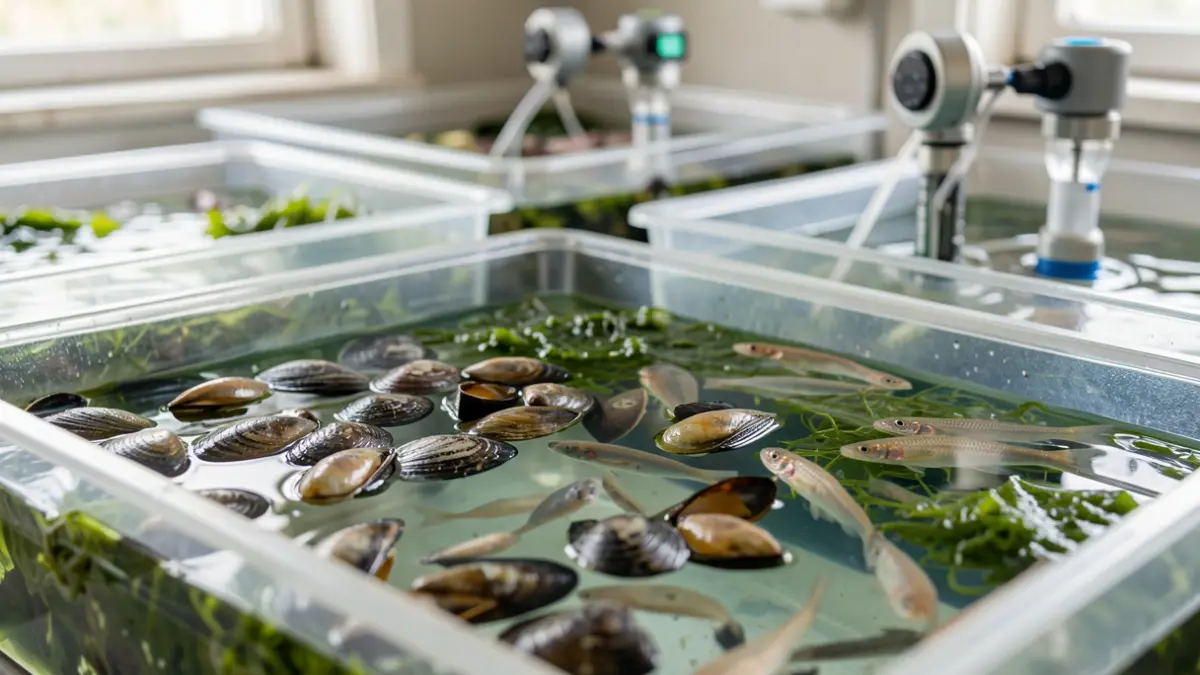
The goal of AQUALICIOUS is to transform the aquaculture industry into a more sustainable, efficient, and climate-resilient sector. This will be achieved by introducing species that are less resource-intensive and have a smaller ecological footprint, creating a system where the by-products of some species become resources for others.
The project, funded with 6 million euros by the European Union's Horizon Europe program, will bring together 14 European partners. The developed technologies and digital tools will be tested in Norway, Belgium, and Spain under real-world conditions. The CSIC is involved through the Torre de la Sal Aquaculture Institute (IATS) and the Santander Oceanographic Center of the Spanish Institute of Oceanography (IEO).
Aquaculture is the fastest-growing food production sector globally, but in the European Union, it is still dominated by fish species high up in the marine food chain, leading to environmental challenges. AQUALICIOUS proposes a shift in focus towards low-trophic level aquaculture and integrated multitrophic aquaculture.
“The project will introduce omnivorous fish species, crustaceans, mollusks, and algae, promoting diversification and reducing environmental impact. By developing circular value chains based on species that do not require external feed or occupy low trophic levels, AQUALICIOUS will facilitate the transition towards resource-efficient production systems with a minimal ecological footprint,” explains Óscar Monroig, a CSIC researcher at IATS.
In addition to monitoring and production optimization technologies, the project will integrate social sciences to assess the regulatory, financial, and social conditions necessary for its implementation, as well as market studies to support effective labeling and marketing strategies.
The Spanish participation focuses on studying the flow of essential nutrients in multitrophic cultivation systems. The IATS-CSIC evaluates the capacity of different organisms to produce omega-3 fatty acids, analyzing species such as microalgae, macroalgae, mollusks, crustaceans, and low-trophic level fish like the thin-lipped mullet. Meanwhile, the IEO-CSIC is responsible for a pilot facility in Santander where the species Chelon labrosus is cultivated, with its effluents used to produce polychaete worms and microalgae, which in turn are used for oyster cultivation.