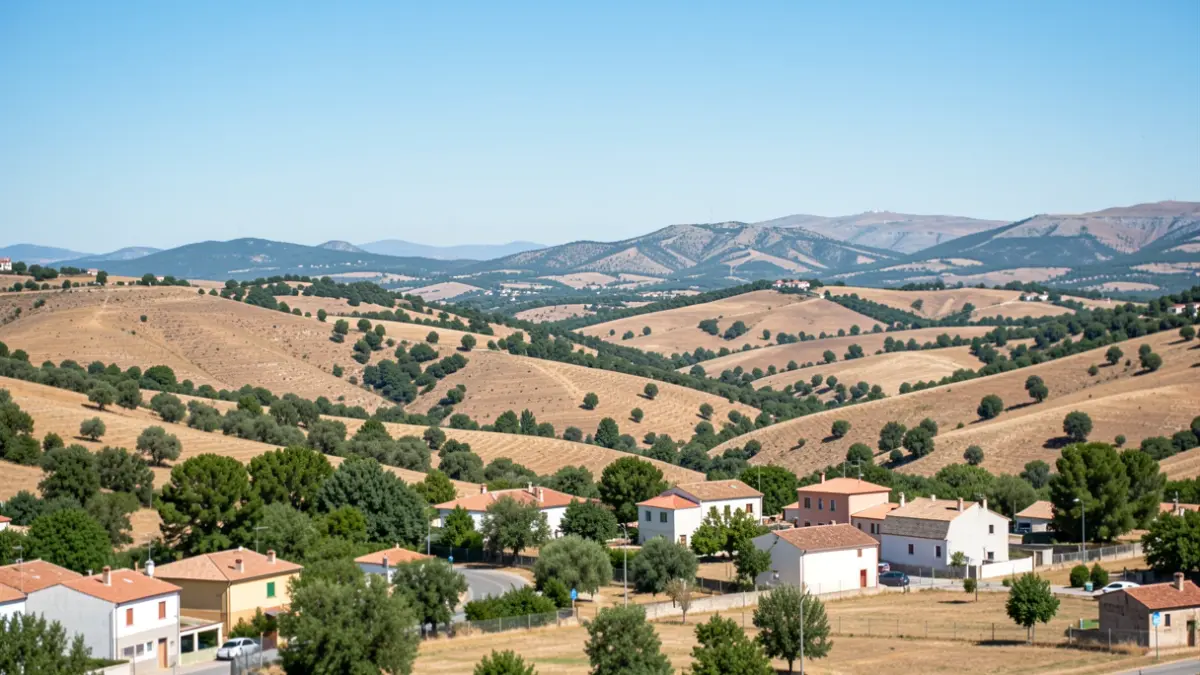
Buitrago del Lozoya has been the setting for the first meeting between administrations to organize security and mobility for the solar eclipse scheduled for August 12. Representatives from about thirty municipalities in the Sierra Norte attended, presenting their planned activities for the astronomical event.
The Government Delegate in Madrid, Francisco Martín, described the eclipse as a "unique and extraordinary" occasion and urged citizens to experience it responsibly. He requested that people "heed the instructions that will be given by official services," for both health reasons, reminding of the risk of eye damage from looking directly at the sun without protection, and for traffic reasons. It is recommended to go to the designated official points to avoid crowds and facilitate rapid response to incidents.
Concern over the risk of forest fires in August added a key point to the meeting. The Government Delegate urged those attending the Sierra Norte to avoid leaving behind waste that could start a fire and warned drivers not to stop on the road to observe the phenomenon, to avoid blocking evacuation routes.
The meeting included the participation of mayors from the area, heads of Citizen Security and Civil Protection from the Delegation —Javier Robles and Fabián Bejarano—, as well as representatives from State Security Forces and Corps, the General Directorate of Traffic, the Community of Madrid, and local police forces. This meeting follows an instruction from the Secretary of State for Security to organize four regional gatherings.
The objective of these meetings is to create a comprehensive map of all planned activities in the 93 municipalities with high visibility of the eclipse, to adequately size the security and mobility device for the expected massive mobilization of citizens.
The chosen venue for the meeting, Espacio Buitrago, located in the former Telefónica Satellite Communications Center, was built in 1967 and declared an Asset of Cultural Interest. This site played a role in the history of technology as a communications link with NASA during the Apollo missions.